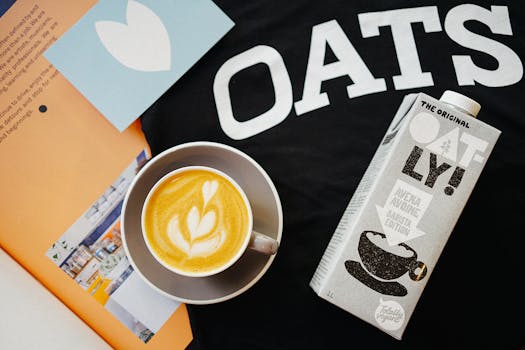
The diets react (see scores below)
Diet Ratings
Oat milk contains 2-3g net carbs per cup, and a typical latte uses 8-12oz, resulting in 16-36g net carbs per drink. Oats are grain-based and incompatible with keto macros.
Oat milk lattes are fully plant-based with no animal products. Whole-food oat milk scores highest; commercial versions may contain additives but remain vegan.
Oat milk is derived from oats, a grain explicitly excluded from paleo diet. Additionally, commercial oat milk contains additives, thickeners, and often added sugars. This violates multiple paleo principles.
Oat milk is processed but plant-based. Acceptable occasionally, but traditional Mediterranean uses water, wine, or dairy milk. Added sugars in commercial oat milk a concern. Homemade or unsweetened versions preferable.
Modern Mediterranean diet interpretations accept plant-based milk alternatives as sustainable substitutes for dairy, particularly when unsweetened and minimally processed.
Oat milk is plant-derived (grain-based). Contains no animal products despite 'milk' labeling. Violates carnivore exclusion of all plant foods including grains.
Oat milk is excluded because oats are a grain. Additionally, most commercial oat milk contains added sugar and other additives. Both the grain base and typical added ingredients make this non-compliant.
Oat milk contains beta-glucans and some fructans. Monash rates oats as low-FODMAP in small portions (~40g dry), but oat milk is processed and may concentrate FODMAPs. Serving size and brand variation affect tolerance.
Monash University data on commercial oat milk is limited; clinical practitioners report variable tolerance. Some patients tolerate standard servings; others experience symptoms. Individual testing recommended.
Oat milk provides fiber and is lower in saturated fat than dairy. However, many commercial versions contain added sugars and sodium. Acceptable if unsweetened and low-sodium, but check labels carefully.
NIH DASH emphasizes low-fat dairy; updated clinical interpretation recognizes plant-based alternatives as acceptable if fortified and low in sodium/sugar, though whole dairy remains preferred for calcium bioavailability.
Oat milk contains ~2g carbs per oz; typical latte (12 oz) = ~24g carbs. Lacks sufficient protein (1-2g) and fat for Zone balance. Requires addition of protein powder and monounsaturated fat source to achieve 40/30/30. Whole milk or unsweetened almond milk preferred.
Some Zone practitioners accept oat milk lattes if supplemented with protein powder and fat, though Dr. Sears emphasizes whole-food carb sources and adequate protein at every meal.
Oat milk provides beta-glucans (soluble fiber with anti-inflammatory potential) and is plant-based. However, many commercial oat milks contain added sugars and oils. Green or black tea in latte adds polyphenols. Quality highly dependent on product formulation.
Some anti-inflammatory advocates prefer unsweetened oat milk with higher scores (7-8) due to beta-glucan content. Others prioritize avoiding all plant-based milk additives and prefer unsweetened versions only.
Oat milk provides some fiber and is fortified with vitamins, but a typical latte (12oz) contains 10-15g sugar and minimal protein unless made with protein powder. Caffeine may trigger nausea on empty stomach in some GLP-1 patients. Liquid calories are less satiating than solid food. Works best as part of a meal with protein (e.g., with eggs), not standalone. Portion-sensitive; smaller sizes (8oz) preferable.
Some RDs tolerate coffee/caffeine for GLP-1 patients who have no nausea sensitivity and recommend it as a meal accompaniment. Others recommend avoiding caffeine entirely during early GLP-1 adjustment or on injection days due to nausea risk.
Nutritional profile
Six traits that cut across every diet.
Fiber & Plants
How much whole-plant food and fiber it delivers.
Healthy Fats
The quality of its fats (unsaturated, omega-3).
Whole / Unprocessed
How close it is to its natural, unprocessed form.
Gut Gentle
How easy it is on digestion (low FODMAP, few irritants).
Low Glycemic
How little it spikes your blood sugar.
Protein Density
How much protein it packs per calorie.
Controversy Index
Score range: 1–8/10. Higher controversy = more disagreement between diets.
Diet-Specific Tips for Oat milk latte
 Vegan — 8/10
- Plant-based milk
- No animal products
- Whole grain base
- Minimal processing possible
 Mediterranean — 5/10
- Plant-based positive
- Processed product
- Added sugar risk in commercial versions
- Not traditional
- Unsweetened essential
 Low-FODMAP — 5/10
- Oat fructan content
- Processing and concentration effects
- Brand-dependent formulation
- Portion size critical
 DASH — 6/10
- Variable sugar content
- Check sodium levels
- Fiber from oats
- Lower saturated fat
 Zone — 5/10
- Moderate carbohydrate content
- Insufficient protein
- Minimal fat
- Requires supplementation
- Whole milk alternative preferred
 Anti-Inflammatory — 5/10
- beta-glucans in oats (anti-inflammatory)
- added sugars in many brands
- tea polyphenols (if tea-based)
- seed oil content varies
- avoid sweetened varieties
 GLP-1 Friendly — 5/10
- moderate sugar
- minimal protein
- caffeine sensitivity
- liquid calories
- low satiety standalone