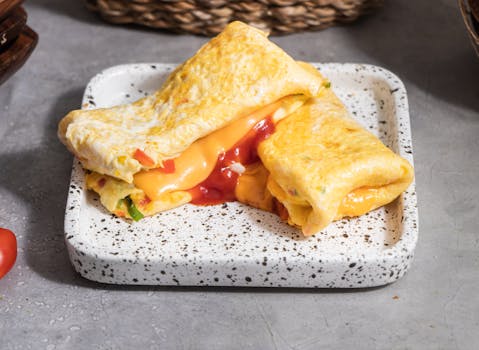
The diets react (see scores below)
Diet Ratings
Cheese omelettes are keto staples: eggs provide fat and protein, cheese adds additional fat and minimal carbs. A 2-3 egg omelette with cheese contains ~1-2g net carbs. Versatile and satiating.
Contains both eggs and cheese, both animal products explicitly excluded from vegan diet.
Eggs are paleo-approved, but cheese is a dairy product explicitly excluded from paleo diet. Dairy contains lactose and casein, violating core paleo principles.
Whole eggs with moderate cheese represent traditional Mediterranean preparation. Eggs provide complete protein and choline; cheese adds calcium and flavor. Appropriate for breakfast or light meals several times weekly as per Mediterranean guidelines.
Eggs are approved; cheese is animal-derived dairy. However, dairy is debated in carnivore community—some include it, strict practitioners exclude it due to lactose and potential inflammatory properties. Quality depends on cheese type and processing.
Strict 'meat only' carnivore practitioners and Lion Diet followers exclude all dairy including cheese; 'animal-based' practitioners (Saladino) and most mainstream carnivores include full-fat, low-lactose cheeses.
Cheese is dairy and explicitly excluded from Whole30 for the full 30 days. While omelettes are compliant, adding cheese makes this non-compliant.
Eggs and hard cheeses are both low-FODMAP. Monash confirms eggs at all servings and lactose-free hard cheeses are suitable. Assumes no garlic, onion, or high-FODMAP fillings.
Whole eggs provide cholesterol and saturated fat; cheese adds additional saturated fat and sodium. Acceptable in moderation with careful preparation.
Modern research suggests whole eggs are acceptable on DASH if portion-controlled; cheese choice (low-fat varieties) and cooking method matter significantly.
Protein-rich but cheese adds saturated fat and sodium. A 2-egg omelette with 1 oz cheese (~7g fat) fits one fat block but leaves minimal room for additional fat. Workable with restraint.
Cheese adds saturated fat and omega-6 content to an otherwise acceptable egg base. The inflammatory impact depends on cheese quantity and type. Whole eggs provide beneficial nutrients but yolks contain omega-6.
Some anti-inflammatory protocols (AIP) restrict dairy entirely due to potential inflammatory compounds. Mainstream Weil-based approaches allow moderate cheese in omelets as part of balanced meals.
Good protein (12-15g per 2-egg omelette) and easy to digest, but cheese adds saturated fat (5-8g depending on amount). Fat content may worsen nausea or reflux. Can be approved if cheese is minimal and paired with vegetables.
Some GLP-1 nutrition experts recommend cheese omelettes as acceptable protein sources with moderate fat, while others suggest limiting cheese due to saturated fat and potential lactose sensitivity that develops in some GLP-1 patients. Clinical tolerance varies.
Nutritional profile
Six traits that cut across every diet.
Fiber & Plants
How much whole-plant food and fiber it delivers.
Healthy Fats
The quality of its fats (unsaturated, omega-3).
Whole / Unprocessed
How close it is to its natural, unprocessed form.
Gut Gentle
How easy it is on digestion (low FODMAP, few irritants).
Low Glycemic
How little it spikes your blood sugar.
Protein Density
How much protein it packs per calorie.
Controversy Index
Score range: 1–9/10. Higher controversy = more disagreement between diets.
Diet-Specific Tips for Omelette (cheese)
 Keto — 9/10
- 1-2g net carbs per 2-3 egg omelette
- High fat content
- Complete protein
- Whole food preparation
 Mediterranean — 7/10
- Whole egg nutritional completeness
- Traditional Mediterranean preparation
- Moderate dairy inclusion
- Appropriate frequency alignment
 Carnivore — 5/10
- whole eggs (approved)
- dairy product (debated)
- lactose content varies by cheese
- processing and additives vary
 Low-FODMAP — 8/10
- Eggs are low-FODMAP
- Hard cheese is low-FODMAP
- No added high-FODMAP ingredients assumed
- Cooked preparation
 DASH — 5/10
- Dietary cholesterol
- Saturated fat from cheese
- Sodium content
- Protein quality
 Zone — 5/10
- Good protein content
- Saturated fat from cheese
- Low carb
- Requires portion discipline
 Anti-Inflammatory — 5/10
- whole eggs provide choline and lutein
- cheese adds saturated fat
- cheese contributes omega-6 fatty acids
- portion of cheese is critical
- cooking method affects inflammation
 GLP-1 Friendly — 6/10
- Good protein content
- Moderate to high fat
- Easy to digest
- Lactose consideration
- Customizable fat content