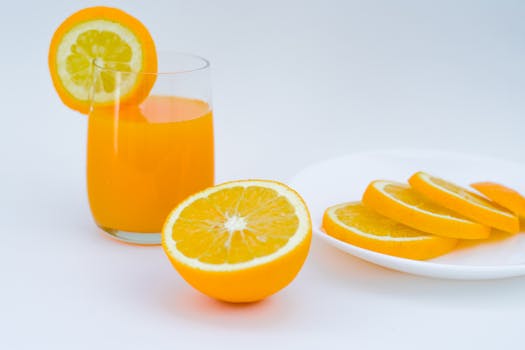
The diets react (see scores below)
Diet Ratings
High sugar content (26g net carbs per 8oz serving) and rapid glucose spike. Incompatible with ketosis regardless of freshness.
Pure plant juice from oranges. No animal products or derivatives. Whole food beverage.
Fresh-squeezed orange juice contains natural sugars and nutrients from whole oranges, but lacks fiber of whole fruit and causes rapid blood sugar spikes. While fruit is paleo-approved, juice concentrates the sugar content. Most paleo practitioners recommend whole fruit over juice.
Some paleo authorities accept fresh-squeezed orange juice in moderation as a natural fruit product, particularly around workouts. However, mainstream paleo guidance favors whole fruit to maintain fiber and satiety.
While oranges are Mediterranean fruits, juice removes fiber and concentrates natural sugars. Whole oranges are preferred. Fresh-squeezed juice in moderation is acceptable; commercial juice with added sugars should be avoided.
Some Mediterranean diet authorities accept fresh-squeezed orange juice as a traditional beverage, particularly in Mediterranean regions where citrus is abundant, though whole fruit consumption is still preferred.
Fruit juice extracted from oranges. Plant-derived, high in sugar, and explicitly excluded from carnivore diet. Provides no nutritional advantage over whole fruit and causes rapid blood sugar elevation.
100% fruit juice is explicitly approved by Whole30 as of official guidance. Fruit juice is not considered added sugar and is compliant both as a standalone drink and recipe ingredient.
Orange juice contains excess fructose (more fructose than glucose). Monash rates orange juice as high-FODMAP due to fructose content exceeding glucose.
Natural sugars (12g per 8oz) and potassium are beneficial, but DASH recommends whole fruit over juice to preserve fiber and reduce sugar concentration. Acceptable in moderation (4–6oz serving).
NIH DASH guidelines emphasize whole fruits; updated clinical interpretation permits small portions of 100% juice as acceptable, though whole oranges are preferred for fiber and satiety.
High-glycemic carbohydrate (high fructose concentration). Lacks fiber of whole fruit. Causes rapid blood sugar spike. Dr. Sears limits fruit to 2 servings/day and prefers whole fruits; juice is explicitly discouraged.
Fresh orange juice contains vitamin C and some polyphenols, but lacks the fiber of whole oranges and has high natural sugar concentration. This creates rapid glucose spikes and inflammatory responses despite antioxidant content. Whole oranges are preferable. Some anti-inflammatory authorities accept small portions; others recommend avoiding.
Dr. Weil and some mainstream sources accept small portions (4-6 oz) of fresh orange juice for its vitamin C and polyphenol content, particularly if consumed with food to moderate glucose response. AIP and stricter protocols recommend whole fruit only.
High sugar (26g per 8oz), minimal fiber (even with pulp), zero protein. Rapid blood sugar spike, empty calories, and liquid calories don't trigger satiety. Carbonated or not, juice is a poor choice for GLP-1 patients. Whole orange is marginally better (fiber, slower absorption) but still not ideal.
Nutritional profile
Six traits that cut across every diet.
Fiber & Plants
How much whole-plant food and fiber it delivers.
Healthy Fats
The quality of its fats (unsaturated, omega-3).
Whole / Unprocessed
How close it is to its natural, unprocessed form.
Gut Gentle
How easy it is on digestion (low FODMAP, few irritants).
Low Glycemic
How little it spikes your blood sugar.
Protein Density
How much protein it packs per calorie.
Controversy Index
Score range: 1–9/10. Higher controversy = more disagreement between diets.
Diet-Specific Tips for Orange juice
 Vegan — 9/10
- 100% plant-based
- Whole food
- No animal ingredients
 Paleo — 4/10
- Concentrated natural sugars
- Lacks fiber of whole fruit
- Blood sugar impact
- Nutrient-dense but portion-sensitive
 Mediterranean — 5/10
- Removes beneficial fiber
- Concentrates natural sugars
- Whole fruit preferred
- Fresh-squeezed better than commercial
 Whole30 — 9/10
- 100% fruit juice
- Explicitly approved by Whole30
- Not classified as added sugar
 DASH — 5/10
- High natural sugar (12g per 8oz)
- Good potassium source
- Lacks fiber of whole fruit
- Portion control essential
 Anti-Inflammatory — 5/10
- high natural sugar
- lacks fiber
- vitamin C and polyphenols present
- high glycemic load