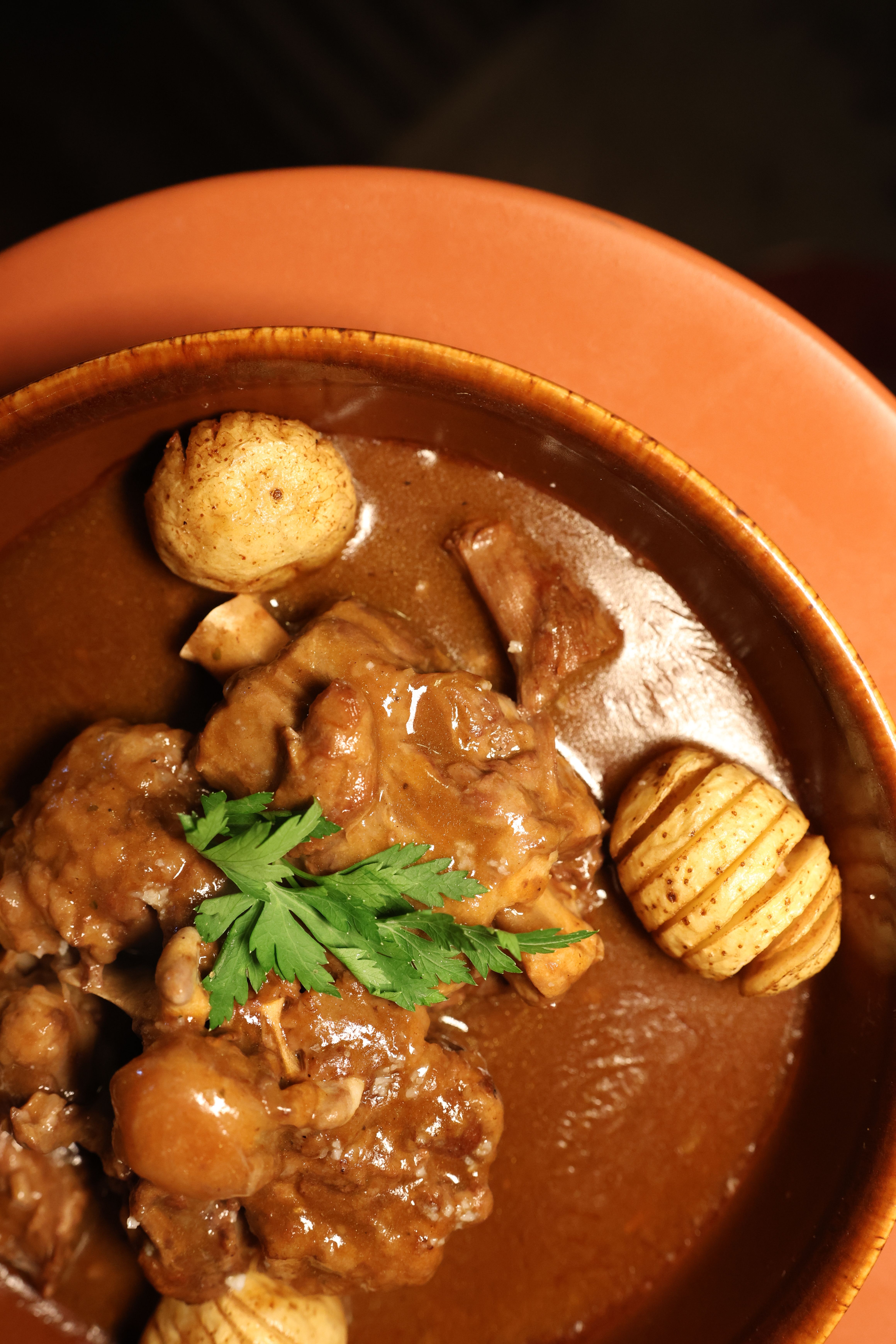
The diets react (see scores below)
Diet Ratings
Fatty, collagen-rich cut with zero carbs. Excellent for bone broth and provides high fat content ideal for ketosis. Whole food.
Oxtail is beef (cattle meat and bone), an animal product explicitly excluded from vegan diets.
Oxtail is an unprocessed muscle meat with collagen-rich connective tissue and marrow. It is nutrient-dense, available to hunter-gatherers, and fully paleo-compliant when prepared without additives.
Beef-based offal extremely high in saturated fat and collagen. While traditional in some cuisines, it contradicts Mediterranean emphasis on lean proteins and minimal saturated fat. Braising method typically adds additional fat.
Oxtail is a ruminant meat cut rich in collagen, gelatin, and fat. Excellent for bone broth and slow cooking. High micronutrient density and ideal fatty acid profile. Minimal processing, pure animal product.
Oxtail is a whole, unprocessed meat cut fully compliant with Whole30. Excellent source of collagen and nutrients.
Oxtail is unprocessed beef with no FODMAP content. It is a pure protein and fat source, making it low-FODMAP at any reasonable serving size.
Oxtail is extremely fatty (11-15g saturated fat per 3oz) and high in cholesterol. Red meat with significant marbling. Typically braised with added sodium. Directly contradicts DASH limits on saturated fat and red meat.
Extremely high in saturated fat (20-30g per 3.5oz cooked). While providing protein, the fat-to-protein ratio is unfavorable for Zone macros. Requires excessive portioning reduction. Dr. Sears recommends avoiding fatty cuts of red meat.
Oxtail is a fatty beef cut with high saturated fat and arachidonic acid. Red meat, especially fatty cuts, is pro-inflammatory and should be avoided.
Oxtail is extremely fatty (20-25g fat per 3oz) with high collagen content that requires long, slow cooking producing a rich, heavy broth or stew. The high saturated fat content and dense texture make it unsuitable for GLP-1 patients. While protein is present (~15g per 3oz), the fat burden is prohibitive.
Nutritional profile
Six traits that cut across every diet.
Fiber & Plants
How much whole-plant food and fiber it delivers.
Healthy Fats
The quality of its fats (unsaturated, omega-3).
Whole / Unprocessed
How close it is to its natural, unprocessed form.
Gut Gentle
How easy it is on digestion (low FODMAP, few irritants).
Low Glycemic
How little it spikes your blood sugar.
Protein Density
How much protein it packs per calorie.
Controversy Index
Score range: 1–10/10. Higher controversy = more disagreement between diets.
Diet-Specific Tips for Oxtail
 Keto — 9/10
- Zero net carbs
- High saturated fat
- Collagen-rich
- Whole food
 Paleo — 9/10
- Unprocessed muscle meat
- Rich in collagen and marrow
- Available to Paleolithic humans
- High nutrient density
 Carnivore — 9/10
- Ruminant meat (beef)
- Collagen and gelatin-rich
- High fat content
- Ideal for bone broth
- Minimal processing
 Whole30 — 10/10
- Whole meat cut
- No processing
- No excluded ingredients
 Low-FODMAP — 9/10
- Unprocessed beef product
- High collagen and gelatin content
- No fermentable carbohydrates