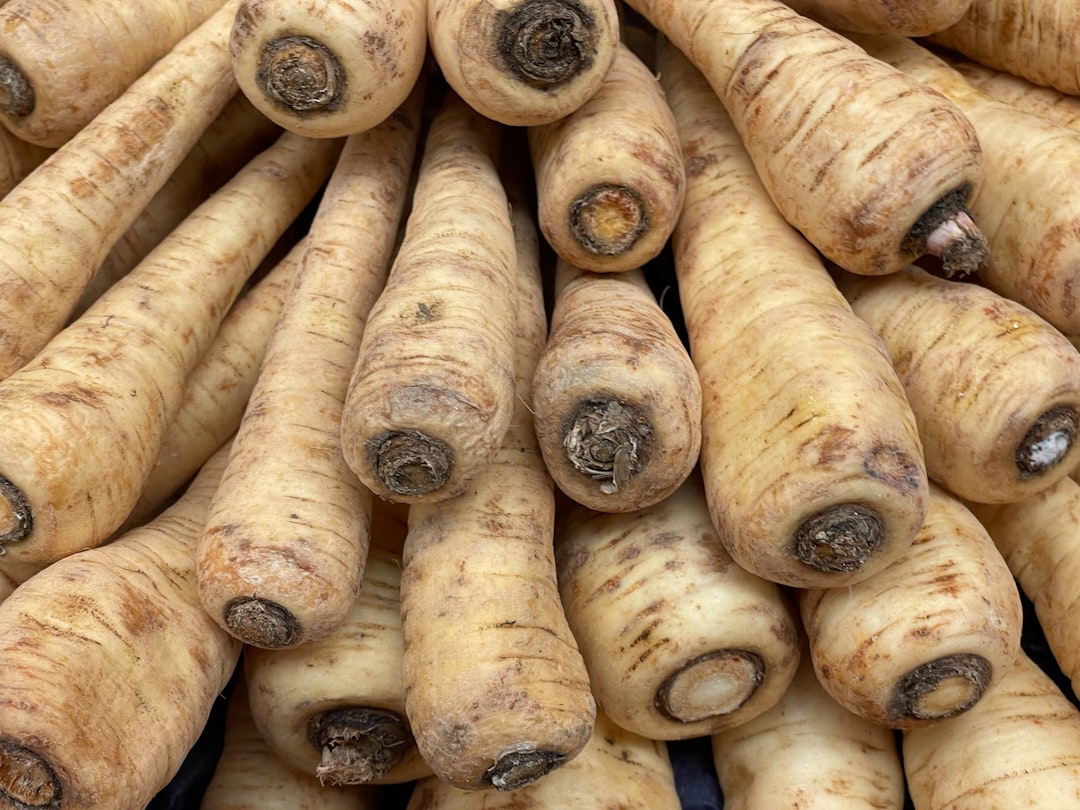
The diets react (see scores below)
Diet Ratings
Parsnips contain 13.2g net carbs per 100g, making them incompatible with keto. Even small portions (50g) would consume 6.6g of daily carb allowance, leaving minimal room for other foods.
Whole plant food, root vegetable with no animal products or derivatives. Good source of fiber and vitamins.
Root vegetable available to hunter-gatherers. Moderate carbohydrate content but acceptable within paleo framework. Nutrient-dense and unprocessed.
Root vegetable with higher carbohydrate and natural sugar content than other vegetables. Acceptable in moderation as part of vegetable-based meals, but not a core staple. Portion control recommended.
Some Mediterranean diet practitioners accept parsnips as traditional root vegetables in Mediterranean regions, particularly in winter preparations, viewing them similarly to turnips.
Root vegetable derived from plants. High in carbohydrates and plant compounds. Incompatible with carnivore diet's exclusive animal product requirement.
Root vegetable with no excluded ingredients. Whole, unprocessed, and explicitly compliant with Whole30.
Parsnip contains moderate fructans and is portion-dependent. Monash University indicates low-FODMAP status only at restricted serving sizes (approximately 80g or 1/2 cup).
Monash University testing shows parsnip becomes high-FODMAP at larger portions (>80g). Some practitioners may recommend avoidance during strict elimination phase due to fructan content.
Root vegetable with higher natural sugar content and carbohydrates than other non-starchy vegetables. Low sodium and contains potassium, but portion control recommended due to caloric density.
Root vegetable with higher net carbs (~17g per 100g) and moderate glycemic index (~52). Can be used in Zone meals but requires careful portioning and should not be a primary vegetable choice. Better alternatives exist.
Root vegetable with moderate antioxidants but higher carbohydrate and glycemic load compared to leafy greens. Contains some polyphenols but less anti-inflammatory density than emphasized vegetables. Acceptable in moderation.
Some anti-inflammatory authorities view parsnips neutrally as part of whole vegetable diversity. Glycemic impact varies by preparation method.
Root vegetable with decent fiber and water content, but higher in natural sugars and calories than other non-starchy vegetables. Acceptable in moderation but less nutrient-dense per calorie than leafy greens or cruciferous vegetables.
Nutritional profile
Six traits that cut across every diet.
Fiber & Plants
How much whole-plant food and fiber it delivers.
Healthy Fats
The quality of its fats (unsaturated, omega-3).
Whole / Unprocessed
How close it is to its natural, unprocessed form.
Gut Gentle
How easy it is on digestion (low FODMAP, few irritants).
Low Glycemic
How little it spikes your blood sugar.
Protein Density
How much protein it packs per calorie.
Controversy Index
Score range: 1–10/10. Higher controversy = more disagreement between diets.
Diet-Specific Tips for Parsnip
 Vegan — 9/10
- 100% plant-based
- Whole food
- No processing
- Root vegetable
 Paleo — 8/10
- Root vegetable
- Moderate carbohydrate
- Vitamin C and folate
- No anti-nutrients
 Mediterranean — 6/10
- higher natural sugar content
- moderate glycemic index
- traditional in some Mediterranean regions
- portion control important
 Whole30 — 10/10
- Root vegetable
- No excluded ingredients
- Whole food
 Low-FODMAP — 5/10
- Moderate fructans
- Portion-dependent
- Root vegetable
- Serving size critical
 DASH — 6/10
- Low sodium
- Higher carbohydrate content
- Moderate potassium
- Calorie-dense for a vegetable
 Zone — 5/10
- Higher carb content than preferred vegetables
- Moderate glycemic index
- Starchy root vegetable
- Requires strict portion control
 Anti-Inflammatory — 5/10
- Moderate glycemic load
- Some polyphenols
- Higher carbohydrate density
- Fiber present
- Low omega-6
 GLP-1 Friendly — 5/10
- moderate fiber
- higher natural sugar content
- higher calorie density than leafy greens
- easy to digest