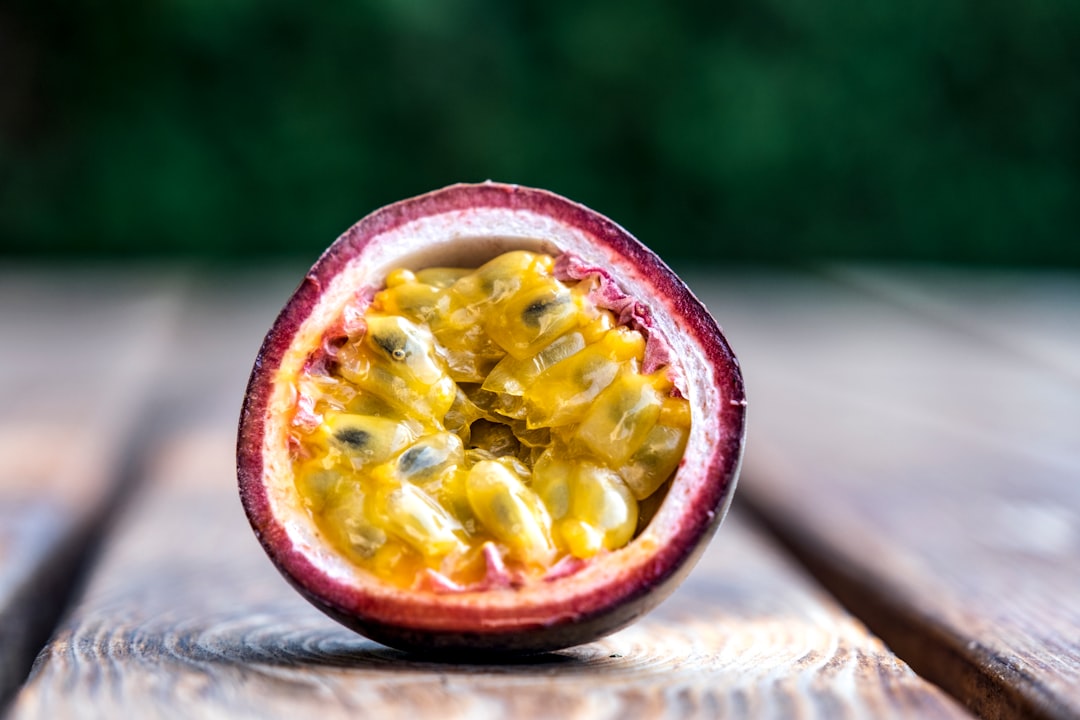
The diets react (see scores below)
Diet Ratings
One passion fruit contains approximately 2g net carbs with minimal fat. The low carb count allows small portions within keto macros, but the minimal nutritional density and lack of fat make it a lower-priority choice compared to other approved foods.
Strict keto practitioners may avoid passion fruit entirely due to its fruit classification and natural sugar content, preferring zero-tolerance for all fruits regardless of carb count.
Whole plant fruit with no animal products or derivatives. Nutrient-dense and minimally processed.
Whole tropical fruit available to ancient humans. High in fiber, vitamin C, and antioxidants. Low sugar relative to other fruits. Unprocessed natural food.
Whole fruit with high fiber, vitamin C, and antioxidants. Nutrient-dense with low calorie content. Fits Mediterranean emphasis on whole fruits despite tropical origin.
Passion fruit is a plant-derived fruit with sugars and carbohydrates. Excluded from carnivore diet.
Whole fruit with no added ingredients. Naturally compliant as a fruit.
Monash University data suggests passion fruit is low-FODMAP at restricted portions (approximately 2 tablespoons or 30g seeds). Larger servings may exceed FODMAP thresholds due to fructose content.
Clinical FODMAP practitioners may recommend stricter portion control or avoidance during elimination phase due to concentrated fructose in seeds.
Excellent DASH fruit. Very low sodium, high potassium, excellent fiber content, rich in antioxidants. Small portion size naturally limits intake.
Low glycemic index, high in fiber and polyphenols. One fruit (~9g carbs, 2g fiber = 7g net carbs) fits perfectly into Zone carb block. Excellent anti-inflammatory profile. Sears endorses low-glycemic fruits; passion fruit exemplifies this category.
Excellent polyphenol content, particularly piceatannol. High fiber relative to sugar. Strong antioxidant profile with demonstrated anti-inflammatory compounds. Low glycemic impact.
Excellent fiber content (10.4g per 100g) supports digestion and prevents constipation. Moderate natural sugars (11.2g per 100g) balanced by fiber. High water content (73%) aids hydration. Low calorie density (97 cal per 100g) with good nutrient density. Portion-friendly and easy to digest. Protein is low (2.2g per 100g) but acceptable as a side/snack with protein-rich meal.
Nutritional profile
Six traits that cut across every diet.
Fiber & Plants
How much whole-plant food and fiber it delivers.
Healthy Fats
The quality of its fats (unsaturated, omega-3).
Whole / Unprocessed
How close it is to its natural, unprocessed form.
Gut Gentle
How easy it is on digestion (low FODMAP, few irritants).
Low Glycemic
How little it spikes your blood sugar.
Protein Density
How much protein it packs per calorie.
Controversy Index
Score range: 1–9/10. Higher controversy = more disagreement between diets.
Diet-Specific Tips for Passion fruit
 Keto — 5/10
- 2g net carbs per fruit
- Very small portion size
- Minimal fat content
- High fiber relative to carbs
- Portion-dependent compatibility
 Vegan — 9/10
- 100% plant-based
- Whole food
- No processing required
 Paleo — 8/10
- Whole fruit
- High fiber
- Low sugar relative to fruit
- Antioxidant-rich
 Mediterranean — 7/10
- high fiber content
- antioxidant-rich
- low calorie
- whole fruit
 Whole30 — 9/10
- Whole fruit
- No added sugar
- Natural carbohydrates
 Low-FODMAP — 5/10
- Concentrated fructose in seeds
- Portion-dependent FODMAP status
- Limited Monash testing data
 DASH — 8/10
- Very low sodium
- High potassium
- Excellent fiber
- Rich in antioxidants
- Small natural portion
 Zone — 8/10
- low glycemic index
- high fiber content
- polyphenol-rich
- ideal carb block size
 Anti-Inflammatory — 8/10
- Piceatannol polyphenol
- High fiber-to-sugar ratio
- Antioxidant compounds
- Low glycemic index
 GLP-1 Friendly — 7/10
- high fiber
- high water content
- low calorie density
- good nutrient density
- easy to digest
- portion-friendly