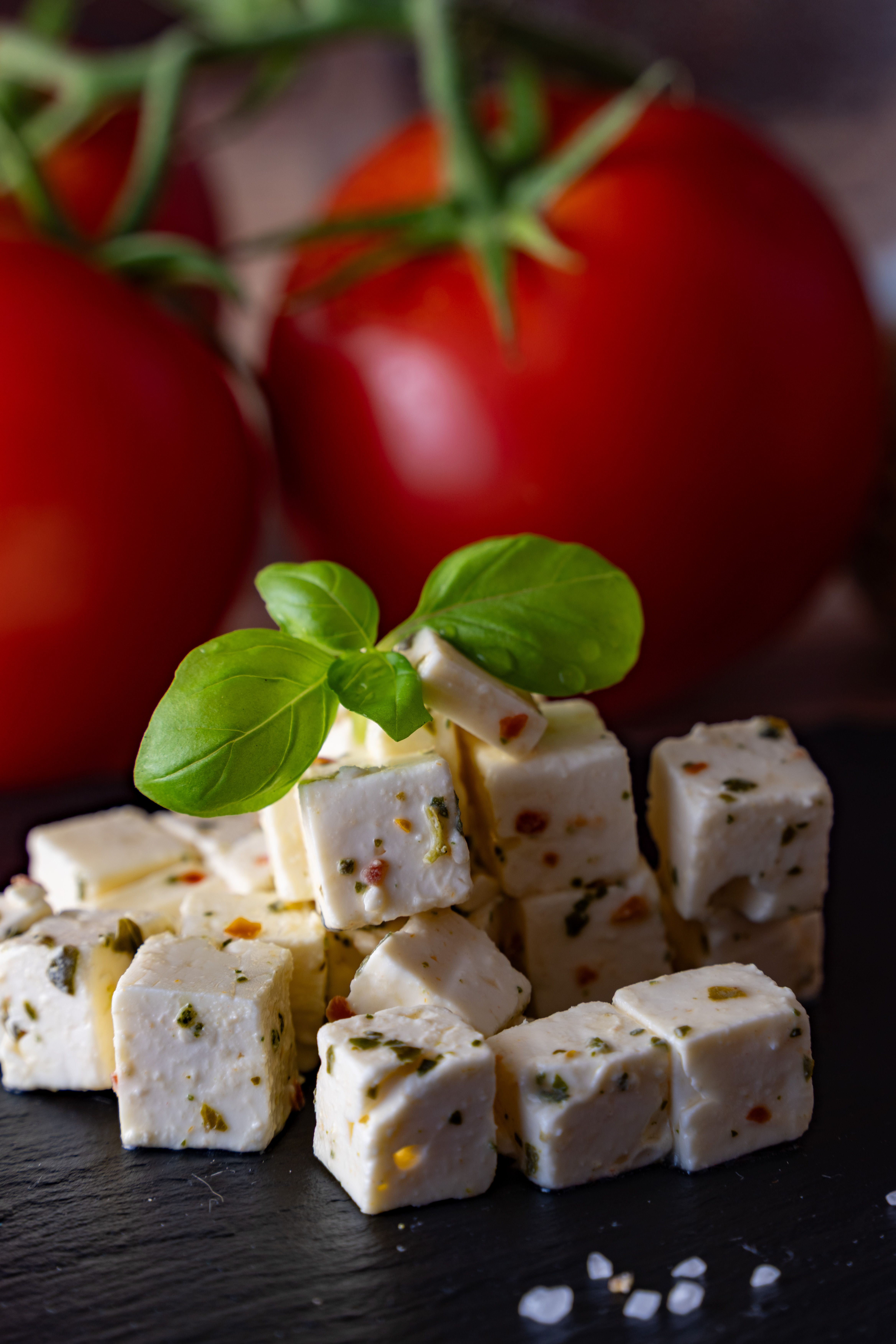
The diets react (see scores below)
Diet Ratings
Full-fat cheese with minimal net carbs (0.4g per oz). High fat content supports ketosis. No added sugars in standard varieties.
Cheese is a dairy product derived from animal milk, making it incompatible with vegan diet principles.
Dairy is excluded from paleo diet. Cheese contains lactose and casein, which are not available to Paleolithic humans and are inflammatory for many practitioners.
Cheese is acceptable in moderation per Mediterranean diet, but pepper jack is high in saturated fat and sodium. Traditional Mediterranean cheeses like feta, goat, and ricotta are preferred. Pepper jack's processing and flavor profile make it less aligned with traditional Mediterranean choices.
Full-fat cheese is animal-derived and acceptable to most carnivore practitioners, but pepper jack contains added peppers (plant-derived spice) and often additives. The spice content violates strict carnivore principles, though many practitioners consume it.
Strict carnivore and Lion Diet adherents exclude all spiced cheeses due to plant-derived pepper content. Some practitioners accept it as a minor deviation if the cheese itself is high-quality and minimally processed.
Cheese is explicitly excluded from Whole30. Dairy products including all cheese varieties are not permitted during the 30-day elimination period.
Hard cheese is low-FODMAP. Pepper jack contains capsaicin from peppers, which are low-FODMAP. No lactose concerns in aged cheese due to fermentation.
Full-fat cheese high in saturated fat (6g per oz) and sodium (150-200mg per oz). DASH guidelines limit saturated fat and recommend low-fat dairy. Acceptable occasionally in small portions.
Cheese provides protein and fat but is calorie-dense and high in saturated fat. Pepper jack specifically contains added peppers (minimal carbs) but the high saturated fat content requires careful portioning to maintain Zone ratios. Works as a fat block but not ideal for monounsaturated fat preference.
Full-fat cheese is high in saturated fat and omega-6 fatty acids, promoting inflammation. Pepper jack offers some capsaicin from peppers, but this modest benefit does not offset the inflammatory fat profile. Should be used sparingly as a flavoring rather than a primary food.
Moderate protein (7g per oz) but high saturated fat (6g per oz) and calorie-dense. The spice may trigger reflux/nausea in some GLP-1 patients. Works as a small flavor accent but not as a primary protein source.
Nutritional profile
Six traits that cut across every diet.
Fiber & Plants
How much whole-plant food and fiber it delivers.
Healthy Fats
The quality of its fats (unsaturated, omega-3).
Whole / Unprocessed
How close it is to its natural, unprocessed form.
Gut Gentle
How easy it is on digestion (low FODMAP, few irritants).
Low Glycemic
How little it spikes your blood sugar.
Protein Density
How much protein it packs per calorie.
Controversy Index
Score range: 1–8/10. Higher controversy = more disagreement between diets.
Diet-Specific Tips for Pepper jack cheese
 Keto — 8/10
- 0.4g net carbs per ounce
- High saturated fat
- No added sugars
- Whole food
 Mediterranean — 4/10
- high saturated fat content
- high sodium
- processed cheese variety
- not traditional Mediterranean cheese
 Carnivore — 5/10
- animal-derived base
- contains plant-derived peppers
- processed with additives
- full-fat dairy
 Low-FODMAP — 8/10
- Aged cheese has minimal lactose
- Peppers are low-FODMAP
- No onion or garlic in standard pepper jack
 DASH — 4/10
- High saturated fat
- Moderate sodium
- Full-fat dairy
- Limited portion control needed
 Zone — 5/10
- High saturated fat (not monounsaturated preference)
- Minimal carbs from peppers
- Protein present but fat-heavy
- Portion control critical
 Anti-Inflammatory — 4/10
- High saturated fat content
- High omega-6 ratio
- Capsaicin from peppers provides minor anti-inflammatory benefit
- Calorie-dense
 GLP-1 Friendly — 5/10
- high saturated fat
- moderate protein density
- potential reflux trigger
- calorie-dense