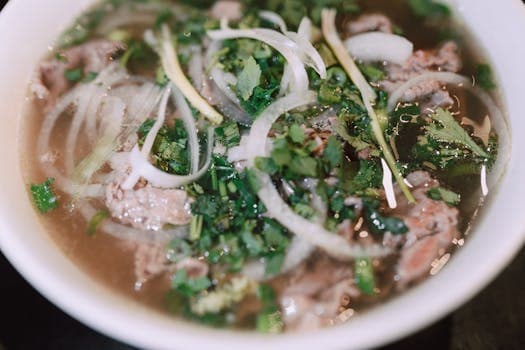
Diet Ratings
Beef pho provides excellent protein and fat from beef and broth, with minimal carbs from vegetables. A typical bowl contains 5-10g net carbs from noodles and vegetables. Can be made fully keto by requesting no noodles.
Contains beef (red meat) and broth made from animal bones. Both are clear animal products prohibited in vegan diet.
Beef broth is excellent, spices are approved, but rice noodles are a grain. The broth-based preparation is paleo-friendly; the noodle component is the primary concern.
iSome paleo practitioners suggest eating pho without noodles or with vegetable noodle substitutes, which would rate it 8-9. The broth itself is highly paleo-compliant.
Beef pho contains red meat and is typically prepared with refined noodles. However, the broth-based preparation with vegetables and herbs has some merit. Acceptable occasionally but not a Mediterranean staple.
iSome Mediterranean diet researchers view pho's vegetable-rich broth and minimal added fats as acceptable when beef consumption is limited to occasional servings, particularly in Mediterranean regions with Asian culinary influences.
Rice noodles (plant), broth base contains spices and often sugar, served with fresh herbs and vegetables (plants). While beef and bone broth are acceptable, noodles and vegetable accompaniments violate carnivore diet.
Broth is typically compliant (beef, water, spices). Beef is compliant. Rice noodles are a grain (excluded). Vegetables and herbs are compliant. The noodles are the primary issue, but broth and protein are solid.
iOfficial Whole30 excludes grains, including rice noodles. However, some community members argue that requesting pho without noodles (broth, beef, vegetables only) honors the spirit of the program. Others strictly avoid due to grain content.
Pho broth is made by simmering beef bones with garlic, onion, ginger, and star anise for hours. Garlic and onion are high-FODMAP and infuse the entire broth. Even though ginger and star anise are low-FODMAP, the garlic/onion content makes this unsuitable.
Broth-based with vegetables is positive. However, beef is red meat (limited in DASH), and broth sodium is typically high (1000+ mg per bowl). Noodles are refined. Acceptable occasionally with low-sodium broth.
iUpdated clinical interpretation suggests pho's high sodium content from traditional broth preparation makes it problematic for hypertension management, despite vegetable benefits.
Broth is anti-inflammatory; rice noodles are high-glycemic; beef protein is present but often fatty cuts. Broth-heavy nature means carbs concentrated in noodles. Requires noodle portion restriction and vegetable/herb maximization.
Broth-based soups have anti-inflammatory potential (collagen, minerals). However, beef is pro-inflammatory (arachidonic acid). Refined rice noodles lack fiber. Broth quality varies; restaurant versions often contain MSG and high sodium. Fresh herbs (basil, cilantro) and lime add antioxidants but don't offset beef's inflammatory profile.
iSome experts emphasize bone broth's collagen and gelatin as anti-inflammatory, potentially offsetting beef concerns. Pho with minimal beef and maximum vegetables/herbs can score 6-7.
Pho is a broth-based soup with moderate protein (8-12g per bowl) and high water content, which supports hydration. The broth is typically low in fat. However, beef pho can contain fatty cuts, and the large volume may be difficult for some GLP-1 patients to consume. The aromatic spices are generally well-tolerated. Lean beef versions are preferable.
Controversy Index
Score range: 1–6/10. Higher controversy = more disagreement between diets.