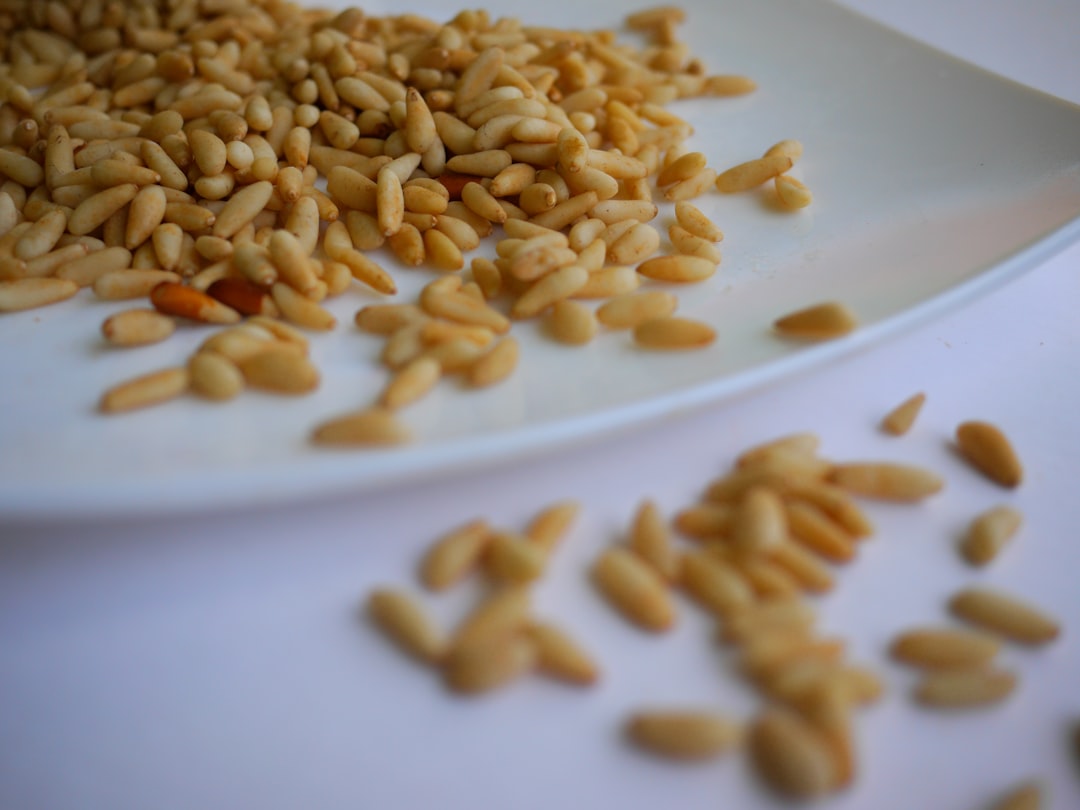
The diets react (see scores below)
Diet Ratings
Pine nuts are low in net carbs (~4g per oz), very high in fat (88% of calories), and provide excellent satiety. Expensive but keto-compatible.
Whole plant-based seeds from pine cones. No animal products or derivatives.
Pine nuts are whole, unprocessed nuts available to hunter-gatherers. Rich in minerals and healthy fats. No processing concerns or anti-nutrients. Universally accepted in paleo diet.
Pine nuts are iconic Mediterranean ingredients, particularly in Italian and Spanish cuisines. Excellent source of healthy fats, minerals, and traditionally used in pesto and Mediterranean dishes.
Pine nuts are plant-derived seeds from conifer trees. Carnivore diet excludes all nuts, seeds, and plant foods without exception.
Pine nuts are whole tree nuts with no excluded ingredients. They are explicitly allowed on Whole30 as a natural fat and protein source.
Pine nuts are low in FODMAPs and not identified as problematic by Monash University. Standard serving sizes are well-tolerated during elimination phase.
Nuts are explicitly encouraged in DASH diet. Pine nuts provide magnesium, potassium, unsaturated fats, and fiber. Naturally low in sodium. Supports DASH nutrient targets.
Pine nuts are ~90% fat but contain significant polyunsaturated fat (~35% linoleic acid), which is omega-6 heavy. While they provide some monounsaturated fat and polyphenols, the high omega-6 content conflicts with Zone anti-inflammatory principles. Usable in moderation but not preferred over monounsaturated-dominant nuts.
Pine nuts contain polyphenols, vitamin E, and magnesium. Predominantly monounsaturated fat profile with modest omega-6 content. Whole food form supports anti-inflammatory diet principles.
Pine nuts are extremely calorie-dense (191 calories per ounce) with 19g fat per ounce and only 4g protein. The high fat-to-protein ratio and small serving size needed to reach satiety make them poor GLP-1 companions. Easy to overconsume despite reduced appetite.
Nutritional profile
Six traits that cut across every diet.
Fiber & Plants
How much whole-plant food and fiber it delivers.
Healthy Fats
The quality of its fats (unsaturated, omega-3).
Whole / Unprocessed
How close it is to its natural, unprocessed form.
Gut Gentle
How easy it is on digestion (low FODMAP, few irritants).
Low Glycemic
How little it spikes your blood sugar.
Protein Density
How much protein it packs per calorie.
Controversy Index
Score range: 1–9/10. Higher controversy = more disagreement between diets.
Diet-Specific Tips for Pine nuts
 Keto — 8/10
- 4g net carbs per ounce
- 88% fat content
- High in arginine and magnesium
 Vegan — 9/10
- 100% plant-based
- Whole food
- Nutrient-dense
- No processing required
 Paleo — 8/10
- Whole, unprocessed nut
- Nutrient-dense
- Available to Paleolithic humans
- Minimal anti-nutrients
 Mediterranean — 9/10
- Traditional Mediterranean ingredient
- High in monounsaturated fats
- Used in classic Mediterranean dishes
- Rich in antioxidants
 Whole30 — 9/10
- Whole food
- Tree nut
- No excluded ingredients
 Low-FODMAP — 8/10
- Not listed as high-FODMAP by Monash
- Low fructan and polyol content
- Safe at typical serving sizes
 DASH — 8/10
- Rich in magnesium
- Good potassium content
- Unsaturated fat profile
- Low sodium
- Nutrient-dense
 Zone — 6/10
- High polyunsaturated fat (omega-6 heavy)
- Expensive and calorie-dense
- Some polyphenols present
- Portion control critical
 Anti-Inflammatory — 7/10
- Polyphenols
- Monounsaturated fats
- Vitamin E
- Magnesium