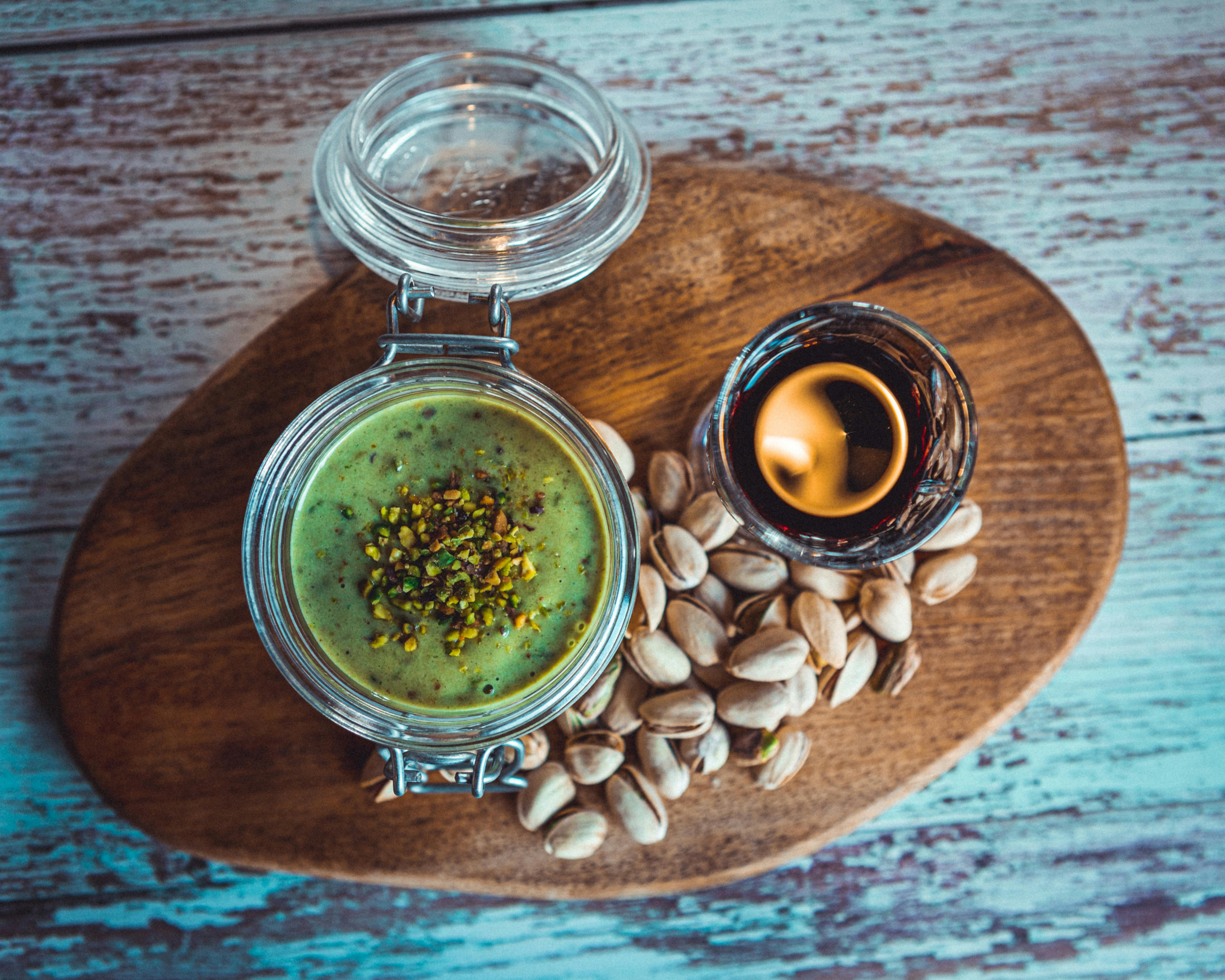
Pistachio butter
Rated by 11 diets
The diets react (see scores below)
Diet Ratings
Pure pistachio butter contains approximately 5-6g net carbs per 2 tablespoons with 16g fat. Consumable in small portions but carb-dense compared to other nut butters. Many commercial versions contain added sugars.
Strict keto practitioners avoid pistachio butter due to higher carb content relative to macadamia or pecan butter, preferring lower-carb alternatives.
Ground nuts, plant-based whole food. No animal products or derivatives when pure pistachio.
Nuts are paleo-approved. Pistachio butter (ground pistachios) is unprocessed and nutrient-dense. Verify no added oils (seed oils) or sugar in commercial versions.
Nuts are Mediterranean staple, eaten multiple times daily. Pistachios provide healthy monounsaturated fats, protein, and fiber. Minimal processing if pure nut butter.
Plant-derived nut butter. Seeds/nuts are explicitly excluded from carnivore diet. No animal component. Violates core carnivore principle.
Pistachio butter is a nut butter made from tree nuts, which are compliant on Whole30. As long as it contains no added sugar or excluded ingredients, it is approved.
Pistachios contain moderate polyols (sorbitol). Monash rates pistachios as low-FODMAP only at 1 ounce (23 nuts); butter form concentrates this. Safe only at restricted portions.
Monash University limits pistachios to 1 oz; clinical practitioners note pistachio butter concentrates polyols further, recommending even smaller portions or avoidance during strict elimination.
Nutrient-dense with monounsaturated fats, potassium, magnesium, and fiber. However, calorie-dense and often contains added sodium and sugar. DASH approves nuts/seeds but portion control essential. 2 tablespoon serving recommended.
Pistachio butter is monounsaturated-fat dominant (~6g per tbsp, 60% MUFA), contains polyphenols, and provides plant protein (3g per tbsp). Ideal Zone fat source. Lower in saturated fat than most nut butters. Portion-controlled use (1-1.5 tbsp) fits fat block requirements perfectly.
Pistachios are rich in polyphenols, antioxidants, and contain favorable omega-6 to omega-3 ratio. High in vitamin E and minerals. Nut butters align with anti-inflammatory principles when unsweetened and minimally processed.
Moderate protein (7g per 2 tbsp) but high fat (16g per 2 tbsp, mostly unsaturated). While unsaturated fats are preferred over saturated, the caloric density and fat content still trigger GI distress in some GLP-1 patients. Portion control is essential and difficult.
Some GLP-1 nutrition experts recommend nut butters in small amounts (1 tbsp) as a source of healthy fats and protein, arguing that unsaturated fats are better tolerated than saturated fats. Others avoid them due to high caloric density and risk of overconsumption triggering nausea.
Nutritional profile
Six traits that cut across every diet.
Fiber & Plants
How much whole-plant food and fiber it delivers.
Healthy Fats
The quality of its fats (unsaturated, omega-3).
Whole / Unprocessed
How close it is to its natural, unprocessed form.
Gut Gentle
How easy it is on digestion (low FODMAP, few irritants).
Low Glycemic
How little it spikes your blood sugar.
Protein Density
How much protein it packs per calorie.
Controversy Index
Score range: 1–9/10. Higher controversy = more disagreement between diets.
Diet-Specific Tips for Pistachio butter
 Keto — 5/10
- 5-6g net carbs per 2 tbsp
- Often contains added sugars
- Moderate fat content
- Portion control essential
 Vegan — 9/10
- nut-based
- whole food
- check for added ingredients
 Paleo — 8/10
- nut-based
- unprocessed form preferred
- check for added seed oils
- portion control recommended
 Mediterranean — 8/10
- nut-based
- healthy fats
- high protein and fiber
- minimal processing preferred
 Whole30 — 8/10
- Tree nut (pistachio)
- Whole and minimally processed
- Verify no added sugar or excluded additives
 Low-FODMAP — 4/10
- Polyol content (sorbitol)
- Concentrated nut product
- 1 tablespoon maximum
 DASH — 6/10
- Monounsaturated fats (beneficial)
- High potassium and magnesium
- Calorie-dense
- Often contains added sodium/sugar
- Portion control critical
 Zone — 8/10
- Monounsaturated fat rich
- Polyphenol content
- Plant-based protein
- Anti-inflammatory
- Portion-friendly
 Anti-Inflammatory — 8/10
- high polyphenols and antioxidants
- favorable fatty acid profile
- vitamin E and minerals
- whole food nut butter
- must verify no added sugars
 GLP-1 Friendly — 5/10
- moderate protein
- high fat (unsaturated)
- high caloric density
- portion-dependent
- may trigger nausea