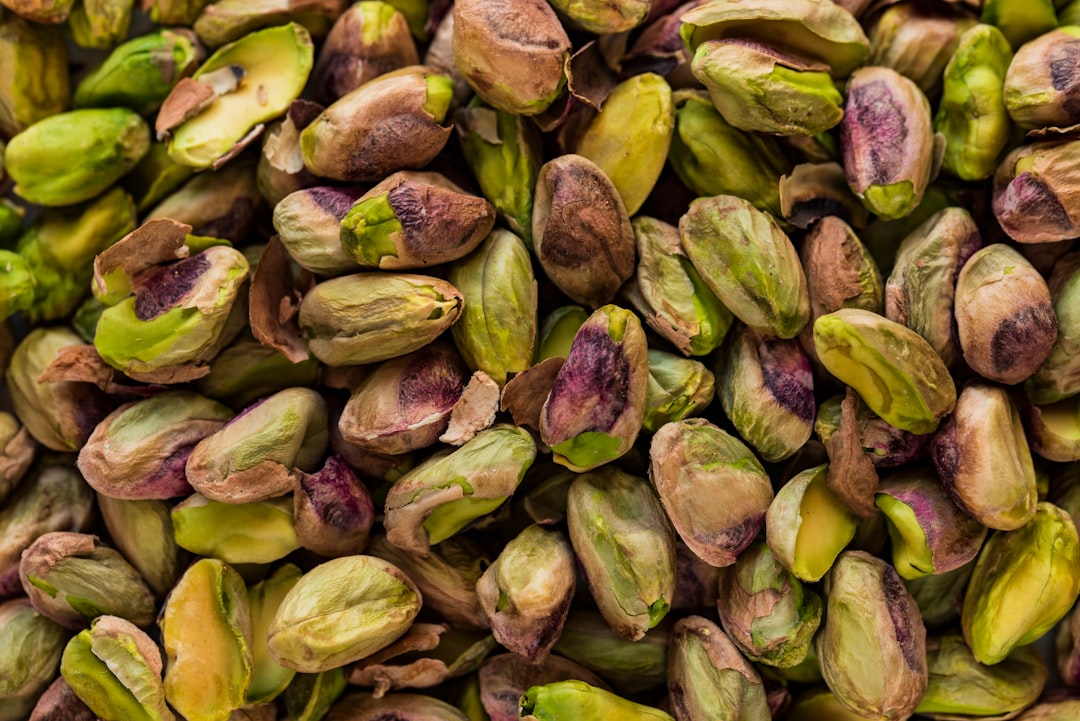
The diets react (see scores below)
Diet Ratings
Pistachios contain ~6g net carbs per ounce (49 nuts), higher than almonds or walnuts. While keto-compatible in small portions, they're less ideal than lower-carb nuts. Often salted/flavored versions add sodium and carbs.
Whole plant food, excellent source of protein, healthy fats, and antioxidants. Minimally processed. Highly nutritious and fully plant-based.
Pistachios are whole nuts with good nutrient density and a reasonable omega-3 to omega-6 ratio. They are unprocessed and ancestral. Portion control is recommended due to moderate carbohydrate content and caloric density.
Traditional Mediterranean nut, particularly in Middle Eastern and Southern Mediterranean regions. Rich in healthy fats, fiber, and antioxidants. Strongly encouraged as daily snack or ingredient. Core Mediterranean food.
Tree nut and plant seed. Plant-derived and explicitly excluded from carnivore diet along with all nuts and seeds.
Pistachios are whole, unprocessed tree nuts explicitly allowed on Whole30. They provide protein, fiber, and healthy fats. No excluded ingredients.
Pistachios are high in FODMAPs due to fructans and GOS content. Monash testing shows even small portions (10 nuts/14g) exceed FODMAP thresholds.
Good source of monounsaturated fats, fiber, potassium, and magnesium. Lower in saturated fat. Supports DASH guidelines. Often salted, so choose unsalted varieties to minimize sodium.
Pistachios contain monounsaturated fat and moderate carbs (~8g per ounce), requiring careful portioning. Approximately 0.75 ounce (49 kernels) = 1 fat block + carb contribution. While acceptable, the carb density is higher than almonds, making them less ideal for strict Zone balance. Good for variety.
Good source of polyphenols, antioxidants, and fiber. Contains lutein and zeaxanthin. Reasonable omega-6 to omega-3 ratio. Research supports anti-inflammatory and cardiovascular benefits. Solid whole food choice.
Pistachios offer 6g protein and 2.8g fiber per ounce with mostly unsaturated fats (13g per ounce). Lower in saturated fat than cashews or pecans. The act of shelling slows consumption, supporting satiety. Nutrient-dense with good vitamin E and potassium content. Portion-friendly at 1 ounce (~49 nuts).
Nutritional profile
Six traits that cut across every diet.
Fiber & Plants
How much whole-plant food and fiber it delivers.
Healthy Fats
The quality of its fats (unsaturated, omega-3).
Whole / Unprocessed
How close it is to its natural, unprocessed form.
Gut Gentle
How easy it is on digestion (low FODMAP, few irritants).
Low Glycemic
How little it spikes your blood sugar.
Protein Density
How much protein it packs per calorie.
Controversy Index
Score range: 1–9/10. Higher controversy = more disagreement between diets.
Diet-Specific Tips for Pistachios
 Keto — 5/10
- 6g net carbs per ounce
- Higher carb content than preferred nuts
- Often high in sodium
- Portion control critical
 Vegan — 9/10
- Whole food
- High protein content
- Antioxidant-rich
- Healthy fat composition
 Paleo — 8/10
- whole unprocessed nut
- ancestral food
- nutrient-dense
- moderate carbohydrate content
 Mediterranean — 8/10
- Traditional Mediterranean nut
- Healthy monounsaturated fats
- High in antioxidants
- Eaten regularly in Mediterranean regions
 Whole30 — 9/10
- Whole tree nut
- No excluded ingredients
- Good protein source
 DASH — 8/10
- Monounsaturated fats
- High potassium
- Good fiber source
- Magnesium-rich
- Choose unsalted
 Zone — 6/10
- Monounsaturated fat dominant
- Moderate carb content
- Requires precise portioning
- Anti-inflammatory compounds
- Larger portion needed per fat block
 Anti-Inflammatory — 7/10
- Polyphenols
- Antioxidants
- Lutein and zeaxanthin
- Fiber
- Whole food
 GLP-1 Friendly — 7/10
- High protein density
- Good fiber
- Mostly unsaturated fats
- Portion-friendly
- Shelling slows consumption
- Supports satiety