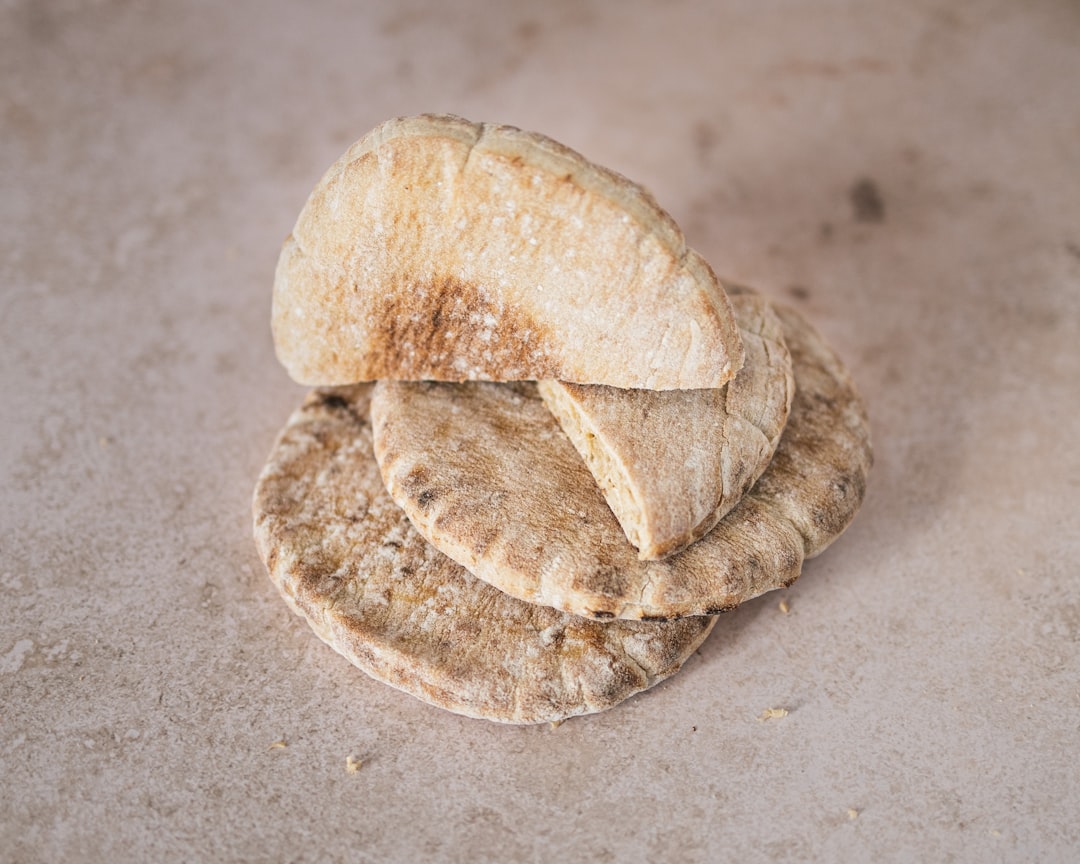
The diets react (see scores below)
Diet Ratings
A single pita bread contains 30-35g net carbs. Refined grain product with minimal fat; completely incompatible with ketogenic macronutrient targets.
Pita bread is often vegan (flour, water, yeast, salt, oil), but many commercial brands add dairy, eggs, or honey. Some use animal-derived dough conditioners. Ingredient verification is necessary.
Some vegans consider plain pita bread inherently vegan when made traditionally, while others avoid commercial versions due to frequent hidden animal products.
Pita bread is made from wheat flour and is a processed grain product. All grain-based breads are excluded from the paleo diet.
Whole wheat pita bread is a traditional staple across Mediterranean regions, particularly in Middle Eastern and Greek cuisines. When made from whole grains, it provides fiber and is typically eaten in reasonable portions. Excellent vehicle for Mediterranean foods like hummus, vegetables, and lean proteins.
Pita bread is a grain-based bread product made from wheat flour. It is plant-derived and incompatible with carnivore diet principles.
Pita bread is a grain-based baked good made from wheat flour. Both grains and baked goods are explicitly excluded from Whole30.
Pita bread is wheat-based and contains significant fructans. Monash University rates wheat pita as high-FODMAP at standard serving sizes (1 pita bread).
Refined grain pita contains 300-400mg sodium per bread. Whole wheat pita is preferable. Acceptable occasionally but not a core DASH staple due to sodium and refined grain content.
Pita bread is typically refined flour with moderate-high glycemic index (GI ~57-68). Whole wheat pita is better but still less ideal than vegetable carbs. Can be used in small portions (1/2 pita ≈ 1 carb block) but vegetables are preferred.
Some Zone practitioners accept pita as a convenient carb block, particularly whole wheat versions. However, Dr. Sears' core guidance emphasizes vegetable carbs as primary sources.
Standard pita is refined white flour with minimal anti-inflammatory properties. Whole wheat pita improves profile with fiber and polyphenols but still processed. Moderate glycemic response. Acceptable occasionally, especially whole grain varieties, but not a primary staple.
Pita bread (standard white or whole wheat) contains minimal protein (6g per pita) and moderate fiber (2g for whole wheat, <1g for white). It is calorie-dense relative to nutritional return and often consumed in larger portions. While it can serve as a vehicle for high-protein fillings, it is not an ideal standalone carbohydrate for GLP-1 patients.
Nutritional profile
Six traits that cut across every diet.
Fiber & Plants
How much whole-plant food and fiber it delivers.
Healthy Fats
The quality of its fats (unsaturated, omega-3).
Whole / Unprocessed
How close it is to its natural, unprocessed form.
Gut Gentle
How easy it is on digestion (low FODMAP, few irritants).
Low Glycemic
How little it spikes your blood sugar.
Protein Density
How much protein it packs per calorie.
Controversy Index
Score range: 1–8/10. Higher controversy = more disagreement between diets.
Diet-Specific Tips for Pita bread
 Vegan — 6/10
- Often vegan in traditional form
- Commercial versions may contain dairy
- Honey sometimes added
- Label verification important
 Mediterranean — 8/10
- Traditional Mediterranean staple
- Whole grain varieties available
- Reasonable portion sizes
- Versatile with Mediterranean foods
 DASH — 5/10
- High sodium content
- Refined grain unless whole wheat
- Low fiber in standard varieties
- Portion control essential
 Zone — 4/10
- Moderate-high glycemic index (57-68)
- Grain-based carb
- Whole wheat version preferable
- Portion control essential
 Anti-Inflammatory — 5/10
- refined grain (standard)
- moderate glycemic load
- low fiber (white)
- whole wheat variant better
 GLP-1 Friendly — 4/10
- Low protein
- Moderate fiber (whole wheat better)
- Calorie-dense for nutrient value
- Portion-sensitive
- Best used as a wrapper for protein