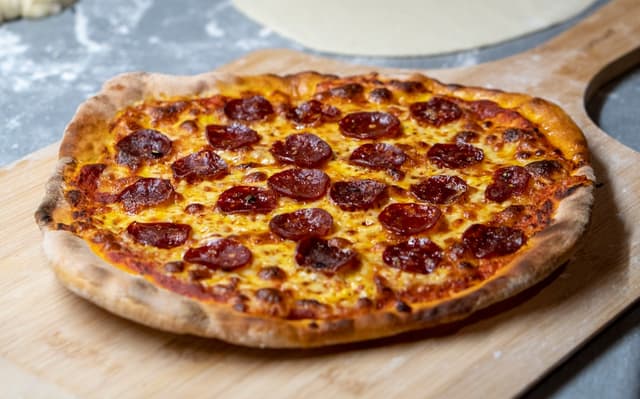
Diet Ratings
Depends on crust type. Thin crust: 15-25g net carbs per 2 slices. Thick crust: 30-40g. Pepperoni and cheese are keto-friendly. Crust is the limiting factor.
iSome keto practitioners avoid pizza entirely due to seed oils in dough and difficulty with portion control, preferring cauliflower crust alternatives.
Pepperoni is processed meat (pork/beef). Cheese is dairy. Crust may contain dairy or eggs. Multiple animal products.
Grain crust (excluded). Cheese is dairy (excluded). Pepperoni is processed meat with additives. Tomato sauce acceptable but overwhelmed by violations.
While pizza can be Mediterranean, commercial pepperoni pizza typically uses refined grain crust, processed pepperoni (cured red meat), and excessive cheese. High in saturated fat, sodium, and processed ingredients.
Crust is grain-based (plant product). While pepperoni and cheese are animal-derived, the primary component violates carnivore diet. Tomato sauce is plant-based.
Crust is grain-based, cheese is dairy, pepperoni is processed meat with nitrates/nitrites and often sugar.
Pizza crust is made from wheat flour, which is high in fructans. Even a single slice exceeds low-FODMAP fructan limits. Pepperoni and cheese are low-FODMAP, but the crust is the limiting factor.
High sodium (600-900mg per 2 slices), high saturated fat (cheese, pepperoni), refined grain crust. Processed meat (pepperoni) conflicts with DASH recommendations.
Refined flour crust is high-glycemic. Pepperoni is processed, omega-6 heavy, and high in saturated fat. Cheese adds saturated fat. Carb-to-protein ratio severely imbalanced. Anti-inflammatory profile poor.
Refined flour crust, processed pepperoni (cured meat with nitrates), full-fat cheese, and often high-omega-6 vegetable oils. Tomato sauce provides lycopene benefit, but overwhelmed by inflammatory components. High sodium and saturated fat.
Pizza combines multiple GLP-1 problem foods: high fat (cheese, pepperoni oil), refined carbohydrates (crust), and often high sodium. The greasy texture is particularly problematic for GLP-1 patients. While it contains some protein, the fat-to-protein ratio is unfavorable. The combination of fat and refined carbs reliably triggers nausea, bloating, and reflux in GLP-1 patients.
Controversy Index
Score range: 1–4/10. Higher controversy = more disagreement between diets.