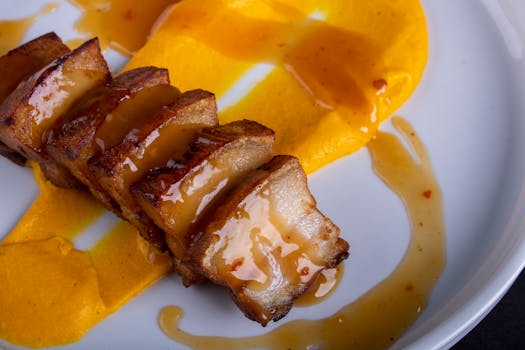
The diets react (see scores below)
Diet Ratings
Pork belly is nearly pure fat with minimal carbs (0g net carbs per 100g). Excellent fat-to-protein ratio aligns perfectly with keto macros. Whole, unprocessed food.
Pork belly is meat from a pig, a clear animal product that violates core vegan principles.
Unprocessed pork belly is a whole animal food available to hunter-gatherers. Rich in fat and protein, aligns with paleo principles of nose-to-tail eating.
Pork belly is extremely high in saturated fat and calories, contradicting Mediterranean diet principles which minimize fatty red/processed meats. It is not a traditional Mediterranean staple.
Pork belly is a fatty cut of pork with excellent fat-to-protein ratio, aligning with carnivore principles. Minimally processed when sourced fresh, providing complete animal nutrition.
Whole30 explicitly allows unprocessed meat. Pork belly is a whole cut of meat with no added ingredients.
Pure protein and fat with no carbohydrates. Contains no FODMAPs. Monash University confirms all unprocessed meats are low-FODMAP.
Pork belly is extremely high in saturated fat (>30% of calories) and total fat. Contains minimal lean protein relative to fat content. Directly contradicts DASH emphasis on lean meats and low saturated fat intake.
Pork belly is extremely high in saturated fat (>50% of calories from fat) and lacks the lean protein profile Zone demands. Even small portions create unfavorable macronutrient ratios incompatible with 40/30/30 targeting.
Pork belly is extremely high in saturated fat and omega-6 polyunsaturated fats with minimal omega-3 content. The high fat content and processing methods make it pro-inflammatory. Lacks the beneficial compounds found in plant-based anti-inflammatory foods.
Extremely high in saturated fat (>50% calories from fat), which directly worsens GLP-1 side effects like nausea, bloating, and reflux. Poor protein-to-fat ratio. Not nutrient-dense per calorie relative to lean alternatives.
Nutritional profile
Six traits that cut across every diet.
Fiber & Plants
How much whole-plant food and fiber it delivers.
Healthy Fats
The quality of its fats (unsaturated, omega-3).
Whole / Unprocessed
How close it is to its natural, unprocessed form.
Gut Gentle
How easy it is on digestion (low FODMAP, few irritants).
Low Glycemic
How little it spikes your blood sugar.
Protein Density
How much protein it packs per calorie.
Controversy Index
Score range: 1–9/10. Higher controversy = more disagreement between diets.
Diet-Specific Tips for Pork belly
 Keto — 9/10
- 0g net carbs
- High saturated fat content
- Unprocessed meat
- Excellent fat ratio
 Paleo — 8/10
- Unprocessed meat
- High fat content
- No additives or curing agents
 Carnivore — 9/10
- High fat content
- Minimal processing
- Complete amino acid profile
- Nutrient-dense
 Whole30 — 9/10
- Unprocessed meat
- No added sugar or excluded ingredients
- Whole food
 Low-FODMAP — 9/10
- No fermentable carbohydrates
- Unprocessed meat
- No additives with FODMAP content
Editor's Picks
As an Amazon Associate, FoodRef.ai earns from qualifying purchases. This does not affect our ratings.