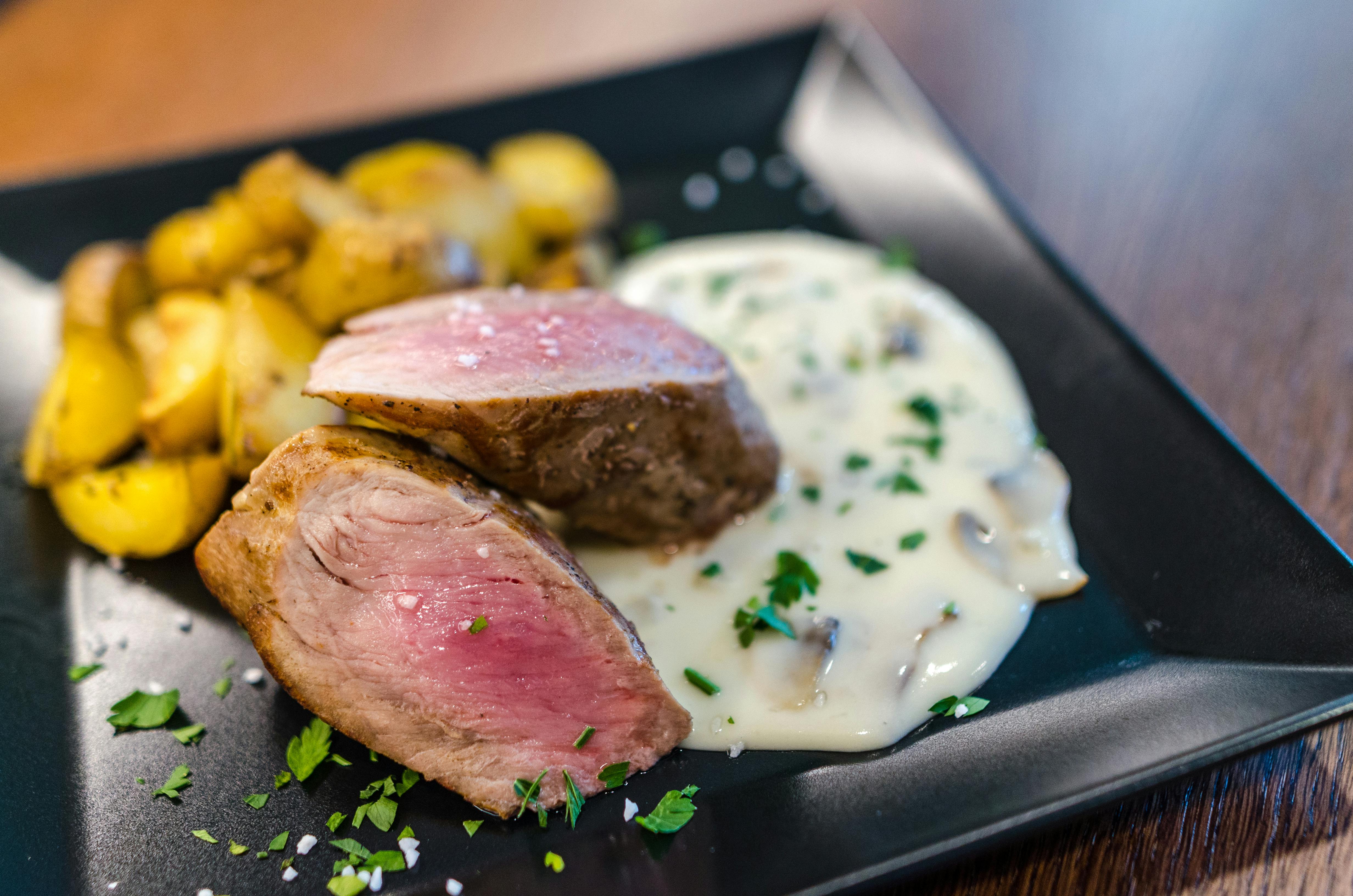
The diets react (see scores below)
Diet Ratings
Lean, high-quality protein with minimal carbs and healthy fat profile. Versatile and whole food. Fits perfectly within keto macros.
Pork is animal flesh, directly violating core vegan dietary principles.
Unprocessed pork tenderloin is a clean muscle meat available to hunter-gatherers. It is nutrient-dense, contains no grains, legumes, or additives when purchased as plain meat, and aligns with paleo principles.
Red meat should be limited to a few times per month. Pork tenderloin is leaner than other pork cuts but still falls under red meat category. Acceptable occasionally but not a dietary staple.
Pork is a fully approved carnivore meat. Tenderloin is a lean cut, which is less ideal than fattier cuts (ribeye, brisket) but still excellent. Pure, unprocessed pork with no additives meets all carnivore criteria.
Plain pork tenderloin is a whole, unprocessed meat product fully compliant with Whole30. No excluded ingredients.
Plain pork tenderloin is a lean protein with negligible FODMAP content. Monash University clearly rates unprocessed pork as low-FODMAP at all reasonable serving sizes.
Lean cut of pork with only 1.4g saturated fat per 3oz and minimal sodium when unseasoned. Excellent protein source (26g per 3oz). Aligns with DASH emphasis on lean meats. One of the leanest pork options available.
One of the leanest pork cuts available (~3g fat per 3.5oz). Provides ~26g protein per serving. Fits Zone protein requirements excellently with minimal saturated fat. Ideal for building balanced Zone meals.
Lean pork tenderloin is lower in saturated fat than other pork cuts but still contains moderate arachidonic acid. Can be included occasionally as part of a varied protein rotation, but not emphasized in anti-inflammatory diet.
Pork tenderloin is one of the leanest cuts of pork (~3-4g fat per 3oz cooked) with excellent protein content (~26g per 3oz). It's easy to digest, nutrient-dense per calorie, and works well in small portions. Prepare by grilling, baking, or pan-searing with minimal oil to maintain low fat profile.
Nutritional profile
Six traits that cut across every diet.
Fiber & Plants
How much whole-plant food and fiber it delivers.
Healthy Fats
The quality of its fats (unsaturated, omega-3).
Whole / Unprocessed
How close it is to its natural, unprocessed form.
Gut Gentle
How easy it is on digestion (low FODMAP, few irritants).
Low Glycemic
How little it spikes your blood sugar.
Protein Density
How much protein it packs per calorie.
Controversy Index
Score range: 1–10/10. Higher controversy = more disagreement between diets.
Diet-Specific Tips for Pork tenderloin
 Keto — 9/10
- Zero net carbs
- High protein
- Moderate fat
- Whole food
 Paleo — 9/10
- Unprocessed muscle meat
- Available to Paleolithic humans
- No additives or processing
- High-quality protein source
 Mediterranean — 5/10
- Red meat category
- Relatively lean cut
- Should be limited to few times monthly
- Portion control essential
 Carnivore — 8/10
- Unprocessed pork meat
- Lean cut (less fat than preferred)
- No additives or spices
 Whole30 — 10/10
- Whole meat cut
- No processing
- No excluded ingredients
 Low-FODMAP — 9/10
- Pure protein source
- No fermentable carbohydrates
- No additives in plain form
 DASH — 8/10
- Very lean (lowest fat pork cut)
- High protein content
- Low sodium when unseasoned
- Minimal saturated fat
 Zone — 8/10
- Very lean protein source
- Low saturated fat profile
- Excellent macronutrient fit
- Versatile preparation options
 Anti-Inflammatory — 5/10
- lean cut
- moderate saturated fat
- arachidonic acid present
- acceptable in moderation
 GLP-1 Friendly — 8/10
- very lean protein source
- high protein density
- easy to digest
- versatile preparation