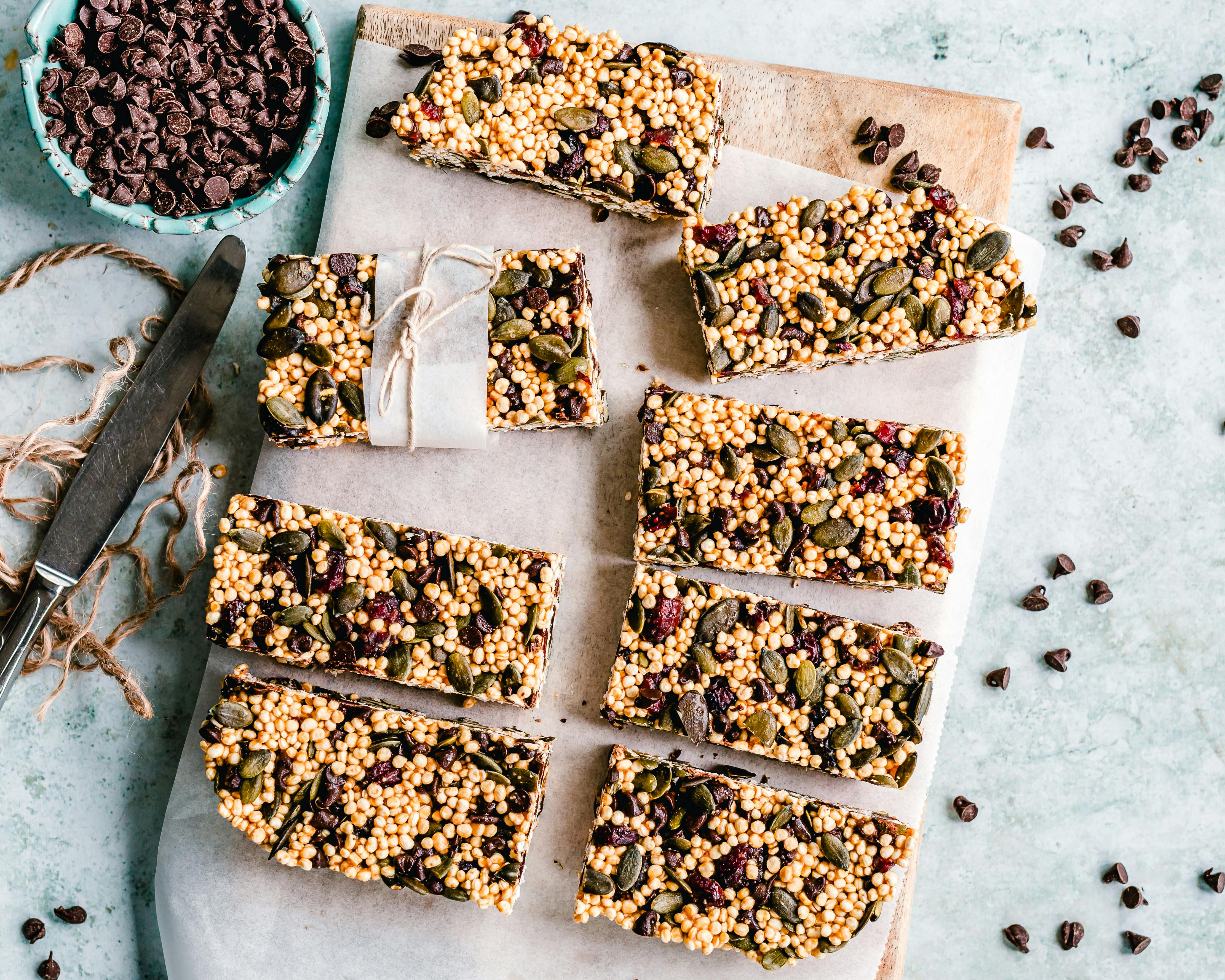
Protein bar (Quest)
Rated by 11 diets
The diets react (see scores below)
Diet Ratings
Quest bars contain 1-3g net carbs per bar with 20g protein and high fat. Specifically formulated for keto with sugar alcohols and fiber. Widely accepted in keto community.
Quest bars are technically vegan (no animal products), but heavily processed with sugar alcohols, artificial sweeteners, and synthetic ingredients. Whole-food vegans often avoid due to processing level.
Some pragmatic vegans accept Quest bars as convenient, ethical alternatives to animal-based protein sources, prioritizing animal welfare over whole-food purity.
Quest bars use paleo-compliant ingredients (whey protein, nuts, sugar alcohols) but are heavily processed. The processing and reliance on artificial sweeteners (sugar alcohols) contradicts paleo philosophy despite ingredient compliance.
Some flexible paleo practitioners accept Quest bars as a convenient protein source when whole foods aren't available, viewing the processing as acceptable for practical adherence.
Highly processed with artificial sweeteners and additives. While protein content aligns with moderate protein intake, the processing and ingredient list contradict Mediterranean principles favoring whole foods.
Some modern Mediterranean diet practitioners accept protein bars as convenient alternatives for those with high protein needs, though whole food sources remain preferred.
Contains whey protein (animal-derived) but includes plant-based sugar alcohols, fiber from plants, and various additives. Some carnivore practitioners consume these for convenience, but strict adherents avoid the plant-derived ingredients and processing.
Strict carnivore practitioners and Lion Diet followers reject Quest bars due to plant-derived fiber, sugar alcohols (erythritol, stevia), and processing. Meat-only advocates argue whole animal foods are superior.
Quest bars contain sugar alcohols and artificial sweeteners (erythritol, stevia), and often include processed ingredients that violate the whole-food spirit of Whole30. Additionally, they recreate baked goods/junk food.
Quest bars contain sugar alcohols (polyols) including erythritol and maltitol. While erythritol is better tolerated, maltitol is a FODMAP. Individual tolerance varies significantly. Monash data on specific Quest formulations is limited.
Monash University has limited specific testing on Quest bars. Clinical FODMAP practitioners often recommend caution due to polyol content, though some individuals tolerate erythritol-dominant formulations better than maltitol-heavy bars.
Quest bars are low-sugar and high-protein, but contain sugar alcohols and artificial sweeteners. NIH DASH guidelines do not explicitly address these bars; updated clinical interpretation suggests acceptable as occasional snack, but whole foods preferred.
NIH DASH guidelines emphasize whole foods; some clinicians accept Quest bars as convenient protein source for active individuals, while others recommend whole nuts/seeds instead.
Quest bars are specifically engineered for low-glycemic diets with high protein (20g), low net carbs (1-3g), and balanced fat. Macros align closely with Zone 40/30/30 when paired appropriately. Minimal sugar alcohols impact on most individuals.
Contains artificial sweeteners and processed ingredients. While protein content is beneficial, the ultra-processed nature and sugar alcohols may trigger inflammatory responses in sensitive individuals. Better than candy but not a whole-food option.
Some functional nutrition experts view Quest bars favorably for blood sugar control due to low net carbs and high protein, making them acceptable for metabolic health despite processing.
Quest bars provide 20g protein, 9-14g fiber, low sugar (1g), and moderate fat (9-11g). Nutrient-dense per calorie, convenient, and specifically formulated for low-carb/high-protein needs. Widely recommended by GLP-1 RDs as meal replacement or snack. Easy to digest and portion-controlled.
Nutritional profile
Six traits that cut across every diet.
Fiber & Plants
How much whole-plant food and fiber it delivers.
Healthy Fats
The quality of its fats (unsaturated, omega-3).
Whole / Unprocessed
How close it is to its natural, unprocessed form.
Gut Gentle
How easy it is on digestion (low FODMAP, few irritants).
Low Glycemic
How little it spikes your blood sugar.
Protein Density
How much protein it packs per calorie.
Controversy Index
Score range: 2–8/10. Higher controversy = more disagreement between diets.
Diet-Specific Tips for Protein bar (Quest)
 Keto — 8/10
- 1-3g net carbs per bar
- 20g protein
- Sugar alcohol sweetened
- High fiber content
 Vegan — 5/10
- Verify specific flavor—some contain dairy
- High processing and artificial ingredients
- Acceptable for convenience but not whole-food ideal
 Paleo — 5/10
- Processed food product
- Contains sugar alcohols (erythritol, maltitol)
- Paleo-compliant base ingredients
- Convenience vs. philosophy trade-off
 Mediterranean — 4/10
- Highly processed
- Artificial sweeteners
- Multiple additives
- Convenient but not whole food
 Carnivore — 5/10
- Whey protein is animal-derived
- Contains plant-based sugar alcohols
- Plant fiber added
- Highly processed
- Artificial sweeteners
 Low-FODMAP — 5/10
- Polyol content (erythritol and/or maltitol)
- Individual polyol tolerance varies
- Specific formulation matters
 DASH — 5/10
- Low added sugar
- High protein content
- Contains sugar alcohols and artificial sweeteners
- Processed food
- Variable sodium depending on flavor
 Zone — 8/10
- High protein content
- Very low net carbs
- Balanced fat profile
- Minimal glycemic impact
- Convenient Zone-compliant option
 Anti-Inflammatory — 5/10
- Artificial sweeteners (sugar alcohols)
- Ultra-processed
- High protein content
- Minimal whole-food ingredients
 GLP-1 Friendly — 8/10
- high protein (20g)
- high fiber (9-14g)
- low sugar (1g)
- convenient
- portion-controlled
- moderate fat