The diets react (see scores below)
Diet Ratings
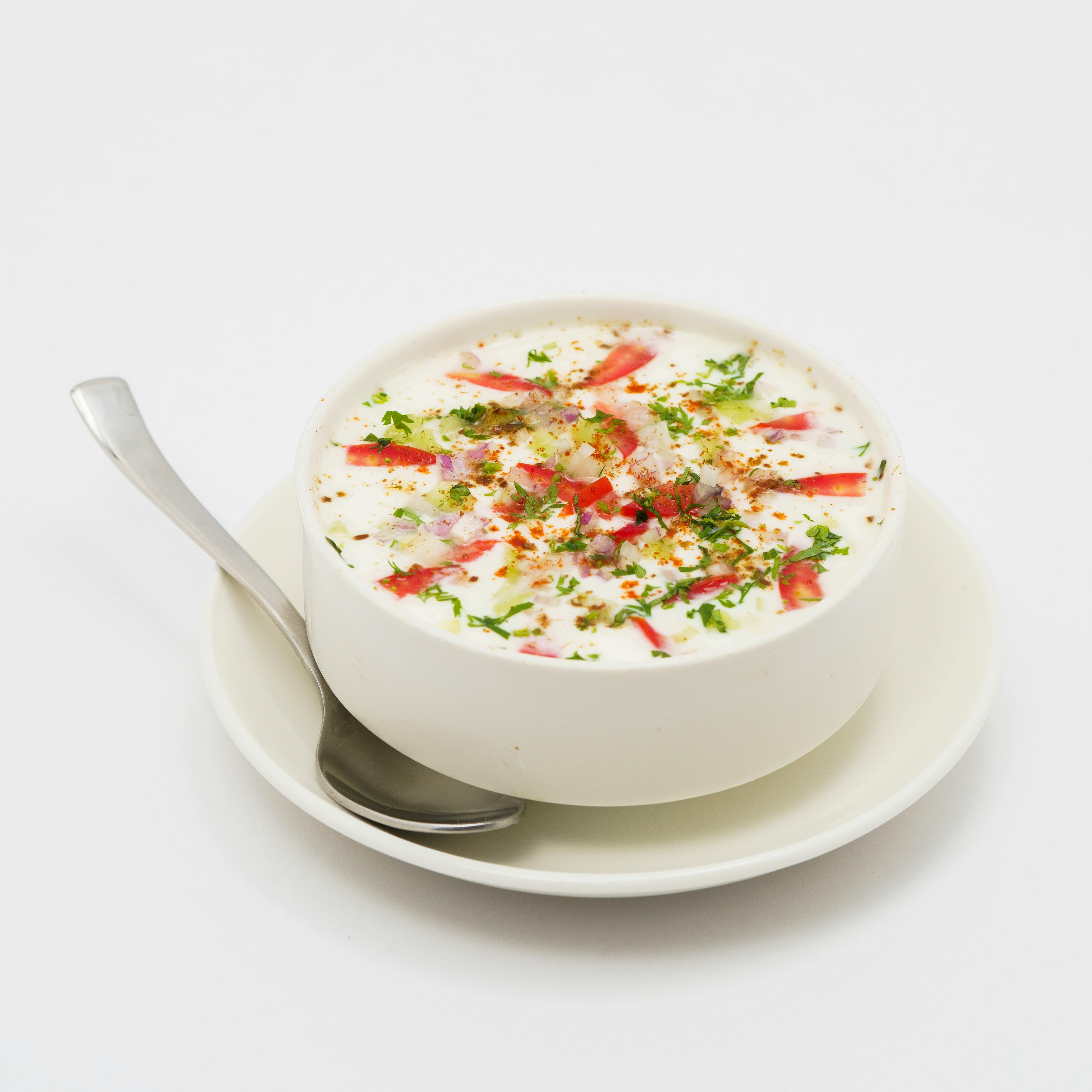
Raita is yogurt-based with cucumber and spices. Similar macros to tzatziki. Full-fat yogurt and low-carb vegetables make it keto-compatible. Minimal added sugar in traditional recipes.
Traditional raita is made with yogurt, a dairy product. Contains animal-derived ingredients incompatible with veganism.
Raita is made from yogurt (dairy), which is excluded from paleo. The vegetables and spices are compliant, but the yogurt base disqualifies the entire dish.
Raita is similar to tzatziki, made from yogurt, cucumber, and spices. While originating from South Asian cuisine, it aligns perfectly with Mediterranean diet principles of fermented dairy, fresh vegetables, and herbs without added sugars or unhealthy fats.
Raita is a yogurt-based condiment but primarily consists of cucumber, tomato, and other vegetables with yogurt as a minor component. The plant content dominates, making it incompatible with carnivore principles.
Raita is a yogurt-based condiment. Yogurt is a dairy product explicitly excluded on Whole30.
Raita is yogurt-based with cucumber and spices, but often contains garlic and/or onion. Garlic and onion are high-FODMAP. Lactose depends on yogurt type. Only acceptable if made without garlic/onion.
Monash University rates both garlic and onion as high-FODMAP. Traditional raita recipes typically include these ingredients, making standard versions unsuitable for low-FODMAP diet.
Raita is yogurt-based with cucumber and spices. Similar benefits to tzatziki: high in protein, calcium, and probiotics. Low sodium when prepared traditionally without excess salt. Excellent DASH-compliant condiment.
Similar to tzatziki: yogurt protein, cucumber carbs, oil fat. Macro-balanced in controlled portions. Some recipes add mango or other fruits, raising glycemic load.
Similar to tzatziki: yogurt base with cucumber and anti-inflammatory spices (cumin, coriander). Turmeric often included, which is a cornerstone anti-inflammatory spice. Supports probiotic intake and spice-based anti-inflammatory approach.
Raita is yogurt-based with cucumber and spices. Similar nutritional profile to tzatziki: high protein, high water content, probiotics, low calorie, easy to digest. Spice level is mild to moderate, making it well-tolerated by most GLP-1 patients.
Controversy Index
Score range: 1–8/10. Higher controversy = more disagreement between diets.
Diet-Specific Tips for Raita
 Keto — 8/10
- Yogurt and cucumber base
- 2-3g net carbs per serving
- High fat and protein
- Minimal sugar in traditional form
 Mediterranean — 7/10
- Fermented dairy base
- Fresh vegetables
- Minimal processing
- Spice-based flavoring
- Low sugar
 Low-FODMAP — 5/10
- Garlic and onion are high-FODMAP
- Lactose content varies by yogurt type
- Cucumber is low-FODMAP
- Spices are typically low-FODMAP
 DASH — 8/10
- High protein from yogurt
- Calcium-rich
- Low sodium (traditional preparation)
- Probiotics
- Low saturated fat (if low-fat yogurt used)
 Zone — 6/10
- Yogurt-based protein
- Low-glycemic vegetable base
- Fruit additions increase glycemic impact
- Portion control essential
 Anti-Inflammatory — 8/10
- Probiotic yogurt base
- Turmeric provides curcumin (potent anti-inflammatory)
- Cumin and coriander contain polyphenols
- Cucumber adds antioxidants
- Minimal added sugars in traditional preparations
 GLP-1 Friendly — 8/10
- High protein from yogurt
- High water content from cucumber
- Probiotics support digestion
- Mild to moderate spice level
- Low calorie, nutrient-dense