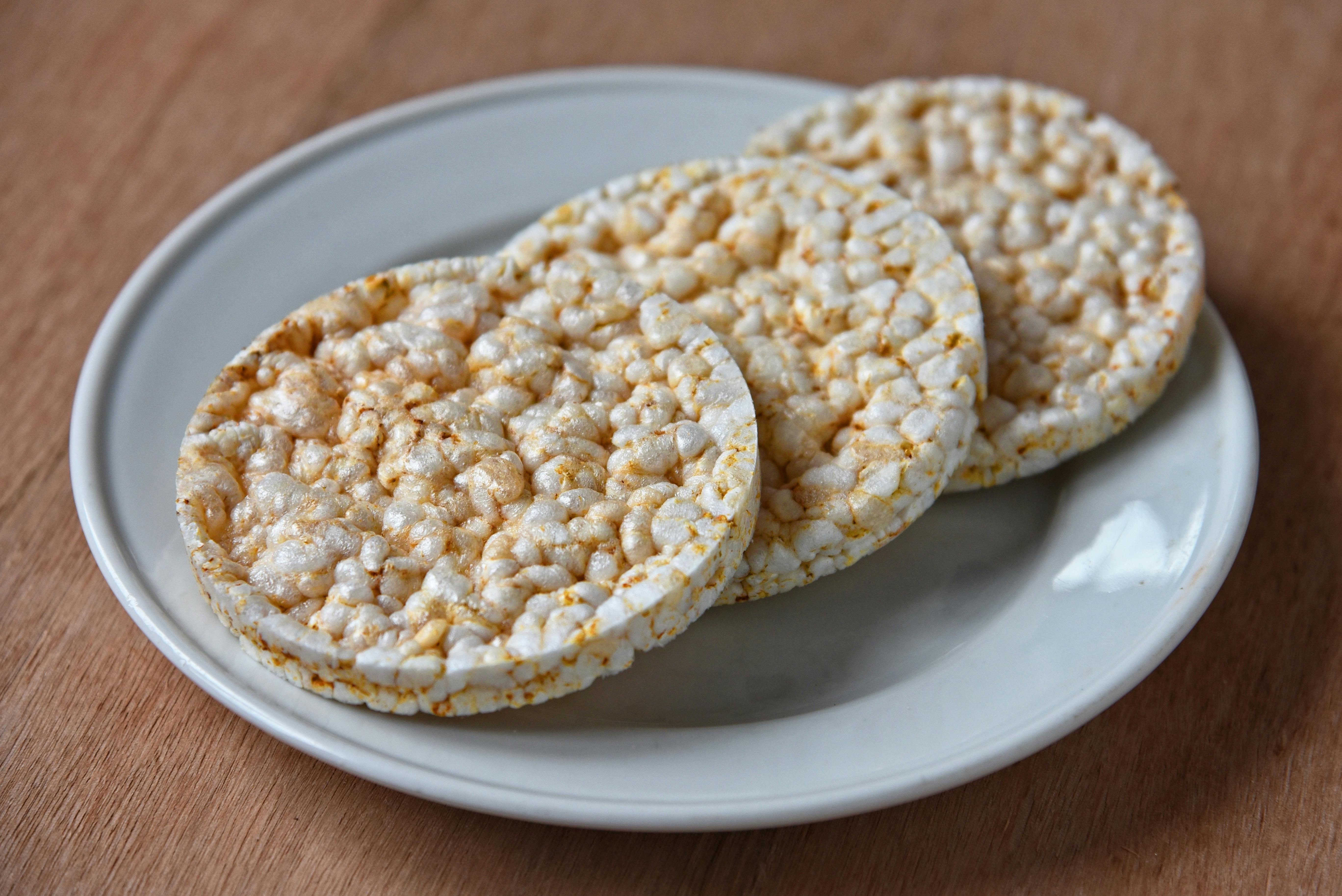
The diets react (see scores below)
Diet Ratings
Rice cakes contain ~80g net carbs per 100g. They are pure refined carbohydrate with minimal nutritional value and no fat. Completely incompatible with ketogenic diet.
Plant-based but heavily processed. Many commercial rice cakes contain added oils, salt, and additives. Some brands may include non-vegan ingredients like honey or whey. Whole grain varieties are preferable.
Some vegans accept rice cakes as convenient, minimally-processed snacks when ingredient lists are verified, particularly unflavored varieties.
Rice cakes are processed grain products made from rice. While white rice is debated in some paleo circles, rice cakes represent further processing and are generally excluded. The processing contradicts paleo philosophy of whole, unprocessed foods.
Rice cakes are typically made from refined rice, lacking fiber and nutrients. They have a high glycemic index and minimal nutritional density. However, whole grain rice cakes exist but are less common.
Some practitioners accept whole grain rice cakes as an occasional alternative to refined grain snacks, though they remain less ideal than whole grain bread or legume-based options.
Plant-derived grain product. Processed rice violates carnivore diet's exclusion of all plant foods and grains.
Rice cakes are made from rice, which is explicitly excluded as a grain. Additionally, crackers/cakes violate the 'no recreating junk food' rule. Not compliant.
Rice cakes are low in FODMAPs. Made from rice with minimal additives, they are confirmed low-FODMAP by Monash University.
Refined grain product lacking significant fiber and nutrients compared to whole grains. Low sodium but minimal DASH nutritional benefit. Use sparingly.
Extremely high glycemic index (~82). Processed grain with minimal fiber and negligible satiety. Rapidly spikes insulin, directly contrary to Zone's anti-inflammatory goal. No protein or fat to balance carbs. Pure high-glycemic carb with no redeeming Zone qualities.
Rice cakes are highly processed, refined carbohydrates with high glycemic index and minimal fiber or polyphenols. Lack anti-inflammatory compounds. Better alternatives exist (whole grain bread, brown rice).
Plain rice cakes without additives are technically acceptable as occasional carbohydrate source, though nutritionally inferior to whole grain alternatives. Some practitioners accept them in moderation.
Low protein (0.9g per cake), low fiber (0.4g per cake), and high calorie density relative to satiety. Essentially empty calories that don't support GLP-1 dietary priorities. Rapid gastric emptying may worsen blood sugar spikes.
Nutritional profile
Six traits that cut across every diet.
Fiber & Plants
How much whole-plant food and fiber it delivers.
Healthy Fats
The quality of its fats (unsaturated, omega-3).
Whole / Unprocessed
How close it is to its natural, unprocessed form.
Gut Gentle
How easy it is on digestion (low FODMAP, few irritants).
Low Glycemic
How little it spikes your blood sugar.
Protein Density
How much protein it packs per calorie.
Controversy Index
Score range: 1–9/10. Higher controversy = more disagreement between diets.
Diet-Specific Tips for Rice cakes
 Vegan — 6/10
- processed food
- requires label verification
- high sodium varieties common
- minimal nutritional density
 Mediterranean — 5/10
- Usually made from refined rice
- High glycemic index
- Low fiber content
- Minimal nutritional density
 Low-FODMAP — 9/10
- Rice-based, low-FODMAP grain
- Minimal fermentable content
- Check for added ingredients
 DASH — 5/10
- Refined grain
- Low fiber
- Low nutrient density
- Low sodium
 Anti-Inflammatory — 4/10
- refined carbohydrate
- high glycemic index
- minimal fiber
- minimal polyphenols
- processed