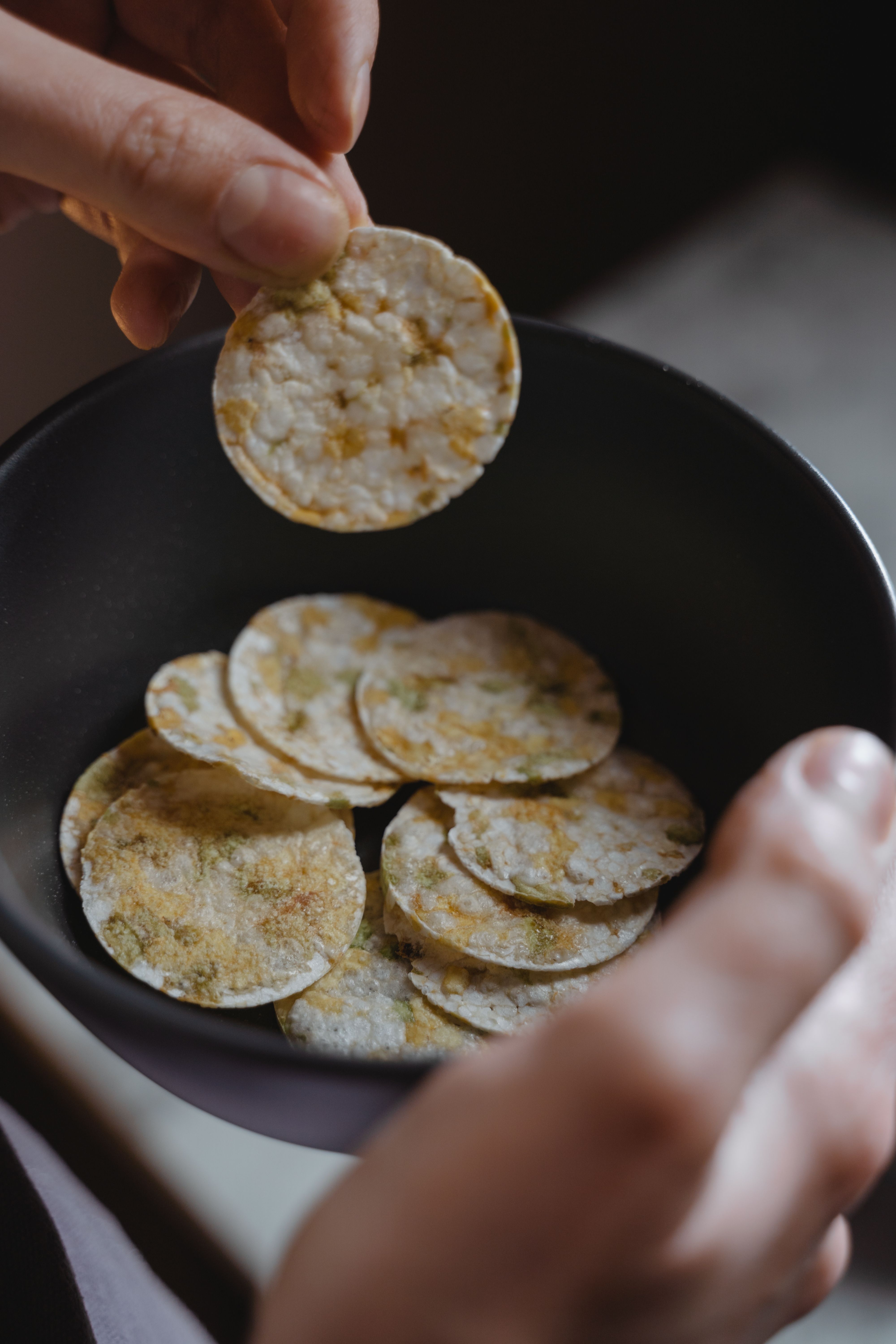
Rice crackers
Rated by 11 diets
The diets react (see scores below)
Diet Ratings
Rice crackers are refined carbohydrate with 7-9g net carbs per ounce. Even small portions rapidly consume daily carb allowance and spike blood glucose.
Plain rice crackers are typically made from rice, oil, and salt—entirely plant-based. Verify no dairy flavoring or animal-derived additives in seasoned varieties.
Rice is a grain and excluded from paleo diet. Rice crackers are processed grain products with added salt and often seed oils.
Made from whole grain rice, lower in sodium than many crackers. However, still processed and lacks the fiber and nutrients of whole grains eaten in traditional form.
Some Mediterranean diet practitioners accept plain rice crackers as acceptable occasional alternatives to bread, particularly in regions with rice-based traditions.
Rice is a grain and plant-derived carbohydrate source. Violates core carnivore principle of excluding all plant foods.
Rice crackers contain grains (rice) which are explicitly excluded. They also recreate a processed snack food format prohibited by Whole30.
Rice is naturally low-FODMAP and contains no fructans, lactose, or excess fructose. Monash University confirms rice crackers as low-FODMAP at standard servings. No portion restriction needed for typical consumption.
Plain rice crackers are lower in sodium and fat than Ritz, but still refined carbohydrates with minimal fiber. Acceptable in moderation with hummus or other DASH-approved dips, but not ideal as standalone snack.
Rice crackers are high-glycemic refined carbohydrates with minimal protein and fiber. White rice is explicitly avoided in Zone diet. Cannot be reasonably portioned into Zone meals.
Refined rice lacks fiber and whole-grain benefits. Minimal inflammatory compounds but also minimal anti-inflammatory benefit. Neutral to slightly pro-inflammatory due to refined carbohydrate profile.
Some practitioners view plain rice crackers as acceptable for those with grain sensitivities, particularly if made without seed oils, viewing them as a neutral starch option.
Rice crackers are lower in fat than Ritz (0.5-1g per serving) but still low in protein (1g), low in fiber (0g), and high in refined carbs. Better than Ritz but still empty calories. Some GLP-1 patients use them as vehicles for protein-rich toppings (hummus, cheese), which improves the rating.
Some RDs recommend avoiding rice crackers entirely as refined carbs with minimal nutritional value, while others accept them if paired with high-protein toppings to increase satiety and nutrient density.
Nutritional profile
Six traits that cut across every diet.
Fiber & Plants
How much whole-plant food and fiber it delivers.
Healthy Fats
The quality of its fats (unsaturated, omega-3).
Whole / Unprocessed
How close it is to its natural, unprocessed form.
Gut Gentle
How easy it is on digestion (low FODMAP, few irritants).
Low Glycemic
How little it spikes your blood sugar.
Protein Density
How much protein it packs per calorie.
Controversy Index
Score range: 1–9/10. Higher controversy = more disagreement between diets.
Diet-Specific Tips for Rice crackers
 Vegan — 8/10
- Check seasoning for dairy or animal ingredients
- Plain varieties almost always vegan
- Minimal processing
 Mediterranean — 4/10
- Whole grain base
- Lower sodium option
- Still processed
- Limited nutritional density
 Low-FODMAP — 9/10
- Rice is naturally low-FODMAP
- No fructans or problematic sugars
- No portion restriction at typical servings
 DASH — 4/10
- Lower sodium than flavored crackers
- Refined grains
- Minimal fiber
- Low saturated fat if unflavored
- Portion control important
 Anti-Inflammatory — 4/10
- Refined carbohydrates
- Low fiber
- Minimal polyphenols
- Neutral inflammatory profile
 GLP-1 Friendly — 4/10
- low fat
- low protein
- no fiber
- refined carbs
- portion-dependent on toppings