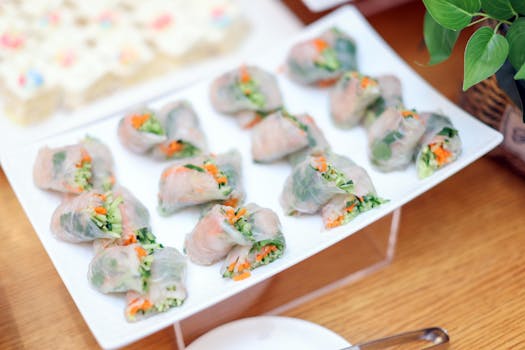
The diets react (see scores below)
Diet Ratings
Rice paper wrappers are made from rice flour and water, containing ~23g net carbs per 100g. A single wrapper (8-10g) contains ~2-2.5g net carbs, but they are typically consumed in multiples, quickly exceeding limits.
Made from rice flour and water, inherently plant-based. Check labels for rare cases of non-vegan additives, but standard versions are vegan.
Rice paper wrappers are made from rice flour and water, making them a grain product. Rice is explicitly excluded from paleo diet regardless of processing form. Violates core paleo principle of avoiding grains.
Rice paper wrappers are refined grain products with minimal nutritional value. Not traditional to Mediterranean cuisine, though acceptable occasionally as a wrapper for vegetable-based fillings.
Contemporary Mediterranean diet practitioners may accept rice paper wrappers as a neutral vehicle for Mediterranean vegetable and herb fillings, particularly in multicultural contexts.
Made from rice flour and water. Plant-derived grain product with high carbohydrate content. Directly violates carnivore diet exclusion of grains and plant foods.
Rice paper wrappers are made from rice, which is an excluded grain on Whole30. Additionally, they are typically used to recreate non-compliant foods like spring rolls or wraps.
Rice paper wrappers are made from rice flour and water with minimal additives. They contain negligible FODMAPs and are safe at standard serving sizes used in spring rolls or wraps.
Refined rice product with minimal fiber and micronutrients. Low sodium is positive. Not a whole grain. Acceptable in moderation as part of balanced meals but lacks nutritional density emphasized in DASH.
Updated clinical interpretation: Rice paper wrappers are sometimes considered acceptable for portion-controlled use in Asian DASH-adapted meals. NIH DASH guidelines prioritize whole grains and fiber-rich carbohydrates.
Rice paper wrappers are made from refined rice flour and tapioca starch—both high-glycemic refined carbohydrates with minimal fiber, protein, or fat. They provide no nutritional density and spike blood glucose rapidly. Zone protocol excludes refined grain products; these offer no advantage over white bread.
Rice paper wrappers are refined rice starch with minimal nutritional value. No fiber, antioxidants, or anti-inflammatory compounds. Neutral inflammatory profile but contribute little benefit.
Refined starch (8g carbs per wrapper, minimal protein 0.5g, minimal fiber 0.3g), low nutrient density. However, thin and portion-controlled format means small serving sizes are typical. Acceptable as vehicle for high-protein fillings (shrimp, tofu, vegetables) but wrapper itself contributes empty calories. Some GLP-1 patients tolerate thin starches better than thick breads.
Some RDs view rice paper as acceptable in moderation when used as a low-volume wrapper for protein-rich fillings; others recommend avoiding refined starches entirely to maximize protein and fiber intake within calorie constraints.
Nutritional profile
Six traits that cut across every diet.
Fiber & Plants
How much whole-plant food and fiber it delivers.
Healthy Fats
The quality of its fats (unsaturated, omega-3).
Whole / Unprocessed
How close it is to its natural, unprocessed form.
Gut Gentle
How easy it is on digestion (low FODMAP, few irritants).
Low Glycemic
How little it spikes your blood sugar.
Protein Density
How much protein it packs per calorie.
Controversy Index
Score range: 1–8/10. Higher controversy = more disagreement between diets.
Diet-Specific Tips for Rice paper wrappers
 Vegan — 8/10
- Rice-based
- Minimal ingredients
- Label verification recommended
 Mediterranean — 5/10
- refined grain
- minimal nutrition
- not traditional
- depends on filling
 Low-FODMAP — 8/10
- Rice-based, low FODMAP
- Minimal processing
- No added fructans or polyols
 DASH — 5/10
- Refined grain
- Low fiber
- Low sodium
- Minimal micronutrients
- Portion control important
 Anti-Inflammatory — 5/10
- Refined starch
- Minimal fiber
- No antioxidants
- Low glycemic load per serving
 GLP-1 Friendly — 5/10
- refined starch
- minimal protein
- minimal fiber
- portion-controlled format
- vehicle-dependent value