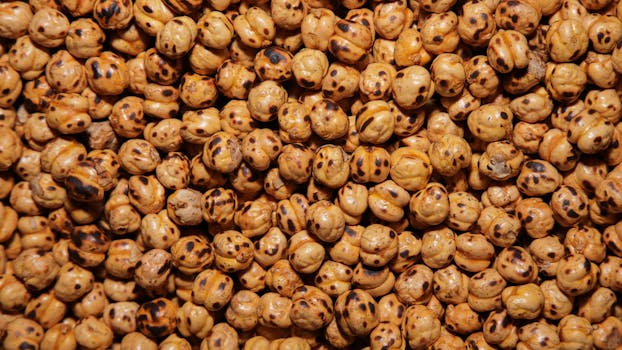
The diets react (see scores below)
Diet Ratings
Roasted chickpeas contain ~22g net carbs per 100g. High-carb legume snack. Incompatible with ketosis despite protein content.
Whole plant legume, minimally processed (roasted), excellent protein and fiber. Fully vegan-compliant. Check for added oils and seasonings, but base ingredient is whole food.
Chickpeas are legumes, a fundamental paleo exclusion. Roasting does not eliminate lectins and phytic acid, and the processing contradicts paleo principles.
Chickpeas are Mediterranean staples, but roasting often involves added oils and salt. Lightly roasted with minimal salt and olive oil is acceptable; heavily seasoned or fried versions less ideal.
Some sources view roasted chickpeas as acceptable snack when prepared with extra virgin olive oil and minimal salt, fitting Mediterranean snacking patterns.
Roasted chickpeas are legumes (plant-derived) and explicitly excluded from carnivore diet. Processing does not change the plant-based nature of the food.
Chickpeas are legumes, which are explicitly excluded from Whole30 for the full 30-day period. Roasting does not change their legume status.
Chickpeas are high in GOS and fructans. Monash rates cooked chickpeas as high-FODMAP even at small portions (½ cup). Roasting does not reduce FODMAP content.
Chickpeas are DASH-approved, but roasted versions often contain added salt and oil. Unsalted, lightly oiled roasted chickpeas are acceptable; commercial varieties frequently exceed sodium limits.
NIH DASH guidelines support chickpeas as legumes; updated clinical interpretation emphasizes sodium content in roasted/seasoned versions, which may negate cardiovascular benefits.
Roasted chickpeas are processed and often coated with oils and salt. While chickpeas themselves are usable legumes, roasting concentrates carbs and adds fat in unpredictable amounts. Better to use whole cooked chickpeas for Zone macro control.
Whole chickpeas are anti-inflammatory, but roasting method matters significantly. If roasted in seed oils or with excessive salt, inflammatory potential increases. Olive oil roasting would be preferable.
Some consider roasted chickpeas a healthy snack comparable to raw chickpeas. However, roasting concentrates calories and may use problematic oils.
Good protein (15g per cooked cup) and fiber (12g per cup), but roasting typically adds oil, increasing fat content. Crunchy texture may be harder to digest than soft-cooked chickpeas. Acceptable in small portions if lightly roasted with minimal oil.
Some RDs view roasted chickpeas as a convenient, portion-controlled snack with good protein density; others prefer soft-cooked chickpeas to minimize fat and aid digestion in GLP-1 patients with sensitive stomachs.
Nutritional profile
Six traits that cut across every diet.
Fiber & Plants
How much whole-plant food and fiber it delivers.
Healthy Fats
The quality of its fats (unsaturated, omega-3).
Whole / Unprocessed
How close it is to its natural, unprocessed form.
Gut Gentle
How easy it is on digestion (low FODMAP, few irritants).
Low Glycemic
How little it spikes your blood sugar.
Protein Density
How much protein it packs per calorie.
Controversy Index
Score range: 1–8/10. Higher controversy = more disagreement between diets.
Diet-Specific Tips for Roasted chickpeas
 Vegan — 8/10
- Whole food legume
- Minimal processing
- High protein content
- Good fiber source
 Mediterranean — 6/10
- preparation method
- salt content
- oil quality
- portion control
 DASH — 5/10
- High sodium in commercial roasted versions (200-400mg per serving)
- Added oils increase saturated fat
- Unsalted, home-roasted versions are DASH-compliant
- Check label for sodium and oil content
 Zone — 5/10
- Processed snack form
- Added oils and salt
- Carbs concentrated by roasting
- Difficult to portion accurately
 Anti-Inflammatory — 6/10
- roasting method critical
- often uses seed oils
- high sodium in commercial versions
- base chickpea is anti-inflammatory
- processing reduces some benefits
 GLP-1 Friendly — 5/10
- good protein
- good fiber
- added fat from roasting
- crunchy texture may stress digestion
- portion-friendly