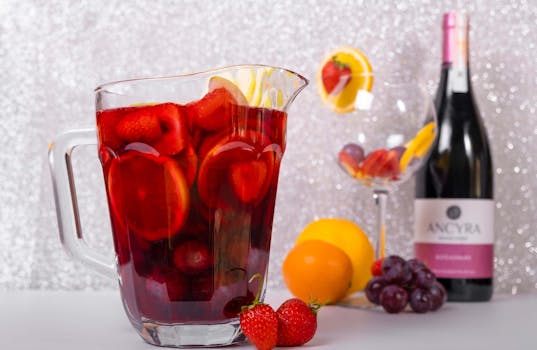
The diets react (see scores below)
Diet Ratings
Sangria contains added sugars and fruit juices, typically 15-25g carbs per serving. Wine base plus sweeteners makes it incompatible with ketosis.
Wine-based drink is typically vegan, but some sangrias contain honey, gelatin (clarifying agent), or other animal-derived ingredients. Depends heavily on recipe and brand.
Some vegans consider all wine non-vegan due to animal-derived fining agents used in production, though many mainstream vegan organizations accept wine.
Sangria is wine (acceptable in paleo) mixed with fruit and often added sugar or sweeteners. The added sugars and processing make it questionable. Alcohol is debated within paleo; if made with minimal added sugar, it falls into the caution category.
Some paleo practitioners accept moderate alcohol consumption including wine-based drinks, while others exclude all alcohol as a processed product incompatible with hunter-gatherer diets.
Sangria is a traditional Spanish beverage, but commercial versions often contain added sugars and are high in calories. Homemade sangria with minimal added sugar and fresh fruit aligns better with Mediterranean principles. The alcohol content (wine-based) is acceptable in moderation.
Some Mediterranean diet authorities emphasize that traditional sangria, especially homemade versions with whole fruits and minimal added sugar, can be part of Mediterranean eating patterns when consumed occasionally and in small portions (4-6 oz).
Sangria is a wine-based beverage mixed with fruit, fruit juices, and sugar. Multiple violations: fermented plant product (wine), added fruits, added sugars. Incompatible with carnivore principles.
Sangria is an alcoholic beverage made with wine and typically added sugar. Alcohol is explicitly excluded for the full 30 days on Whole30.
Sangria typically contains fruit (often apples, oranges, berries) and added sugars. Wine itself is low-FODMAP, but fruit additions and excess fructose from added sugars create FODMAP concerns. Portion and fruit composition are critical.
Monash University rates wine as low-FODMAP, but sangria's FODMAP status depends entirely on fruit type and quantity added. Clinical practitioners often recommend avoiding due to unpredictable fruit FODMAP load and added sugars.
Wine-based beverage typically contains added sugars and alcohol. Moderate alcohol consumption may have cardiovascular benefits, but added sugars contradict DASH principles. Highly variable sodium depending on recipe.
NIH DASH guidelines permit moderate alcohol (1 drink/day for women, 2 for men) as part of overall diet, but commercial sangria often exceeds recommended added sugar limits. Updated clinical interpretation emphasizes limiting added sugars over moderate wine consumption.
Wine-based beverage with added sugar and fruit juices. High glycemic load from sugar and fruit sugars. Alcohol impairs fat metabolism. Incompatible with Zone's low-glycemic carb requirement.
Sangria contains red wine (approved in moderation) but typically includes added sugars and fruit juices that increase inflammatory load. The alcohol content and sugar combination creates mixed inflammatory profile. Acceptable occasionally but not as regular dietary component.
Some anti-inflammatory authorities emphasize red wine's resveratrol benefits and may view sangria more favorably if sugar content is minimal. However, Weil's pyramid limits alcohol to red wine specifically, and sangria's added sugars contradict core anti-inflammatory principles.
Sangria also contains added sugars and carbonation, both of which worsen GLP-1 side effects (bloating, nausea, reflux). Empty calories with no nutritional benefit.
Nutritional profile
Six traits that cut across every diet.
Fiber & Plants
How much whole-plant food and fiber it delivers.
Healthy Fats
The quality of its fats (unsaturated, omega-3).
Whole / Unprocessed
How close it is to its natural, unprocessed form.
Gut Gentle
How easy it is on digestion (low FODMAP, few irritants).
Low Glycemic
How little it spikes your blood sugar.
Protein Density
How much protein it packs per calorie.
Controversy Index
Score range: 1–5/10. Higher controversy = more disagreement between diets.
Diet-Specific Tips for Sangria
 Vegan — 5/10
- Wine fining agents variable
- Potential honey addition
- Recipe-dependent
- Brand-specific formulation
 Paleo — 5/10
- Contains alcohol (debated)
- Often contains added sugar
- Processed beverage
- Fruit content varies
 Mediterranean — 5/10
- Often contains added sugars
- Traditional Spanish origin
- Alcohol content variable
- Homemade versions preferable
 Low-FODMAP — 5/10
- Wine base is low-FODMAP
- Fruit additions (apples, stone fruits) may be high-FODMAP
- Added sugars increase fructose load
- Highly variable composition
 DASH — 5/10
- Added sugars variable
- Alcohol content
- Sodium content recipe-dependent
- Processed fruit ingredients
 Anti-Inflammatory — 5/10
- Red wine base with polyphenols
- Added sugars from fruit and sweeteners
- Alcohol content
- Variable preparation affects inflammatory profile