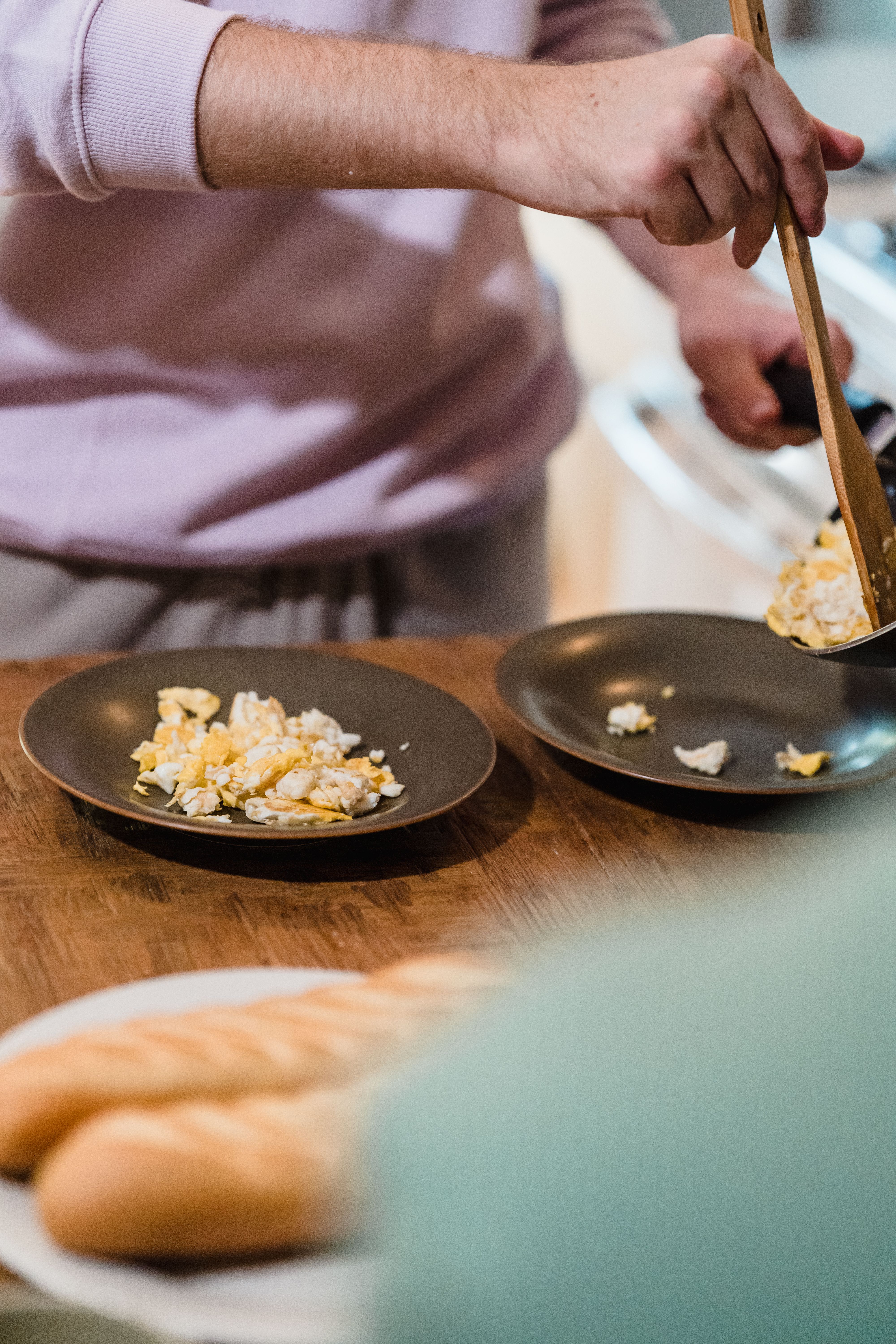
The diets react (see scores below)
Diet Ratings
Scrambled eggs retain the nutritional profile of whole eggs (~0.4g net carbs, ~6g protein, ~5g fat per large egg). Preparation with butter or oil adds healthy fat. Perfectly keto-compatible.
Eggs are animal products explicitly excluded from vegan diet. Cooking method does not change animal origin or vegan status.
Scrambled eggs are whole eggs prepared through simple cooking. Paleo-approved if cooked in approved fat (butter, ghee, coconut oil, olive oil). Score depends on cooking fat used.
Scrambled eggs are acceptable when prepared with minimal added fat (ideally olive oil). Whole food preparation maintains nutrients. Frequency should align with Mediterranean guideline of few times weekly.
Whole eggs prepared by cooking. Complete animal product with nutrients intact. Cooking method is acceptable. Widely consumed and approved by carnivore practitioners.
Strict Lion Diet adherents exclude eggs as non-ruminant animal products, consuming only ruminant meat, salt, and water.
Scrambled eggs are whole eggs prepared by cooking. Explicitly allowed on Whole30 as long as no dairy, added sugar, or other excluded ingredients are added during preparation.
Scrambled eggs are low-FODMAP if prepared with low-FODMAP ingredients (butter, salt, pepper). However, the verdict depends on preparation method. If made with milk, cream, or high-FODMAP additions, they become problematic. Standard preparation with butter is acceptable.
Monash University rates plain eggs as low-FODMAP, but scrambled eggs prepared with regular milk or cream would be high-FODMAP due to lactose content. Clinical practitioners recommend confirming preparation method.
Whole egg preparation with added sodium and saturated fat risk. If prepared with butter or oil, saturated fat increases. If salt is added, sodium increases. Acceptable if prepared with minimal oil/butter and no added salt, but less ideal than egg whites or boiled eggs.
Scrambled whole eggs contain ~6g protein, ~5g fat, ~0.6g carbs per large egg. Cooking method adds fat (butter/oil), further increasing total fat and potentially saturated fat. Usable in Zone meals but requires careful portioning and attention to cooking fat to maintain 40/30/30 ratio.
Scrambled whole eggs retain anti-inflammatory compounds if cooked gently. However, preparation method matters: high heat or added butter/cream increases saturated fat and may reduce benefits. Best prepared with minimal added fat or olive oil.
Some authorities emphasize that scrambled eggs prepared with butter or cream increase saturated fat content, potentially offsetting anti-inflammatory benefits. Cooking temperature and added fats significantly impact inflammatory profile.
High protein density (6g per egg), complete amino acids, excellent satiety. Preparation method matters: cooked in minimal fat (cooking spray, 1 tsp oil) scores 8-9; cooked in butter or excess oil scores lower. Easy to digest and portion-friendly. Excellent small-meal option for GLP-1 patients.
Nutritional profile
Six traits that cut across every diet.
Fiber & Plants
How much whole-plant food and fiber it delivers.
Healthy Fats
The quality of its fats (unsaturated, omega-3).
Whole / Unprocessed
How close it is to its natural, unprocessed form.
Gut Gentle
How easy it is on digestion (low FODMAP, few irritants).
Low Glycemic
How little it spikes your blood sugar.
Protein Density
How much protein it packs per calorie.
Controversy Index
Score range: 1–10/10. Higher controversy = more disagreement between diets.
Diet-Specific Tips for Scrambled eggs
 Keto — 9/10
- Negligible net carbs
- Complete protein and fat profile
- Often cooked in additional fat (butter/oil)
- Versatile, easy preparation
 Paleo — 9/10
- Whole egg in unprocessed form
- Simple cooking method (pan-frying)
- Cooking fat choice critical (avoid seed oils)
- Nutrient-dense and versatile
 Mediterranean — 7/10
- Whole food preparation
- Olive oil preferred for cooking
- Nutrient-dense
- Portion and frequency matter
 Carnivore — 9/10
- Complete animal product
- All nutrients preserved
- Minimally processed cooking method
- Widely consumed preparation
 Whole30 — 10/10
- Whole food
- Explicitly allowed
- Preparation dependent on added ingredients
 Low-FODMAP — 6/10
- Base egg ingredient is low-FODMAP
- Cooking fat (butter) is low-FODMAP
- Milk or cream additions would add lactose
- Preparation method determines final FODMAP status
 DASH — 5/10
- High cholesterol (if whole eggs)
- Added fat from cooking oil/butter
- Potential added sodium
- Cooking method increases saturated fat
 Zone — 6/10
- Cooking fat adds to total
- Saturated fat from yolk
- Requires careful portioning
- Preparation method matters
 Anti-Inflammatory — 7/10
- Retains yolk nutrients if whole egg
- Preparation method critical
- Added fat content matters
- Gentle cooking preserves compounds
 GLP-1 Friendly — 8/10
- high protein density
- complete amino acids
- easy to digest
- preparation method affects fat content
- excellent satiety