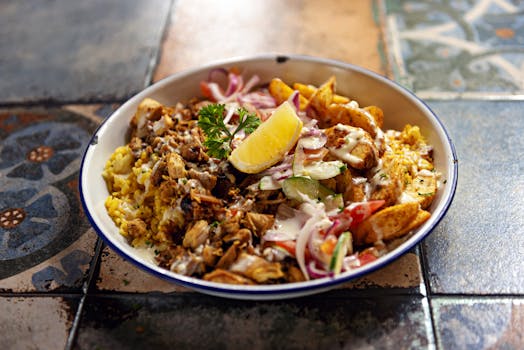
Shawarma (chicken)
Rated by 11 diets
How the diets react
Diet Ratings
Chicken shawarma itself (meat and spices) is keto-friendly, but traditional preparation often includes added sugars in marinades and serving with pita bread or rice. Eating the meat alone without bread is compatible; with bread it is not.
Some keto practitioners strictly avoid shawarma due to common use of sugar in spice blends and marinades; others accept it if marinades are verified sugar-free.
Contains chicken (poultry), a direct animal product. Marinades may contain animal-derived ingredients.
Grilled or roasted chicken with spices is paleo-compliant. Verify it's cooked in animal fat or approved oils (not seed oils) and contains no added sugar or preservatives in the marinade.
Lean chicken protein is Mediterranean-friendly, and traditional spices are beneficial. However, often cooked with added oils, high sodium, and served in refined pita. Acceptable if prepared with minimal oil and whole grain bread.
Mediterranean diet practitioners in Levantine regions consider shawarma a traditional dish when made with olive oil and served with abundant vegetables and whole grains, viewing it as culturally aligned.
Chicken meat is acceptable, but shawarma is typically seasoned with spice blends (plant-derived) and may contain additives. Quality depends on preparation and spice content.
Strict carnivore practitioners avoid all spices and plant-derived seasonings, viewing them as plant compounds that contradict the 'only animal products' rule. Some prefer unseasoned meat or salt-only preparations.
Grilled or roasted chicken with spices, served with vegetables and compliant sauces (tahini, lemon, garlic). All components are Whole30 compliant if no added sugar or non-compliant binders are used.
Chicken is low-FODMAP. Spice blends are typically low-FODMAP. However, marinades often contain garlic and onion. Tahini sauce is low-FODMAP, but hummus (chickpea) is high-FODMAP GOS. Pita bread contains wheat fructans.
Monash rates tahini as low-FODMAP, but traditional shawarma marinades almost always include garlic/onion. Hummus is definitively high-FODMAP. Pita bread portion-dependent.
Lean protein (chicken) is DASH-approved, but preparation involves high-sodium spice blends and marinades. Often served with tahini sauce (high fat) and pita bread. Sodium typically 800-1200mg per serving.
NIH DASH guidelines support lean poultry; updated clinical interpretation emphasizes sodium content from spice blends and marinades can exceed 1/3 daily sodium limit in single serving.
Lean chicken protein (25-30g per serving) is excellent. Spice blend is anti-inflammatory. However, often cooked in high-fat preparation and served with tahini sauce (high fat). Pita bread is refined carb. Can work if served without bread or with vegetable sides; requires careful fat portioning.
Chicken shawarma uses lean poultry (acceptable) with anti-inflammatory spices (cumin, coriander, garlic). However, often served with tahini sauce (high omega-6), pita bread (refined), and may contain added oils. Nutritional value depends on preparation and accompaniments.
Some anti-inflammatory experts rate chicken shawarma as 'approve' (7) when made with minimal oil, whole-grain wraps, and vegetable-forward accompaniments. Traditional preparation with tahini is less favorable.
Chicken shawarma provides good protein, but is typically cooked in oil with high fat content. Spices (cumin, paprika, garlic) are generally well-tolerated but may trigger reflux in sensitive patients. Tahini sauce adds additional fat. Acceptable if fat is minimized and portion controlled.
Some RDs rate this higher (7-8) if made with lean chicken breast and minimal oil, viewing it as a protein-rich option; others rate lower (4-5) due to typical preparation methods and fat content.
Controversy Index
Score range: 1–9/10. Higher controversy = more disagreement between diets.