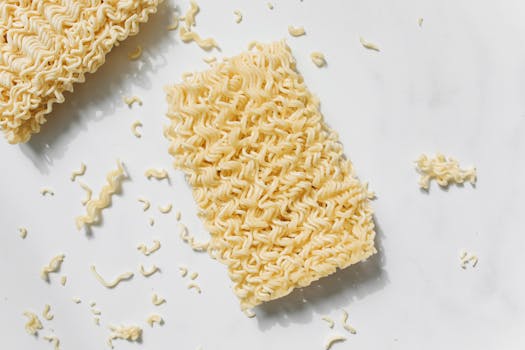
The diets react (see scores below)
Diet Ratings
Shirataki noodles contain approximately 1-2g net carbs per serving with virtually no digestible carbs due to glucomannan fiber. Excellent pasta substitute for keto, widely endorsed across all keto communities.
Made from konjac root, entirely plant-based. Minimal processing. No animal products or derivatives.
Made from konjac root (glucomannan fiber), technically paleo-compliant ingredient but highly processed. Minimal calories/nutrients. Acceptable as occasional substitute but contradicts whole-food philosophy.
Some paleo practitioners accept shirataki noodles as a processed but compliant alternative for those seeking pasta substitutes, while strict paleo excludes all processed foods regardless of ingredient source.
Shirataki noodles are highly processed, made from konjac root starch. While low-carb, they lack the nutritional profile of whole grains emphasized in Mediterranean diet. Not traditional and minimal nutritional benefit.
Some modern Mediterranean diet practitioners accept shirataki noodles as a low-glycemic alternative for those managing blood sugar, particularly in updated interpretations focusing on metabolic health rather than strict traditionalism.
Made from konjac plant (glucomannan fiber). Despite low carb marketing, it is plant-derived and violates carnivore's animal-only principle. Often contains additives.
Shirataki noodles are explicitly prohibited under Whole30's 'no recreating junk food' rule. They are a noodle substitute designed to mimic pasta, which violates the spirit of the program regardless of ingredient compliance.
Shirataki noodles are made from glucomannan (soluble fiber) with negligible carbohydrates and no FODMAPs. Monash University confirms these as low-FODMAP at any reasonable serving size.
Made from konjac root, extremely low carbohydrate and calorie content with minimal sodium. Supports DASH goals for weight management and blood pressure control. Not explicitly addressed in original NIH DASH but aligns with modern cardiovascular nutrition principles.
NIH DASH guidelines predate widespread shirataki availability and emphasize whole grains; however, updated clinical interpretation recognizes shirataki as beneficial for glycemic control and weight management in hypertension management.
Shirataki noodles are made from glucomannan (soluble fiber) with virtually zero net carbs and zero glycemic impact. They are explicitly praised in Zone materials as a carb-free pasta alternative. Excellent for creating satisfying meals without disrupting Zone ratios. Minimal calories and carbs make them nearly impossible to overeat.
Made from konjac root glucomannan fiber. Virtually zero net carbs, zero sugar, zero glycemic impact. Neutral inflammatory profile with benefit of not spiking blood glucose. Excellent pasta substitute.
Exceptional for GLP-1 patients. Nearly zero calories (20 per serving), zero net carbs, high water content, and high soluble fiber (3g per serving) — supports digestion and fullness. Allows satisfying noodle-based meals without calorie burden. Easy to digest. Portion-flexible — can eat a full bowl without concern. Pairs well with high-protein sauces and vegetables. Minimal GI side effects.
Nutritional profile
Six traits that cut across every diet.
Fiber & Plants
How much whole-plant food and fiber it delivers.
Healthy Fats
The quality of its fats (unsaturated, omega-3).
Whole / Unprocessed
How close it is to its natural, unprocessed form.
Gut Gentle
How easy it is on digestion (low FODMAP, few irritants).
Low Glycemic
How little it spikes your blood sugar.
Protein Density
How much protein it packs per calorie.
Controversy Index
Score range: 1–9/10. Higher controversy = more disagreement between diets.
Diet-Specific Tips for Shirataki noodles
 Keto — 9/10
- 1-2g net carbs per serving
- Glucomannan fiber (indigestible)
- Pasta substitute compatibility
- Neutral taste profile
 Vegan — 8/10
- plant-based
- minimal processing
- no animal products
 Paleo — 5/10
- highly processed
- konjac root source
- minimal nutrition
- compliant ingredients
- contradicts philosophy
 Mediterranean — 4/10
- highly processed
- not traditional Mediterranean
- minimal nutritional density
- lacks whole grain benefits
 Low-FODMAP — 9/10
- Glucomannan-based (no FODMAPs)
- Negligible carbohydrates
- No fructans, GOS, or polyols
- Unlimited serving size
 DASH — 8/10
- Very low sodium
- Minimal calories
- Low carbohydrate
- Supports weight management
 Zone — 9/10
- Near-zero net carbs
- Zero glycemic impact
- High soluble fiber
- Explicitly approved in Zone protocol
- Excellent pasta substitute
 Anti-Inflammatory — 8/10
- Zero net carbohydrates
- High soluble fiber
- No glycemic impact
- Supports stable blood sugar
 GLP-1 Friendly — 9/10
- near-zero calories
- high soluble fiber
- high water content
- easy to digest
- portion-flexible
- supports satiety