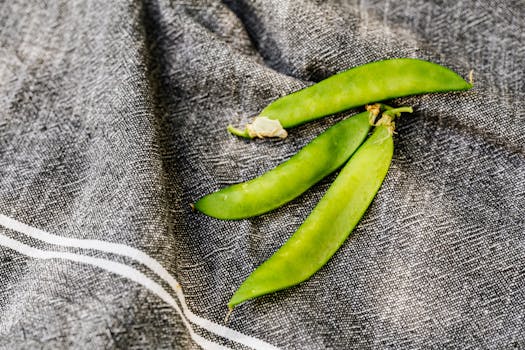
The diets react (see scores below)
Diet Ratings
Snow peas contain approximately 5g net carbs per 100g. Technically low-carb but higher than leafy greens. Portion control required; small servings (1 cup raw) fit keto, but easy to overconsume.
Strict keto practitioners avoid snow peas due to higher carb density compared to other vegetables, while flexible keto followers include them in measured portions.
Whole plant legume with no animal products or derivatives. Excellent source of plant protein and fiber.
Snow peas are legumes (Pisum sativum). Paleo diet explicitly excludes all legumes due to lectins, phytic acid, and other anti-nutrients. Even immature pods retain legume classification.
Legume-vegetable hybrid providing plant protein, fiber, and micronutrients. Fits Mediterranean pattern of legume consumption and vegetable emphasis.
Plant-derived legume vegetable. Carnivore diet strictly excludes all legumes and vegetables regardless of form.
Explicitly listed as an exception to the legume exclusion in official Whole30 guidelines.
Snow peas contain GOS (galacto-oligosaccharides) from legume family. Monash rates them as low-FODMAP at 1 cup (160g) cooked, but portions above this threshold increase FODMAP load significantly.
Some clinical practitioners recommend stricter avoidance during elimination phase due to legume-derived GOS content, while Monash University permits up to 1 cup cooked.
Legume-vegetable hybrid with good protein, fiber, and potassium. Low sodium when fresh or lightly prepared. Supports DASH vegetable and legume recommendations.
Low-glycemic vegetable but higher carb density than leafy greens (~7g net carbs per cup). Usable in Zone meals but requires careful portioning to maintain 40/30/30 ratio.
Legume-vegetable hybrid with polyphenols, fiber, and plant-based protein. Anti-inflammatory compounds and low inflammatory load. Excellent nutrient density.
Good protein for a vegetable (3g per 100g), high fiber (2.2g per 100g), high water content, low fat, crunchy texture aids satiety. Nutrient-dense and easy to digest.
Controversy Index
Score range: 1–10/10. Higher controversy = more disagreement between diets.
Diet-Specific Tips for Snow peas
 Keto — 5/10
- 5g net carbs per 100g
- Pod-based legume
- Easy to overconsume
- Portion control critical
 Vegan — 10/10
- 100% plant-based
- Whole food
- Legume protein source
- No processing
 Mediterranean — 8/10
- Plant-based protein source
- Low caloric density
- Fresh whole food
- Legume family benefits
 Whole30 — 9/10
- official exception
- pod consumed whole
- legume exception
 Low-FODMAP — 5/10
- GOS from legume family
- Portion cutoff at 1 cup (160g) cooked
- Higher FODMAP at larger servings
 DASH — 8/10
- Plant-based protein
- Dietary fiber
- Potassium source
- Low sodium when fresh
 Zone — 6/10
- Moderate carb content relative to other vegetables
- Low glycemic index
- Requires portion control
 Anti-Inflammatory — 8/10
- polyphenols
- plant protein
- fiber
- low glycemic load
- antioxidants
 GLP-1 Friendly — 8/10
- moderate protein for vegetable
- good fiber
- high water content
- low fat
- satisfying texture