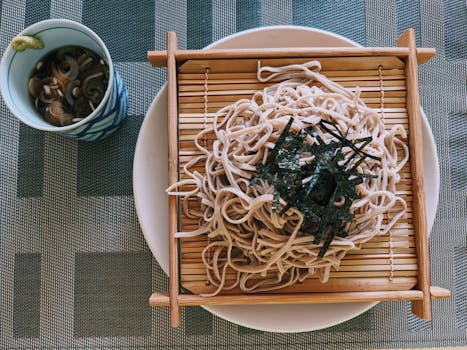
The diets react (see scores below)
Diet Ratings
Soba noodles (buckwheat) contain approximately 20g net carbs per cooked cup. Despite buckwheat's reputation as a health food, the carb content is incompatible with ketosis.
Typically made from buckwheat and wheat, plant-based. However, many commercial soba noodles contain egg binder. Must verify label for egg content.
Some vegans consider egg-free soba noodles fully approvable (score 9), while others avoid the category entirely due to widespread egg use in traditional recipes.
Made from buckwheat, which is a grain despite the name. Grains are explicitly excluded from paleo diet. Processed food product.
Soba noodles made from buckwheat contain whole grains and are less refined than white pasta, but are not traditional Mediterranean. Quality varies; some contain significant wheat. Whole grain Mediterranean pasta is preferred.
Some Mediterranean diet experts accept soba noodles as a whole grain alternative comparable to whole wheat pasta, particularly in modern adaptations. However, traditional Mediterranean diet emphasizes durum wheat pasta.
Made from buckwheat (plant grain). Contains significant carbohydrates and plant compounds. Explicitly excluded from carnivore diet.
Soba noodles are made from buckwheat, which is a grain. Grains are explicitly excluded on Whole30. Additionally, noodles violate the 'no recreating junk food' rule.
Soba noodles are made from buckwheat flour, which contains fructans. Monash University rates soba as high-FODMAP due to fructan content from buckwheat.
Whole grain soba (100% buckwheat) is acceptable, but many commercial soba contain wheat flour and added sodium. Nutritional profile varies significantly by brand. Portion control important due to carbohydrate content.
Soba noodles are made from buckwheat and have a lower glycemic index than wheat pasta, but they are still a grain-based carb. One cooked cup (~170g) contains ~30g carbs with moderate fiber. Zone protocol limits grains to 0-1 serving/day; soba requires careful portioning and should be balanced with adequate protein and fat to maintain 40/30/30 ratio.
Made from buckwheat (technically a seed, not grain) with some anti-inflammatory compounds. However, refined soba has moderate glycemic index and lacks whole-grain benefits. 100% buckwheat soba is superior to blended versions.
Dr. Weil and some anti-inflammatory authorities view buckwheat more favorably than wheat pasta due to lower glycemic response and unique polyphenols. Quality varies significantly by product.
Soba (buckwheat) noodles contain more protein (6g per cooked cup) and fiber (4g) than white pasta, making them better than refined alternatives. However, they're still calorie-dense (192 cal per cooked cup) and carb-heavy (42g carbs per cup). GLP-1 patients eating reduced portions may struggle to feel satisfied. Portion control is essential. Better alternatives exist (shirataki, lentil pasta) for calorie-conscious patients.
Nutritional profile
Six traits that cut across every diet.
Fiber & Plants
How much whole-plant food and fiber it delivers.
Healthy Fats
The quality of its fats (unsaturated, omega-3).
Whole / Unprocessed
How close it is to its natural, unprocessed form.
Gut Gentle
How easy it is on digestion (low FODMAP, few irritants).
Low Glycemic
How little it spikes your blood sugar.
Protein Density
How much protein it packs per calorie.
Controversy Index
Score range: 1–6/10. Higher controversy = more disagreement between diets.
Diet-Specific Tips for Soba noodles
 Vegan — 6/10
- often contains egg
- label verification required
- buckwheat is plant-based
 Mediterranean — 5/10
- buckwheat is whole grain
- not traditional Mediterranean
- variable quality and wheat content
- whole grain Mediterranean pasta preferred
 DASH — 5/10
- Variable sodium content by brand
- Often mixed with wheat flour
- Moderate glycemic impact
- Portion control needed
 Zone — 4/10
- Lower glycemic index than wheat pasta
- Still grain-based carbohydrate
- Requires precise portioning
- Must be balanced with protein and fat
- Better than refined pasta but not ideal
 Anti-Inflammatory — 6/10
- Moderate glycemic index
- Contains rutin (polyphenol)
- Often blended with wheat flour
- Better than refined wheat pasta
 GLP-1 Friendly — 5/10
- moderate protein
- moderate fiber
- calorie-dense
- carb-heavy
- portion-sensitive
- requires careful measurement