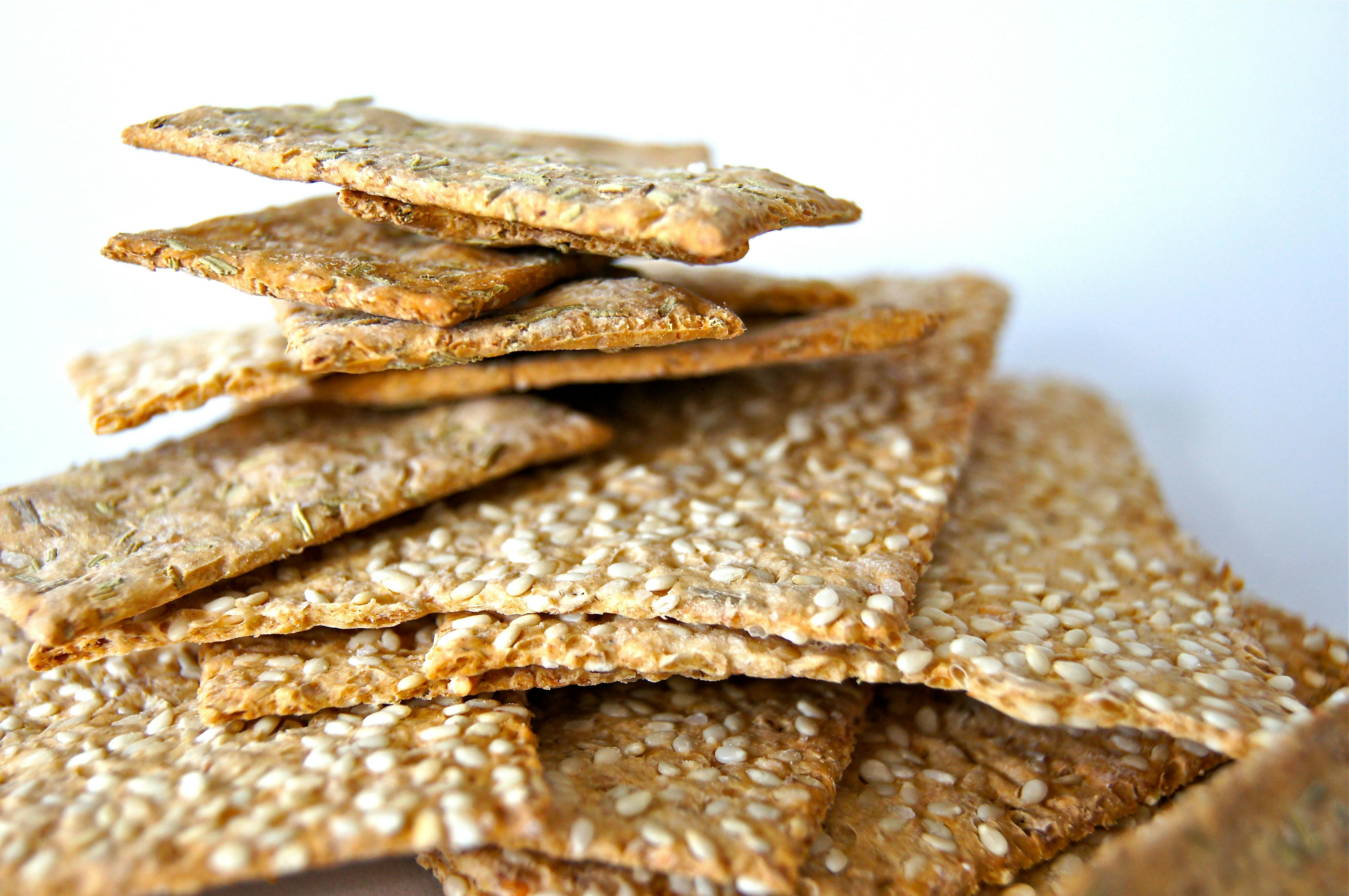
The diets react (see scores below)
Diet Ratings
Sourdough crackers contain 15-20g net carbs per serving from refined wheat flour. While fermentation may reduce some carbs, they remain too high for keto.
Sourdough crackers typically contain only flour, water, salt, and fermentation cultures. Plant-based and minimally processed.
Sourdough crackers are made from wheat flour (grain). While fermentation reduces some anti-nutrients, grains remain excluded from paleo diet. Processed and often contain added salt.
Sourdough crackers are made from whole grains with fermentation, which aligns with Mediterranean traditions. However, they are processed and often contain added salt and oils. Acceptable in moderation with meals.
Some Mediterranean diet practitioners view sourdough as a traditional, acceptable bread product due to fermentation improving digestibility and nutrient bioavailability.
Sourdough crackers are grain-based products made from wheat flour. Fermentation does not change their grain origin, which is explicitly excluded.
Crackers are explicitly prohibited on Whole30. They are made from grains (wheat) and violate the spirit of the program as a recreated junk food.
Sourdough fermentation reduces fructan content compared to regular wheat products. Monash University indicates sourdough bread may be lower in FODMAPs due to fermentation, but crackers are more concentrated. Safe only at restricted portions (3-4 crackers).
Monash University testing shows sourdough fermentation significantly reduces fructans, making some sourdough products low-FODMAP at specific serving sizes. However, crackers are more concentrated; clinical practitioners recommend limiting to 3-4 crackers (approximately 15-20g) per serving.
Sourdough fermentation may improve digestibility and mineral bioavailability compared to standard crackers. However, most commercial sourdough crackers are still refined flour-based and moderate-to-high sodium. Whole-grain sourdough would score higher.
NIH DASH guidelines emphasize whole grains; updated clinical interpretation recognizes sourdough fermentation may offer modest benefits for glycemic response and mineral absorption, though sodium content remains a concern.
Sourdough fermentation lowers glycemic index vs. regular crackers, but still refined grain. ~15g carbs per 5 crackers. Dr. Sears allows whole grains sparingly (0-1 serving/day); sourdough's fermentation improves digestibility but doesn't eliminate refined carb concerns. Portion-critical.
Some Zone practitioners view sourdough's fermentation as meaningfully reducing glycemic impact, placing it closer to 'caution 6-7'. Dr. Sears' later writings acknowledge fermented grains' improved tolerability but maintain carb-block counting discipline.
Sourdough fermentation reduces phytic acid and improves nutrient bioavailability compared to standard crackers. However, still refined grain-based with minimal fiber. Better than white crackers but not ideal anti-inflammatory choice.
Some authorities emphasize sourdough's fermentation benefits for gut health and reduced inflammatory response, while others prioritize whole grain content as more important than fermentation.
Sourdough crackers are refined carbohydrates with minimal protein and fiber. Fermentation may improve digestibility slightly compared to standard crackers, but calorie density and portion control remain concerns. Low satiety-to-calorie ratio. Better paired with high-protein foods (cheese, hummus) but not ideal as standalone.
Some RDs view sourdough as acceptable due to fermentation improving digestibility and lower glycemic impact, while others argue refined crackers of any type are poor calorie investments for GLP-1 patients with suppressed appetite.
Nutritional profile
Six traits that cut across every diet.
Fiber & Plants
How much whole-plant food and fiber it delivers.
Healthy Fats
The quality of its fats (unsaturated, omega-3).
Whole / Unprocessed
How close it is to its natural, unprocessed form.
Gut Gentle
How easy it is on digestion (low FODMAP, few irritants).
Low Glycemic
How little it spikes your blood sugar.
Protein Density
How much protein it packs per calorie.
Controversy Index
Score range: 1–8/10. Higher controversy = more disagreement between diets.
Diet-Specific Tips for Sourdough crackers
 Vegan — 8/10
- Plant-based
- Fermented
- Check ingredient list for dairy
 Mediterranean — 6/10
- Whole grain potential
- Fermented preparation beneficial
- Processed format
- Often high in sodium
 Low-FODMAP — 6/10
- Fermentation reduces fructan content
- Crackers are more concentrated than bread
- Safe only at restricted portions (3-4 crackers)
- Monash data supports sourdough fermentation benefit
 DASH — 5/10
- Fermentation may improve nutrient bioavailability
- Often refined flour, not whole grain
- Moderate sodium (typically 150-250mg per serving)
- Limited fiber compared to whole-grain alternatives
 Zone — 5/10
- Fermentation reduces glycemic index
- Still refined grain base
- Portion control essential
- Acceptable as occasional carb block
 Anti-Inflammatory — 5/10
- fermented grain
- reduced phytic acid
- refined grain base
- minimal fiber
- improved digestibility
 GLP-1 Friendly — 4/10
- Refined carbohydrates
- Very low protein
- Very low fiber
- Low fat
- Fermentation may improve digestibility
- Portion-sensitive — easy to overeat