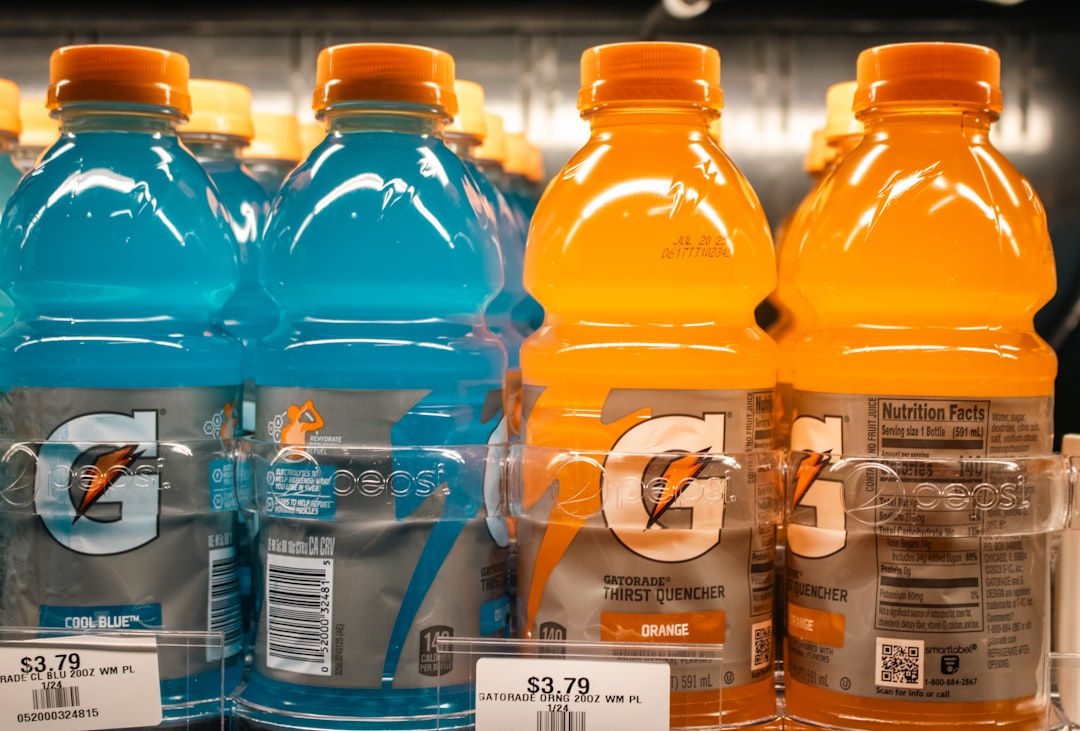
The diets react (see scores below)
Diet Ratings
Standard Gatorade contains 21g net carbs per 20oz bottle, primarily from added sugars and dextrose. Designed for high-carb athletes and completely incompatible with ketosis.
Most Gatorade varieties are vegan-certified with no animal products. Heavily processed with artificial ingredients and high sugar content.
Gatorade contains refined sugar, artificial sweeteners, artificial colors, and electrolyte additives. Highly processed with no whole-food ingredients. Directly violates paleo on refined sugar and artificial additives.
Gatorade is highly processed with added sugars (21-34g per serving), artificial sweeteners, and synthetic ingredients. Contradicts Mediterranean emphasis on whole foods and minimal added sugars. No place in traditional Mediterranean diet.
Gatorade contains sugar, artificial sweeteners, artificial colors (plant-derived dyes), electrolytes from synthetic sources, and various chemical additives. No animal-derived components. Completely incompatible with carnivore diet.
Gatorade contains added sugar and artificial sweeteners, both explicitly excluded from Whole30. It is a processed beverage with no whole-food basis.
Gatorade contains glucose, sucrose, and citric acid but limited fructose. Monash testing on sports drinks is limited. At small volumes (e.g., 250 mL) may be tolerated; larger servings may exceed fructose thresholds depending on formulation.
Monash University has not formally tested Gatorade. Clinical FODMAP practitioners note that some sports drinks contain high fructose corn syrup (high-FODMAP) while others use glucose/sucrose (lower FODMAP). Formulation varies by product and region.
High in added sugar (21-34g per 20oz), sodium (110-290mg per 20oz), and artificial ingredients. Designed for athletic performance, not hypertension management. Contradicts DASH limits on sweets and sodium.
Typical Gatorade ≈ 21g sugar per 8oz. High-glycemic carbs designed for rapid absorption. No protein. Causes insulin spike. Contradicts Zone's low-glycemic carb requirement. Only acceptable during intense endurance exercise (outside normal Zone meal structure).
Gatorade contains high-fructose corn syrup or refined sugars, artificial colors, artificial sweeteners, and electrolytes in inflammatory ratios. Designed for athletic performance, not anti-inflammatory nutrition. Violates core guidelines.
High sugar (34g per 20oz), empty calories, and carbonation in some formulations. While electrolytes are beneficial for GLP-1 hydration, sugar content far outweighs benefits. Low-sugar electrolyte drinks are preferred.
Nutritional profile
Six traits that cut across every diet.
Fiber & Plants
How much whole-plant food and fiber it delivers.
Healthy Fats
The quality of its fats (unsaturated, omega-3).
Whole / Unprocessed
How close it is to its natural, unprocessed form.
Gut Gentle
How easy it is on digestion (low FODMAP, few irritants).
Low Glycemic
How little it spikes your blood sugar.
Protein Density
How much protein it packs per calorie.
Controversy Index
Score range: 1–7/10. Higher controversy = more disagreement between diets.
Diet-Specific Tips for Sports drink (Gatorade)
 Vegan — 7/10
- Vegan-certified
- No animal products
- Highly processed
- High sugar/artificial additives
 Low-FODMAP — 5/10
- Glucose and sucrose content varies by product
- Some formulations contain high fructose corn syrup
- Serving size and specific product matter
- Check ingredient label for fructose content