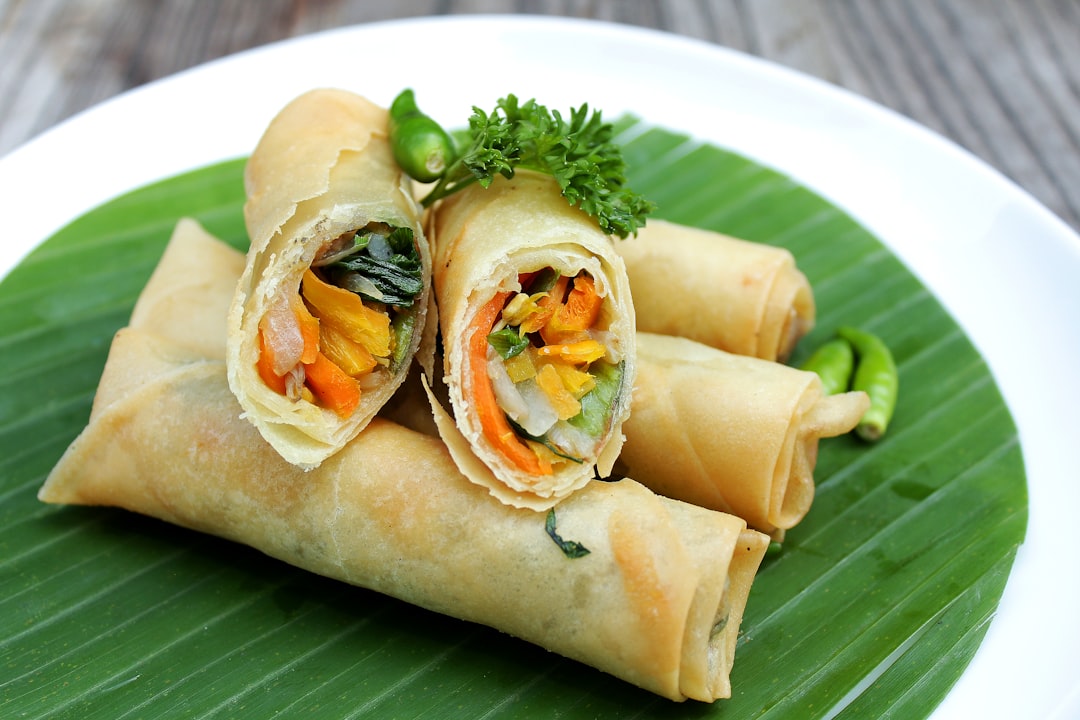
Spring roll (fresh)
Rated by 11 diets
The diets react (see scores below)
Diet Ratings
Fresh spring rolls with rice paper wrapper contain approximately 8-12g net carbs per roll depending on fillings. Rice paper is the primary carb source. Vegetable-heavy versions with minimal wrapper are more keto-friendly.
Strict keto avoids rice paper entirely due to refined carbs; some practitioners accept one roll if carbs fit daily limit and fillings are protein/fat-focused.
Fresh spring rolls typically contain vegetables, rice paper, and plant-based fillings. However, some versions may contain shrimp or fish sauce. Verification of ingredients and preparation method required.
Some spring rolls contain shrimp, fish, or fish sauce, making them non-vegan. Always verify specific ingredients and preparation.
Fresh spring rolls with vegetable/protein filling are mostly paleo-compliant, but rice paper wrapper is a grain product. Filling ingredients determine overall compliance.
Strict paleo excludes all grains including rice paper, while some practitioners accept white rice as a safe starch and tolerate rice paper accordingly.
Fresh vegetables are excellent, but spring rolls are not Mediterranean. Rice paper wrapper is acceptable whole grain alternative. Depends on filling ingredients and preparation method (fried vs. fresh).
Some modern Mediterranean diet practitioners embrace global whole-food preparations; fresh spring rolls with vegetable fillings align with plant-based emphasis despite non-traditional origin.
Contains rice paper wrapper (grain-derived), vegetables (plant-derived), and often herbs and plant-based fillings. Entirely plant-based construction violates carnivore diet.
Fresh spring rolls with rice paper wrapper are technically compliant if the wrapper is made only from rice and water (rice paper is allowed). However, the wrapper is a grain product that some interpret as testing the spirit of the program. The filling must be verified for compliant ingredients (no soy sauce, added sugar, or peanuts).
Official Whole30 guidelines allow rice paper as it is a whole grain product. However, community debate exists about whether rice paper wrappers align with the 'whole foods' spirit, as they are processed grain products. Melissa Urban has indicated rice paper is acceptable, but some community members view it as a gray area similar to recreating foods.
Depends on filling. Rice paper wrapper is low-FODMAP. Filling typically contains vegetables; high-FODMAP if includes garlic, onion, or mushrooms. Low-FODMAP version possible with approved vegetables (carrots, cucumber, lettuce) and garlic-infused oil in dipping sauce.
Monash University rates individual ingredients; most commercial spring rolls contain garlic or onion in filling. Clinical practitioners recommend checking filling ingredients or preparing at home.
Fresh spring rolls with rice paper, vegetables, herbs, and lean protein (shrimp/tofu) are excellent DASH foods. Low sodium, low saturated fat, high fiber from vegetables, nutrient-dense. Avoid fried versions and high-sodium dipping sauces.
Rice paper wrapper adds refined carbs but in moderate quantity. Vegetable and protein filling (shrimp/chicken) is Zone-friendly. Requires careful portioning of wrapper and verification of filling. Dipping sauce impact depends on sugar content.
Fresh spring rolls with rice paper, vegetables, herbs, and lean protein offer excellent anti-inflammatory profile. High in fiber, antioxidants, and phytonutrients. Minimal processing and typically served with anti-inflammatory dipping sauces.
Fresh spring rolls (not fried) are light, easy to digest, contain vegetables (fiber, water content), and often include shrimp or tofu (protein). Low fat, low calorie, portion-friendly. Excellent GLP-1 meal if dipping sauce is low-sugar and low-fat.
Nutritional profile
Six traits that cut across every diet.
Fiber & Plants
How much whole-plant food and fiber it delivers.
Healthy Fats
The quality of its fats (unsaturated, omega-3).
Whole / Unprocessed
How close it is to its natural, unprocessed form.
Gut Gentle
How easy it is on digestion (low FODMAP, few irritants).
Low Glycemic
How little it spikes your blood sugar.
Protein Density
How much protein it packs per calorie.
Controversy Index
Score range: 1–8/10. Higher controversy = more disagreement between diets.
Diet-Specific Tips for Spring roll (fresh)
 Keto — 5/10
- Rice paper carb content
- Filling composition variable
- Portion-dependent
 Vegan — 8/10
- Usually plant-based vegetables
- Rice paper wrapper
- May contain seafood
- May contain fish sauce
- Ingredient verification needed
 Paleo — 5/10
- rice paper wrapper (grain)
- filling ingredients variable
- depends on contents
 Mediterranean — 6/10
- vegetable-based
- whole grain wrapper
- non-traditional
- preparation method critical
 Whole30 — 5/10
- Rice paper wrapper is grain-based
- Filling ingredients critical
- Soy sauce often present in dipping sauce
- Rice paper technically allowed but debated
 Low-FODMAP — 6/10
- Rice paper wrapper (low-FODMAP)
- Vegetable filling composition
- Garlic/onion in filling or sauce
- Dipping sauce ingredients
 DASH — 8/10
- Low sodium
- High vegetable content
- Lean protein options
- Fiber-rich
- Dipping sauce matters
 Zone — 6/10
- refined carb wrapper
- vegetable filling
- lean protein filling
- dipping sauce variable
- portion-dependent
 Anti-Inflammatory — 8/10
- whole vegetables
- herbs
- lean protein
- minimal processing
- high fiber
 GLP-1 Friendly — 8/10
- low fat (fresh, not fried)
- easy to digest
- high water content
- good fiber (vegetables)
- portion-friendly