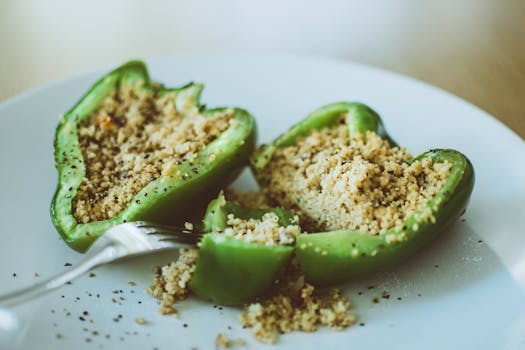
Stuffed bell peppers
Rated by 11 diets
How the diets react
Diet Ratings
Bell peppers contain 5-7g net carbs each. Stuffed peppers are keto-compatible if filled with meat and cheese, but filling ingredients matter greatly. Rice-based fillings are incompatible; meat-based fillings are acceptable.
Strict keto practitioners limit bell peppers due to carb content; others include them freely as they fit within daily carb allowance.
Peppers and vegetables are plant-based, but traditional fillings contain ground meat and cheese. Vegan versions with lentils or grains exist but are not standard.
Some vegans approve vegetable-based stuffed peppers as inherently plant-forward, regardless of typical preparation.
Bell peppers and ground meat filling are paleo-approved. Verify filling contains no grains, legumes, or dairy, and is cooked in animal fat or approved oils.
Bell peppers are Mediterranean vegetables. If filled with whole grains, legumes, and lean protein with olive oil, this is an excellent Mediterranean dish. Traditional in Mediterranean cuisine.
Bell peppers are plant-derived vegetables. Even if stuffed with meat, the pepper wrapper is plant-based and violates carnivore diet rules.
Bell peppers filled with ground meat, vegetables, and compliant seasonings are fully Whole30 compliant. No excluded ingredients if prepared without grains, legumes, or dairy.
Bell peppers are low-FODMAP. Rice filling is low-FODMAP. Ground meat is low-FODMAP. However, filling often includes onion and garlic (high-FODMAP). Tomato sauce base may also contain these aromatics.
Monash rates bell peppers as low-FODMAP, but traditional recipes rely on sautéed onion/garlic as flavor base. Homemade with garlic-free preparation is safer.
Bell peppers are DASH-approved (high potassium, vitamin C), but filling typically contains ground meat and cheese (saturated fat). Sodium depends on filling ingredients and preparation. Often 500-800mg sodium per pepper.
NIH DASH guidelines support vegetables; updated interpretation notes ground meat and cheese filling can elevate saturated fat and sodium beyond DASH targets unless lean meat and low-fat cheese used.
Bell peppers are low-glycemic, polyphenol-rich. Filling typically contains lean ground meat (protein) and rice or vegetables. If filled with lean beef/turkey and brown rice or vegetable base, achieves good 40/30/30 balance. Baked preparation avoids excess oil.
Bell peppers are antioxidant-rich (vitamin C, polyphenols). Filling typically contains grains and protein. Anti-inflammatory if filled with whole grains, beans, lean meat, and herbs. Baked preparation is favorable. Avoid high-fat cheese fillings.
Bell peppers are high-fiber, nutrient-dense, and low-calorie. If stuffed with lean ground turkey or chicken and brown rice, protein is adequate (15-20g per serving). Easy to digest, portion-friendly, and minimal GLP-1 side effects. Versatile and satisfying in small servings.
Controversy Index
Score range: 1–8/10. Higher controversy = more disagreement between diets.