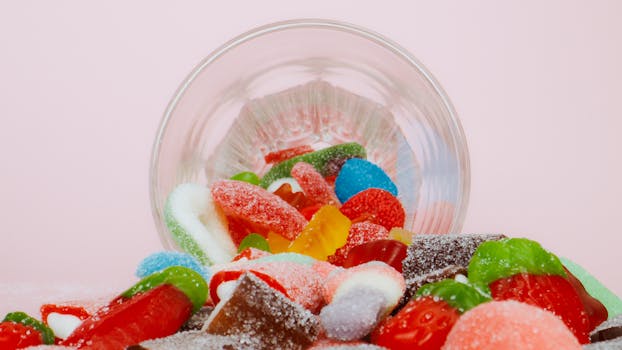
The diets react (see scores below)
Diet Ratings
Sugar-free candies vary widely. Most use sugar alcohols (erythritol, xylitol) with minimal net carbs, but some contain maltitol which raises blood sugar. Quality and ingredients determine compatibility.
Strict keto practitioners avoid all sugar-free candy due to concerns that artificial sweeteners trigger cravings, insulin response, or contain hidden carbs from sugar alcohols like maltitol.
Highly processed with variable ingredients. May contain gelatin, carmine, shellac, or other animal-derived additives. Some brands are vegan, others are not. Requires label verification.
Some vegans avoid all ultra-processed foods regardless of vegan status due to health and environmental concerns, while others accept vegan-certified processed options.
Sugar-free candy contains artificial sweeteners and additives explicitly excluded by paleo rules. Processed food with no nutritional value. Contradicts paleo philosophy of whole, unprocessed foods.
Sugar-free candy is a highly processed food with artificial sweeteners, contradicting Mediterranean principles that emphasize whole, minimally processed foods. It offers no nutritional value and represents modern ultra-processed products antithetical to traditional Mediterranean eating.
Sugar-free candy is a processed food typically made from plant-derived gums, sweeteners (sugar alcohols or artificial), and additives. Contains no animal products. Violates carnivore principle of whole animal foods only.
Sugar-free candy typically contains artificial sweeteners and/or sugar alcohols, which are excluded on Whole30. Additionally, candy violates the spirit of the program by recreating junk food.
Sugar-free candies typically use polyol sweeteners (sorbitol, xylitol, maltitol) which are high-FODMAP. Monash University explicitly flags polyols as fermentable and problematic for IBS/FODMAP-sensitive individuals at any reasonable serving.
Eliminates added sugar but often contains sugar alcohols (sorbitol, xylitol) and artificial sweeteners. May contain saturated fat and sodium. Lacks nutritional value. Acceptable occasionally but not a core DASH food.
NIH DASH guidelines do not explicitly address sugar-free candy. Updated clinical interpretation varies: some support sugar-free alternatives for blood sugar control; others argue whole foods are preferable and artificial sweeteners may have metabolic effects.
Depends heavily on sweetener type. Sugar alcohols (xylitol, erythritol) have minimal glycemic impact; artificial sweeteners (aspartame, sucralose) are inert. However, many contain maltitol with significant glycemic effect. Sears emphasizes whole foods; processed candy conflicts with anti-inflammatory focus despite acceptable macros.
Dr. Sears' later writings acknowledge sugar alcohols as acceptable Zone foods if they don't trigger insulin response, but he consistently prioritizes whole-food sources of sweetness (fruit) over artificial alternatives.
Sugar-free candy typically contains artificial sweeteners, sugar alcohols, and processed additives that contradict anti-inflammatory principles. Often includes inflammatory seed oils, emulsifiers, and artificial colorings. Provides no nutritional anti-inflammatory benefit.
Sugar-free candies replace sugar with sugar alcohols (sorbitol, xylitol, maltitol) which commonly trigger GI distress in GLP-1 patients—bloating, gas, diarrhea—especially problematic given already-slowed gastric emptying. Provides no nutritional value and may worsen side effects.
Some GLP-1 RDs view sugar-free candy as acceptable in very small amounts for occasional cravings, arguing that the psychological benefit of a small treat outweighs minor GI risk; others recommend avoiding entirely due to unpredictable individual tolerance and lack of nutritional benefit.
Nutritional profile
Six traits that cut across every diet.
Fiber & Plants
How much whole-plant food and fiber it delivers.
Healthy Fats
The quality of its fats (unsaturated, omega-3).
Whole / Unprocessed
How close it is to its natural, unprocessed form.
Gut Gentle
How easy it is on digestion (low FODMAP, few irritants).
Low Glycemic
How little it spikes your blood sugar.
Protein Density
How much protein it packs per calorie.
Controversy Index
Score range: 1–5/10. Higher controversy = more disagreement between diets.
Diet-Specific Tips for Sugar-free candy
 Keto — 5/10
- Sweetener type critical (erythritol/xylitol preferred)
- Maltitol-based products problematic
- Individual sweetener tolerance varies
- Read labels carefully for net carbs
 Vegan — 4/10
- Gelatin risk
- Carmine dye risk
- Shellac coating risk
- Brand-dependent
- Ultra-processed
 DASH — 4/10
- No added sugar
- Sugar alcohols may cause GI effects
- Artificial sweeteners
- Minimal nutritional value
- Sodium/saturated fat variable
 Zone — 5/10
- Sweetener type determines glycemic impact
- Processed food
- Lacks polyphenols and micronutrients
- Potential digestive effects from sugar alcohols
 GLP-1 Friendly — 4/10
- sugar alcohols trigger GI distress
- bloating and gas risk
- no nutritional value
- empty calories
- highly individual tolerance