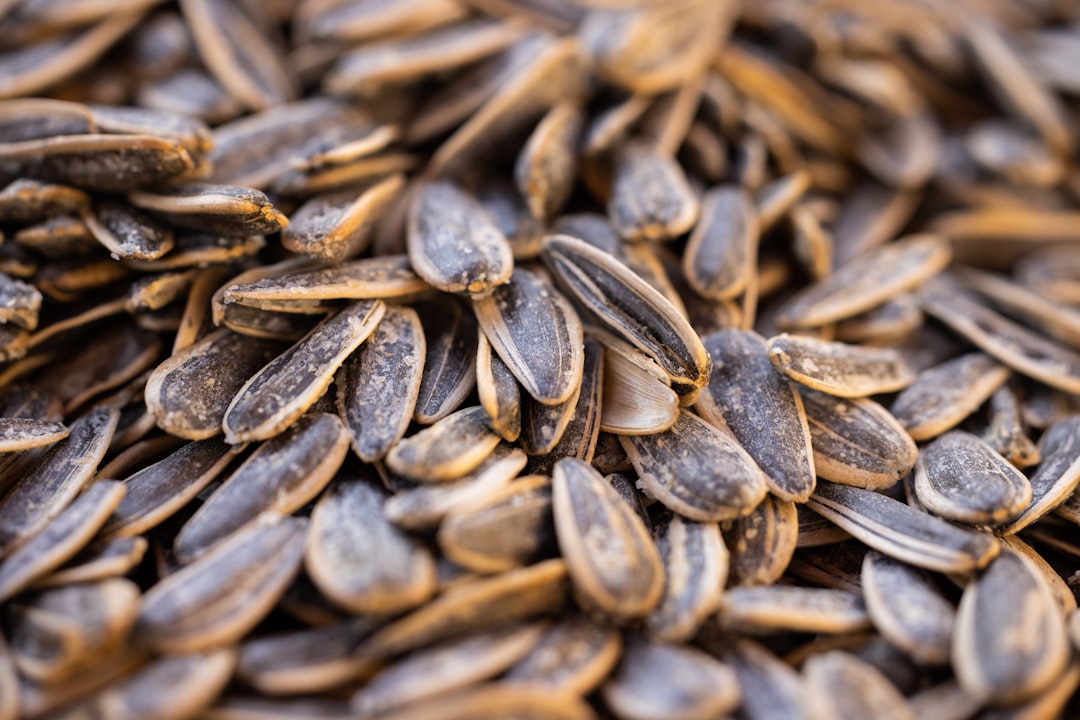
The diets react (see scores below)
Diet Ratings
Sunflower seeds contain ~3g net carbs per ounce and 14g fat per ounce. Acceptable in small portions but high omega-6 content and moderate carbs make them less ideal than macadamia nuts. Portion control essential.
Strict keto practitioners avoid sunflower seeds due to high omega-6 polyunsaturated fat content, which may promote inflammation. Some prefer seeds with better omega-3/omega-6 ratios like flax or chia.
Sunflower seeds are whole plant foods. Unprocessed, nutrient-dense, and fully compliant with vegan principles.
Seeds from sunflower plants are high in omega-6 polyunsaturated fats, creating unfavorable omega-6 to omega-3 ratio. Paleo emphasizes seeds with better fat profiles (pumpkin, flax).
Sunflower seeds are nutrient-dense with healthy polyunsaturated fats, vitamin E, and minerals. Align with Mediterranean principle of nuts and seeds eaten multiple times daily. Minimally processed when raw or lightly roasted.
Plant-derived seeds, directly violating carnivore diet principles. All seeds are excluded regardless of nutritional profile or fat content.
Whole seeds are fully Whole30 compliant. Sunflower seeds contain no excluded ingredients and are an approved fat and protein source.
Sunflower seeds are low-FODMAP at standard servings (32g/3 tablespoons per Monash). They are low in fermentable carbohydrates and polyols.
Excellent source of unsaturated fat, vitamin E, magnesium, and fiber. Low sodium (unsalted varieties). Aligns perfectly with DASH emphasis on nuts and seeds. Supports cardiovascular health and nutrient density.
Good protein and fat content but extremely high in omega-6 polyunsaturated fat (linoleic acid). Inflammatory profile conflicts with Zone anti-inflammatory focus. Can be used sparingly but inferior to macadamia nuts or almonds.
Sunflower seeds are extremely high in omega-6 polyunsaturated fats with minimal omega-3 content, creating an inflammatory omega-6 to omega-3 ratio. Regular consumption of sunflower seeds and sunflower oil is explicitly discouraged in anti-inflammatory protocols.
Good protein (5.5g per oz), high fiber (2.4g per oz), unsaturated fats (9g per oz), nutrient-dense (vitamin E, selenium). Portion-friendly and satiating. Lower fat density than macadamia nuts. Excellent snack for GLP-1 patients.
Nutritional profile
Six traits that cut across every diet.
Fiber & Plants
How much whole-plant food and fiber it delivers.
Healthy Fats
The quality of its fats (unsaturated, omega-3).
Whole / Unprocessed
How close it is to its natural, unprocessed form.
Gut Gentle
How easy it is on digestion (low FODMAP, few irritants).
Low Glycemic
How little it spikes your blood sugar.
Protein Density
How much protein it packs per calorie.
Controversy Index
Score range: 1–10/10. Higher controversy = more disagreement between diets.
Diet-Specific Tips for Sunflower seeds
 Keto — 5/10
- 3g net carbs per ounce
- High omega-6 content
- Moderate fat
- Portion control needed
 Vegan — 10/10
- Whole plant food
- Unprocessed
- Nutrient-dense
- Seed-based
 Mediterranean — 8/10
- Healthy polyunsaturated fats
- Vitamin E rich
- Nutrient-dense
- Minimal processing
- Fits seed consumption principle
 Whole30 — 9/10
- Whole food
- No excluded ingredients
- Approved seed
- Natural fat source
 Low-FODMAP — 8/10
- Low polyol content
- Low fermentable carbohydrates
- Monash-tested at 32g serving
 DASH — 8/10
- Unsaturated fat profile
- Rich in vitamin E
- Good magnesium source
- High fiber content
 Zone — 5/10
- ~6g protein per oz
- ~14g fat per oz (mostly omega-6)
- ~7g carbs per oz
- High omega-6 ratio
- Inflammatory potential
 GLP-1 Friendly — 7/10
- Good protein
- High fiber
- Unsaturated fats
- Nutrient-dense