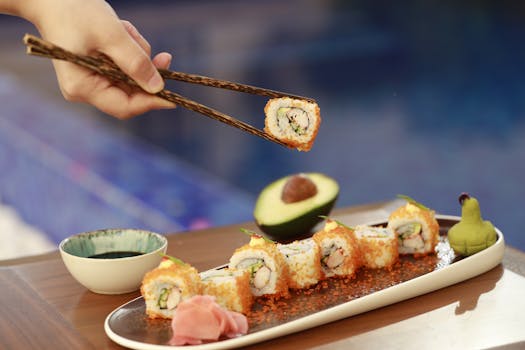
Sushi (California roll)
Rated by 11 diets
How the diets react
Diet Ratings
California rolls contain white sushi rice (20-30g net carbs per 6 pieces), imitation crab (often contains added sugars), avocado mayo, and sometimes sweet condiments. Total net carbs typically 25-35g per standard serving, exceeding daily keto limits. Incompatible with ketosis.
Typically contains imitation crab (usually vegan), but often includes mayonnaise made with eggs. Rice and vegetables are plant-based. Depends heavily on specific ingredients and preparation.
Some vegans accept California rolls if mayo is confirmed egg-free and crab substitute is plant-based, treating it as approvable with verification.
Contains white rice (grain), imitation crab (processed), and often mayonnaise made with seed oils. The processing and grain content conflict with paleo principles, though the fish and vegetable components are acceptable.
Some paleo practitioners accept white rice as a 'safe starch' (Paul Jaminet's Perfect Health Diet), and if the mayo is made with avocado oil or olive oil, the roll becomes more acceptable.
Contains imitation crab (processed), mayonnaise (high saturated fat), and avocado. While avocado is Mediterranean-friendly, the mayo and processed ingredients reduce alignment. Rice content is acceptable but not emphasized in Mediterranean diet.
Some Mediterranean practitioners accept California rolls as occasional treats due to fish content and vegetable components (cucumber, avocado), viewing the mayo as a minor deviation in otherwise balanced meals.
Contains rice, imitation crab (processed with plant-based binders and additives), avocado (plant), and cucumber (plant). Multiple plant-derived ingredients violate carnivore principles.
California rolls contain rice (excluded grain), imitation crab (often contains additives and binders), avocado, and cucumber. While the vegetables and potential real crab would be compliant, imitation crab is a processed product with questionable ingredients. Additionally, the roll format with rice may exceed the spirit of nigiri approval.
Melissa Urban's official guidance approves nigiri sushi specifically, but California rolls with imitation crab and the rolled format push beyond that explicit approval. Some community members accept it as a whole food preparation; others view it as processed.
California rolls contain imitation crab, avocado, and cucumber. Avocado is high in polyols and excess fructose; Monash rates avocado as high-FODMAP. Standard serving size (6-8 pieces) may contain problematic avocado amounts. Rice and crab are low-FODMAP.
Monash University rates avocado as high-FODMAP due to polyols and excess fructose. Some practitioners suggest small amounts (1/8 avocado) may be tolerated, but elimination phase requires strict avoidance.
Contains imitation crab (processed), mayonnaise (saturated fat), and avocado (healthy fat but calorie-dense). Sodium depends on soy sauce use. Less nutrient-dense than salmon nigiri.
Some clinicians view California rolls favorably due to avocado's monounsaturated fats and overall balanced macronutrient profile, though processing and mayo content warrant moderation.
California rolls combine high-glycemic white rice with imitation crab (processed), mayonnaise (omega-6 heavy), and often added sugar in the rice seasoning. Macro profile heavily skewed toward carbs with poor protein quality. Difficult to balance into Zone ratios without excessive vegetable compensation.
Contains imitation crab (processed, often high in sodium and additives), avocado (anti-inflammatory), and mayonnaise-based sauces (typically soybean oil-based, high omega-6). The refined rice and added sugars in sauces reduce anti-inflammatory benefit. Nutritional profile depends heavily on sauce composition.
Some nutritionists view California rolls favorably due to avocado content and moderate portion sizes, considering them acceptable occasional choices despite processing.
Contains imitation crab (low protein), mayonnaise (high fat), and refined rice. Protein content is moderate (~8g per 6 pieces), fiber is minimal. Higher calorie density relative to nutritional value. Acceptable occasionally but not ideal for GLP-1 patients.
Controversy Index
Score range: 2–6/10. Higher controversy = more disagreement between diets.