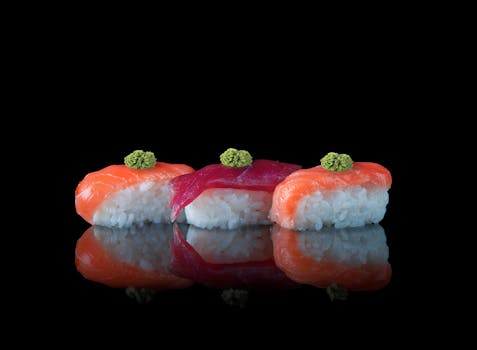
Sushi (salmon nigiri)
Rated by 11 diets
How the diets react
Diet Ratings
Salmon provides excellent omega-3 fats and protein, but nigiri sushi relies on white rice (sushi rice) which is high in refined carbs. A typical 6-piece serving contains 20-30g net carbs, consuming most or all of a daily keto allowance. Can fit with strict portion control (2-3 pieces) or rice substitution.
Some keto practitioners avoid all sushi rice entirely due to its high glycemic index and refined nature, while others argue 2-3 pieces as an occasional treat is acceptable within daily carb limits.
Contains salmon (fish), a clear animal product prohibited in vegan diet.
Raw salmon is an excellent paleo protein source rich in omega-3 fatty acids. White rice is the only concern, but nigiri's minimal rice content makes this acceptable for most paleo practitioners.
Salmon is fatty fish rich in omega-3s, consumed 2-3 times weekly in Mediterranean diet. Nigiri is minimally processed with rice and fish. No added oils or excessive sodium typical of Mediterranean preparation.
Pure salmon (fatty fish) and rice. Rice is plant-derived carbohydrate and violates carnivore rules, but the salmon component is excellent. Rating reflects the salmon quality offset by rice content.
Salmon nigiri consists of raw salmon (compliant protein) and white rice. While rice is excluded, nigiri sushi is explicitly addressed by Whole30 as acceptable because the rice serves as a vehicle/delivery method rather than a primary ingredient, and the focus is on the protein and vegetables. This is a whole food preparation.
Salmon nigiri consists of raw salmon and white rice with minimal additives. Rice is low-FODMAP, salmon is protein with no fermentable carbohydrates. No garlic, onion, or high-FODMAP ingredients in standard preparation.
Salmon provides omega-3 fatty acids and high-quality protein. Nigiri has minimal added sodium and no added sugar. Rice provides whole grain carbohydrates when brown rice is used. Low saturated fat.
Salmon provides excellent lean protein and omega-3 fats, but nigiri relies on white rice (high-glycemic). Typical 6-piece serving contains ~24g carbs (mostly refined), 12g protein, 3g fat. Requires careful portioning and ideally pairing with vegetable sides to balance macros toward 40/30/30.
Salmon is rich in omega-3 fatty acids (EPA and DHA), which are cornerstone anti-inflammatory compounds. Nori (seaweed) provides iodine and minerals. Minimal processing and no inflammatory additives. Rice provides whole grain carbohydrates when sushi-grade.
Salmon provides high-quality protein (25g per 6 pieces) and omega-3 fatty acids. Low in saturated fat, easy to digest, nutrient-dense per calorie. Portion-friendly format naturally limits intake. Minimal processing.
Controversy Index
Score range: 1–9/10. Higher controversy = more disagreement between diets.