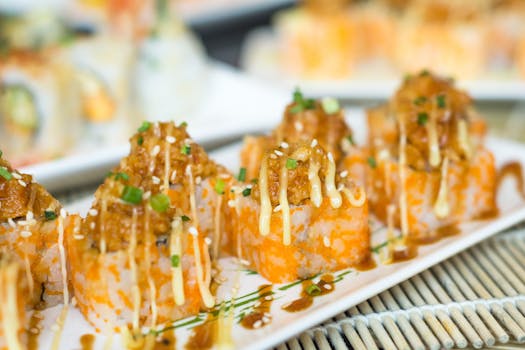
Sushi (spicy tuna roll)
Rated by 11 diets
How the diets react
Diet Ratings
Spicy tuna rolls contain white sushi rice (20-30g net carbs per 6 pieces) and spicy mayo which may contain added sugars. Some versions include sriracha or sweet chili sauce adding additional carbs. Total net carbs typically 25-35g per serving, incompatible with ketosis.
Contains tuna (fish), a clear animal product. The spicy mayo typically contains eggs.
Contains white rice and spicy mayo (typically seed oil-based). The tuna is paleo-approved, but the grain and processed condiments are problematic.
If the spicy mayo uses avocado oil or olive oil instead of seed oils, and white rice is accepted as a safe starch, this becomes more acceptable to some paleo followers.
Tuna is good fish source, but spicy tuna rolls typically contain mayonnaise-based spicy sauce and processed ingredients. The preparation method adds unnecessary fats and sodium not aligned with Mediterranean principles.
Some regions of Mediterranean (particularly Japan-influenced modern Mediterranean) view spicy tuna rolls as acceptable if mayo is minimized and fresh tuna is verified, focusing on the fish benefit.
Contains rice (plant carbohydrate), spicy sauce with plant-derived ingredients (chili peppers, possibly mayo with plant oils), and avocado. Multiple plant violations.
Spicy tuna rolls contain rice (excluded grain) and the 'spicy' component typically involves mayo-based sauces with added sugar, soy sauce (contains soy, an excluded legume), or sriracha (often contains added sugar). The rolled format also exceeds the nigiri exception.
Spicy tuna rolls typically contain tuna (low-FODMAP) and rice, but the spicy sauce often includes garlic, onion, or garlic-infused mayo. Exact FODMAP content depends on sauce preparation. Standard commercial versions likely contain garlic or onion powder.
Monash University rates garlic and onion as high-FODMAP. If the spicy sauce is made without these ingredients, the roll would be low-FODMAP. Most commercial preparations contain garlic or onion, making them problematic.
Tuna provides protein and omega-3s, but spicy rolls typically contain mayonnaise-based sauces (saturated fat, calories). Sodium elevated with soy sauce and spicy mayo. Processing reduces whole-food benefit.
Some nutritionists emphasize tuna's lean protein and omega-3 content as offsetting the mayo concern if portion-controlled, though DASH guidelines prioritize minimizing added fats.
High-glycemic white rice combined with spicy mayo (omega-6 seed oils, added sugars) and processed tuna. The inflammatory fat profile and refined carbs make this difficult to fit into Zone anti-inflammatory principles. Macro imbalance heavily favors carbs.
Tuna provides some omega-3s but less than salmon. Spicy mayo sauce contains inflammatory seed oils (typically soybean or safflower oil) and added sugars. The sriracha or chili pepper adds anti-inflammatory compounds, but overall inflammatory load from sauce is significant.
Some authorities emphasize the anti-inflammatory benefits of capsaicin in chili peppers and tuna's omega-3 content, rating this higher if sauce is minimal.
Tuna provides decent protein (~20g per 6 pieces), but spicy condiments (sriracha, spicy mayo) may trigger reflux and nausea in GLP-1 patients. High fat from mayo-based sauces. Acceptable for those without GI sensitivity, but problematic for others.
Some GLP-1 patients tolerate spicy foods without issue and appreciate the flavor intensity for appetite suppression. Individual tolerance varies significantly; spice sensitivity is not universal on GLP-1s.
Controversy Index
Score range: 1–5/10. Higher controversy = more disagreement between diets.