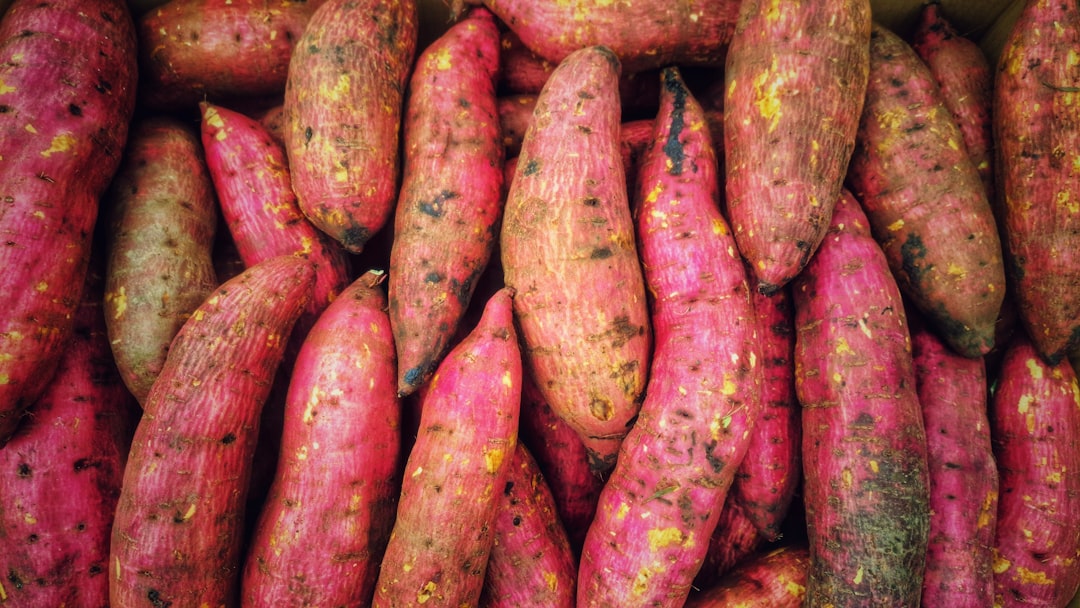
The diets react (see scores below)
Diet Ratings
One medium sweet potato contains approximately 20g net carbs, consuming the entire daily carb allowance for many keto practitioners. High starch content and glycemic load make it fundamentally incompatible with ketosis maintenance.
Whole plant tuber with no animal products or derivatives. Exemplary whole-food vegan staple.
Tuber available to Paleolithic humans. Rich in beta-carotene, fiber, and potassium. Unprocessed whole food. Widely accepted in paleo diet as a safe starch.
Whole grain alternative with fiber, vitamins, and antioxidants. Fits Mediterranean emphasis on whole plant foods. Minimal processing when prepared simply. Moderate portion control recommended.
Sweet potato is a starchy plant tuber with high carbohydrate content. Excluded from carnivore diet.
Whole starchy vegetable with no added ingredients. Explicitly compliant as a potato variety.
Monash University confirms sweet potato is low-FODMAP at standard serving sizes (approximately 150g). Low fructan content when cooked.
Excellent DASH vegetable. Very low sodium, high potassium, good fiber, rich in beta-carotene. Whole grain-like nutrient profile supports DASH goals.
High glycemic index despite 'healthy' reputation. One medium sweet potato (~24g carbs) causes significant insulin response. Sears explicitly categorizes starchy vegetables (potatoes, corn) as high-glycemic carbs to eliminate. Incompatible with Zone anti-inflammatory protocol.
Whole grain carbohydrate with high beta-carotene, vitamin C, and polyphenols. Moderate glycemic index when cooked. Fiber content supports healthy inflammation response. Preferred starch choice in anti-inflammatory diet.
Moderate fiber (3.9g per medium baked) and good carbohydrate quality, but low protein (2g per medium baked) and moderate calorie density (103 cal per medium baked). Natural sugars (5.5g per medium) are moderate. Easy to digest and nutrient-dense, but must be paired with high-protein food to meet meal requirements. Portion-sensitive due to calorie density.
Nutritional profile
Six traits that cut across every diet.
Fiber & Plants
How much whole-plant food and fiber it delivers.
Healthy Fats
The quality of its fats (unsaturated, omega-3).
Whole / Unprocessed
How close it is to its natural, unprocessed form.
Gut Gentle
How easy it is on digestion (low FODMAP, few irritants).
Low Glycemic
How little it spikes your blood sugar.
Protein Density
How much protein it packs per calorie.
Controversy Index
Score range: 1–10/10. Higher controversy = more disagreement between diets.
Diet-Specific Tips for Sweet potato
 Vegan — 10/10
- 100% plant-based
- Whole food
- Nutrient-dense
- No processing required
 Paleo — 8/10
- Tuber
- Nutrient-dense
- Safe starch
- Fiber-rich
 Mediterranean — 8/10
- whole food
- high in fiber
- antioxidant-rich
- nutrient-dense carbohydrate
 Whole30 — 9/10
- Whole vegetable
- Starchy carbohydrate
- Nutrient-dense
 Low-FODMAP — 8/10
- Low fructan content
- Minimal polyol content
- Monash-tested and approved
 DASH — 9/10
- Very low sodium
- High potassium
- Good fiber content
- Rich in beta-carotene
- Moderate glycemic index
 Anti-Inflammatory — 8/10
- Beta-carotene
- Polyphenols
- Dietary fiber
- Moderate glycemic index
 GLP-1 Friendly — 5/10
- moderate fiber
- low protein
- moderate calorie density
- moderate natural sugar
- good nutrient density
- easy to digest