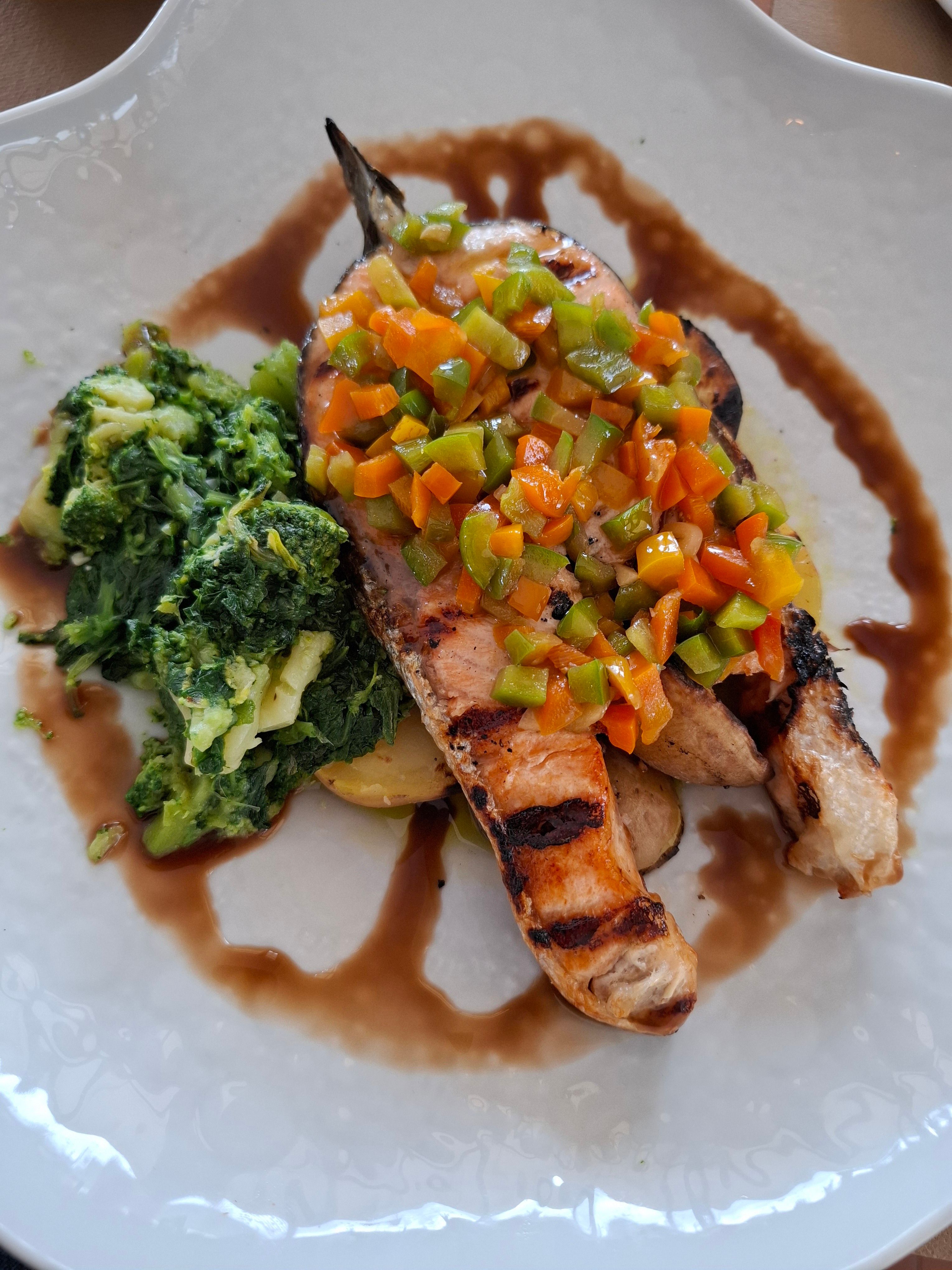
The diets react (see scores below)
Diet Ratings
Zero carbs with high-quality protein and healthy fats. Whole food fish. Mercury content is higher than some fish but not a keto concern.
Fish is animal flesh; all seafood is prohibited in vegan diets.
Swordfish is an unprocessed whole fish available to hunter-gatherers. It is nutrient-dense with omega-3 fatty acids. The only minor concern is mercury content in large predatory fish, but this is a nutritional consideration rather than a paleo compliance issue.
Excellent fish source meeting 2-3 times weekly recommendation, but swordfish accumulates mercury due to predatory nature and long lifespan. Acceptable occasionally but not as primary fish source. Pregnant women and children should limit further.
Some Mediterranean diet authorities emphasize that traditional Mediterranean regions consumed swordfish regularly without concern, and mercury risk is overstated for general adult population consuming moderate amounts.
Swordfish is a fatty fish rich in omega-3 fatty acids and micronutrients. Unprocessed, whole fish meets all carnivore criteria. No concerns with preparation if cooked in animal fat or eaten plain.
Fresh swordfish is a whole, unprocessed seafood product fully compliant with Whole30. Excellent protein and fat source. Note: High mercury content may be a health consideration outside Whole30 scope.
Swordfish is a plain fish with no FODMAP content. Monash University rates unprocessed fish as low-FODMAP at all reasonable portions.
Good protein source (20g per 3oz) with moderate omega-3s and low saturated fat (1.5g per 3oz). However, swordfish has elevated mercury content (FDA advisory for pregnant women/children). NIH DASH guidelines recommend fish but don't specifically address mercury concerns. Updated clinical interpretation suggests limiting frequency due to bioaccumulation.
NIH DASH guidelines emphasize fish as core protein; however, FDA mercury advisories recommend limiting swordfish to 1 serving per week for general population. Some clinicians prioritize mercury risk over DASH benefits.
Lean fish with ~25g protein and ~5g fat per 3.5oz. Low saturated fat, good source of omega-3s. Fits Zone macros well. Minor concern: higher mercury content than some fish, but nutritional profile is Zone-compliant.
Swordfish provides omega-3s and quality protein, but is a large predatory fish with potential mercury accumulation. FDA recommends limiting consumption to 1 serving per week due to mercury content.
Some authorities emphasize the anti-inflammatory benefits of omega-3s in swordfish and suggest occasional consumption is acceptable; others (AHA, FDA) prioritize mercury concerns and recommend lower-mercury fish like salmon, sardines, or mackerel instead.
Swordfish is a lean fish with good protein (~20g per 3oz) and moderate fat (~5g per 3oz, mostly unsaturated). However, swordfish has higher mercury content than many other fish, which is a concern for long-term consumption. It's acceptable occasionally but shouldn't be a primary fish choice for GLP-1 patients. Pair with high-fiber sides to support digestion.
Some RDs view swordfish as acceptable 1-2x monthly given its protein and omega-3 content; others recommend prioritizing lower-mercury fish (salmon, sardines, mackerel) for regular consumption due to bioaccumulation concerns.
Nutritional profile
Six traits that cut across every diet.
Fiber & Plants
How much whole-plant food and fiber it delivers.
Healthy Fats
The quality of its fats (unsaturated, omega-3).
Whole / Unprocessed
How close it is to its natural, unprocessed form.
Gut Gentle
How easy it is on digestion (low FODMAP, few irritants).
Low Glycemic
How little it spikes your blood sugar.
Protein Density
How much protein it packs per calorie.
Controversy Index
Score range: 1–9/10. Higher controversy = more disagreement between diets.
Diet-Specific Tips for Swordfish
 Keto — 8/10
- Zero net carbs
- High protein
- Healthy fats
- Whole food
 Paleo — 8/10
- Unprocessed whole fish
- Available to Paleolithic humans
- Rich in omega-3 fatty acids
- Mercury content consideration (not paleo-specific)
 Mediterranean — 6/10
- Fish category (2-3x weekly encouraged)
- High mercury content
- Predatory fish
- Acceptable occasionally, not primary source
- Vulnerable populations should limit
 Carnivore — 8/10
- Fatty fish (omega-3 rich)
- Unprocessed
- High micronutrient density
- No additives required
 Whole30 — 9/10
- Whole seafood product
- No processing
- No excluded ingredients
 Low-FODMAP — 9/10
- Unprocessed fish protein
- No fermentable carbohydrates
- No additives in plain form
 DASH — 6/10
- Good protein and omega-3 content
- Low saturated fat
- Elevated mercury levels
- Frequency-dependent safety
 Zone — 7/10
- Lean protein source
- Moderate omega-3 content
- Low saturated fat
- Mercury consideration (not Zone-specific)
 Anti-Inflammatory — 5/10
- omega-3 present
- high mercury risk
- quality protein
- frequency-limited
 GLP-1 Friendly — 6/10
- good protein content
- moderate fat (mostly unsaturated)
- higher mercury content
- occasional use recommended