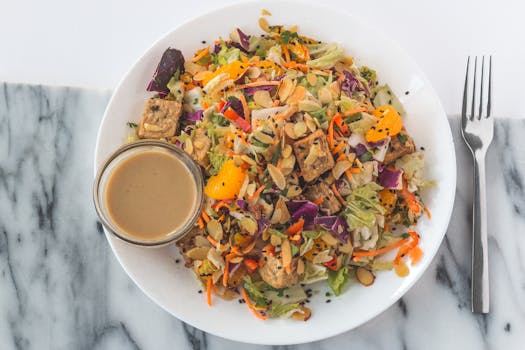
The diets react (see scores below)
Diet Ratings
Tahini dressing varies widely by recipe. Pure tahini is 3g net carbs per 2 tbsp with high fat content, but commercial dressings often contain added sugars, honey, or lemon juice. Homemade versions with tahini, oil, and vinegar are keto-friendly; store-bought versions require careful label review.
Some keto practitioners avoid all tahini-based dressings due to seed oil content and potential for hidden carbs; mainstream keto accepts homemade versions with verified ingredients.
Tahini (sesame seed paste) is plant-based, but dressings often contain honey, dairy, or eggs as binders or flavor enhancers. Homemade versions with plant-based ingredients score higher.
Some vegans consider all commercial tahini dressings suspect due to frequent inclusion of honey or anchovies; homemade versions are preferred.
Tahini (sesame seed paste) is made from seeds, which are technically allowed in paleo. However, tahini dressing typically contains added oils, sweeteners, or other ingredients. Evaluate based on specific formulation; pure tahini is closer to approve.
Some strict paleo practitioners avoid all seed pastes and extracted seed products, viewing them as processed. However, mainstream paleo (Mark Sisson, Whole30) accepts tahini and sesame seeds as compliant whole foods.
Tahini (sesame paste) is a plant-based fat source with Mediterranean roots, particularly in Levantine cuisine. When used as a dressing base, it provides healthy fats and protein. Aligns well with Mediterranean principles.
Sesame seed-based dressing. Plant-derived seed product explicitly excluded from carnivore diet. Contains plant oils and compounds.
Tahini (sesame paste) is compliant, but dressings often contain added sugar, vinegars, or other additives. Approval depends entirely on ingredient list. Homemade with compliant ingredients would be acceptable.
Some community members debate whether tahini-based dressings recreate 'salad dressing' in a way that tests the spirit of whole foods, though official Whole30 does not explicitly restrict tahini or simple dressings.
Tahini (sesame paste) is low-FODMAP, but dressings vary widely. Common additions include garlic, onion, lemon juice (excess fructose), or honey (high-FODMAP). Monash rates plain tahini as low-FODMAP, but commercial dressings require ingredient verification.
Monash University rates plain tahini as low-FODMAP, but 'tahini dressing' is undefined. Clinical practitioners recommend checking for garlic, onion, honey, or high-fructose additions. Homemade versions with low-FODMAP ingredients are safer.
Tahini itself is DASH-approved (sesame seeds, healthy fats), but commercial dressings often contain added sodium, oils, and sugars. Homemade tahini dressing with minimal salt is preferable. Sodium content varies significantly by brand.
NIH DASH guidelines support tahini as a nut/seed product; however, commercial dressing formulations often exceed recommended sodium levels. Updated clinical interpretation recommends homemade versions or careful label review.
Tahini (sesame paste) is ~50% fat and ~15% protein by weight. Dressing formulation varies widely. Typical tahini dressing contains ~8-10g fat and ~2-3g carbs per 2 tbsp. Must be portioned carefully; works as part of fat and carb blocks. Verify specific recipe macros.
Tahini (sesame paste) is nutritious with minerals and some polyphenols, but dressings often contain added oils, sugars, and emulsifiers. Quality highly dependent on preparation. Homemade tahini dressing with EVOO and lemon is approvable; commercial versions often problematic.
Some nutritionists view tahini as acceptable due to sesame's mineral content and lignan polyphenols. However, commercial dressings frequently contain inflammatory seed oils and added sugars, making homemade versions preferable.
Tahini is sesame seed paste: high fat (16g per 2 tbsp), high calories (180 per 2 tbsp), moderate protein (5g per 2 tbsp). Dressings typically dilute this further with oil/lemon. High fat content worsens GLP-1 side effects. Use sparingly (1 tsp) as a flavor accent only.
Nutritional profile
Six traits that cut across every diet.
Fiber & Plants
How much whole-plant food and fiber it delivers.
Healthy Fats
The quality of its fats (unsaturated, omega-3).
Whole / Unprocessed
How close it is to its natural, unprocessed form.
Gut Gentle
How easy it is on digestion (low FODMAP, few irritants).
Low Glycemic
How little it spikes your blood sugar.
Protein Density
How much protein it packs per calorie.
Controversy Index
Score range: 1–8/10. Higher controversy = more disagreement between diets.
Diet-Specific Tips for Tahini dressing
 Keto — 6/10
- 3g net carbs per 2 tbsp (pure tahini)
- Variable sugar in commercial versions
- High fat content favorable
- Requires ingredient verification
 Vegan — 6/10
- Tahini base is plant-derived
- Risk of honey, dairy, or eggs in commercial versions
- Homemade versions are safer
- Ingredient list verification essential
 Paleo — 5/10
- Sesame seed source (allowed)
- Processing level varies by product
- Often contains added ingredients
- High omega-6 content
 Mediterranean — 8/10
- plant-based fat
- Mediterranean region (Levant)
- healthy fat profile
- minimal processing
 Whole30 — 5/10
- Tahini itself is compliant
- Added ingredients critical
- Check for sugar and additives
 Low-FODMAP — 5/10
- Tahini base is low-FODMAP
- Dressing additives are variable
- Garlic and onion common in recipes
 DASH — 5/10
- Variable sodium by brand
- Healthy fat base (sesame)
- Often contains added sugars
- Calorie-dense
- Homemade version preferred
 Zone — 5/10
- High fat content; portion control essential
- Moderate protein contribution
- Carb content depends on added sweeteners
- Sesame provides polyphenols
 Anti-Inflammatory — 5/10
- sesame polyphenols present
- mineral-rich base
- commercial versions often contain seed oils
- added sugars common in prepared versions
- preparation method critical
 GLP-1 Friendly — 4/10
- high fat content
- high calorie density
- moderate protein
- worsens GI side effects
- portion-dependent