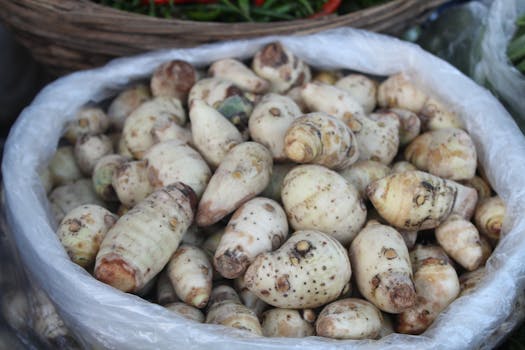
The diets react (see scores below)
Diet Ratings
Contains ~13g net carbs per 100g cooked, high starch content similar to potatoes. Incompatible with keto macros; even small portions significantly impact daily carb budget.
Whole plant tuber staple with good carbohydrate and resistant starch content. Fully vegan-compliant and minimally processed.
Taro is a starchy tuber. While tubers are generally allowed in paleo, taro's high starch and carbohydrate content makes it similar to white potatoes—debated within the community. Acceptable in moderation.
Strict Cordain-school paleo excludes high-starch tubers like taro. However, modern paleo practitioners and Whole30 often include starchy tubers as safe carbs for active individuals, treating taro similarly to sweet potatoes.
Starchy root vegetable with higher carbohydrate and calorie content than typical Mediterranean vegetables. Contains some fiber and minerals, but glycemic impact is significant. Not a traditional Mediterranean ingredient.
Some practitioners accept taro root as a whole plant starch alternative in modern Mediterranean diet adaptations, though it is not historically Mediterranean.
Root vegetable, plant-derived. Explicitly excluded from carnivore diet. High in carbohydrates and plant compounds.
Whole starchy vegetable root, no excluded ingredients. Compliant as a vegetable source of carbohydrates.
Taro root is high in resistant starch and fructans, making it problematic for low-FODMAP diet. Limited Monash testing, but carbohydrate composition and practitioner experience indicate high fermentable content unsuitable for elimination phase.
Monash University has not formally tested taro root. Clinical FODMAP practitioners and carbohydrate analysis suggest high fructan/resistant starch content; however, some sources propose small portions may be tolerated after reintroduction phase.
Starchy root vegetable with fiber and potassium, but higher in calories and carbohydrates than other DASH vegetables. Acceptable as whole-food starch but portion control needed for blood pressure management.
Taro root is starchy tuber with high carbohydrate content (approximately 27g carbs per 100g cooked). High glycemic load similar to potatoes, which Dr. Sears explicitly excludes. Incompatible with Zone low-glycemic carb requirement. Better alternatives available.
Starchy root vegetable with moderate polyphenol content and resistant starch (when cooked and cooled). Higher carbohydrate load than non-starchy vegetables. Contains some antioxidants but lacks potent anti-inflammatory compounds. Acceptable in moderation as whole grain alternative but not a priority.
Some nutritionists emphasize taro's resistant starch and prebiotic fiber benefits for gut health, particularly when properly prepared.
Higher carbohydrate content (27g per 100g cooked) and calorie density (112 cal per 100g cooked) than most approved vegetables. Moderate fiber (4.1g per 100g) and minimal protein (0.5g per 100g). Starchy nature means portion control critical. Easily digestible when cooked. Acceptable as occasional starch component but should be paired with substantial protein and not primary vegetable choice for GLP-1 patients.
Some RDs recommend taro root for its resistant starch content (prebiotic benefit) and mineral density (potassium, manganese). Others view it as too calorie-dense and carb-heavy for GLP-1 patients with significantly reduced appetite and calorie budgets.
Nutritional profile
Six traits that cut across every diet.
Fiber & Plants
How much whole-plant food and fiber it delivers.
Healthy Fats
The quality of its fats (unsaturated, omega-3).
Whole / Unprocessed
How close it is to its natural, unprocessed form.
Gut Gentle
How easy it is on digestion (low FODMAP, few irritants).
Low Glycemic
How little it spikes your blood sugar.
Protein Density
How much protein it packs per calorie.
Controversy Index
Score range: 1–9/10. Higher controversy = more disagreement between diets.
Diet-Specific Tips for Taro root
 Vegan — 9/10
- Whole plant food
- Good resistant starch
- Minimal processing
- Traditional staple
 Paleo — 6/10
- Starchy tuber
- High carbohydrate content
- Contains some anti-nutrients
- Portion control needed
 Mediterranean — 5/10
- High starch content
- Higher glycemic impact
- Non-traditional ingredient
- Moderate nutrient density
 Whole30 — 9/10
- Whole vegetable
- No excluded ingredients
- Starchy but compliant vegetable
 DASH — 6/10
- Low sodium
- Higher calorie density
- Good fiber and potassium
- Portion control important
- Whole food starch
 Anti-Inflammatory — 5/10
- Moderate carbohydrate content
- Resistant starch when cooked and cooled
- Modest polyphenol content
- Prebiotic fiber supports microbiome
 GLP-1 Friendly — 4/10
- high carbohydrate content
- higher calorie density
- moderate fiber
- minimal protein
- starchy/requires portion control
- easily digestible when cooked