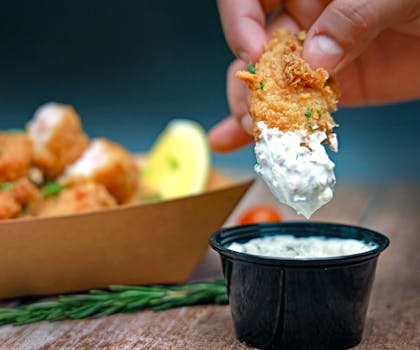
The diets react (see scores below)
Diet Ratings
Tartar sauce typically contains 1-2g net carbs per tablespoon but often includes added sugar, sweetened relish, or high-carb fillers. Homemade versions (mayo, pickles, lemon) are keto-compatible; commercial versions frequently exceed acceptable carb limits. Requires careful label review.
Strict keto practitioners avoid all commercial tartar sauces due to hidden sugars; mainstream keto accepts homemade versions or verified low-carb brands.
Traditional tartar sauce contains mayonnaise (eggs) and sometimes anchovies. Even vegan versions are heavily processed. Standard versions are non-vegan.
Tartar sauce is typically made with mayonnaise (often containing seed oils), pickles (vinegar and added salt/sugar), and other processed ingredients. Most commercial versions contain refined sugar and seed oils.
Tartar sauce is typically made with mayonnaise (refined oils), added sugars, and processed ingredients. It contradicts Mediterranean principles of minimal processing and whole foods.
Condiment typically made with mayonnaise, pickles, capers, and other plant-based ingredients. Contains plant-derived components explicitly excluded from carnivore diet.
Tartar sauce typically contains mayonnaise (eggs and oil are fine, but commercial versions often have added sugar), relish (pickled vegetables with added sugar), and other additives. Most commercial versions contain added sugar.
Tartar sauce is typically made with mayonnaise, pickles, capers, and onion. Onion is high-FODMAP (fructans). Even small amounts of onion in tartar sauce exceed low-FODMAP thresholds. Monash rates onion as high-FODMAP at any reasonable serving.
High sodium (typically 300-400mg per 2 tablespoons) and high saturated fat from mayonnaise base. Added sugars common. Contradicts DASH sodium and fat restrictions.
Typically made with mayonnaise, relish, and added sugar/sweeteners. Contains ~2-3g carbs per tbsp (from sugar and relish) plus high fat from mayo. Highly processed with poor carb quality. Zone-incompatible due to sugar content and difficulty in macro balancing. Use homemade alternative with sugar-free mayo and minimal relish.
Typically made with mayonnaise (seed oil-based), added sugars, and refined ingredients. High omega-6 from vegetable oils. Contains additives and preservatives. No anti-inflammatory benefits. Contradicts all anti-inflammatory dietary principles.
Typically mayonnaise-based (high fat: 10g per 2 tbsp), high calories (180 per 2 tbsp), added sugars (2-3g per 2 tbsp), and ultra-processed. High fat content worsens GLP-1 side effects significantly. Incompatible with GLP-1 dietary guidelines.
Nutritional profile
Six traits that cut across every diet.
Fiber & Plants
How much whole-plant food and fiber it delivers.
Healthy Fats
The quality of its fats (unsaturated, omega-3).
Whole / Unprocessed
How close it is to its natural, unprocessed form.
Gut Gentle
How easy it is on digestion (low FODMAP, few irritants).
Low Glycemic
How little it spikes your blood sugar.
Protein Density
How much protein it packs per calorie.
Controversy Index
Score range: 2–4/10. Higher controversy = more disagreement between diets.
Diet-Specific Tips for Tartar sauce
 Keto — 4/10
- 1-2g net carbs per tbsp (variable)
- Often contains added sugar
- Homemade versions preferred
- Requires brand verification