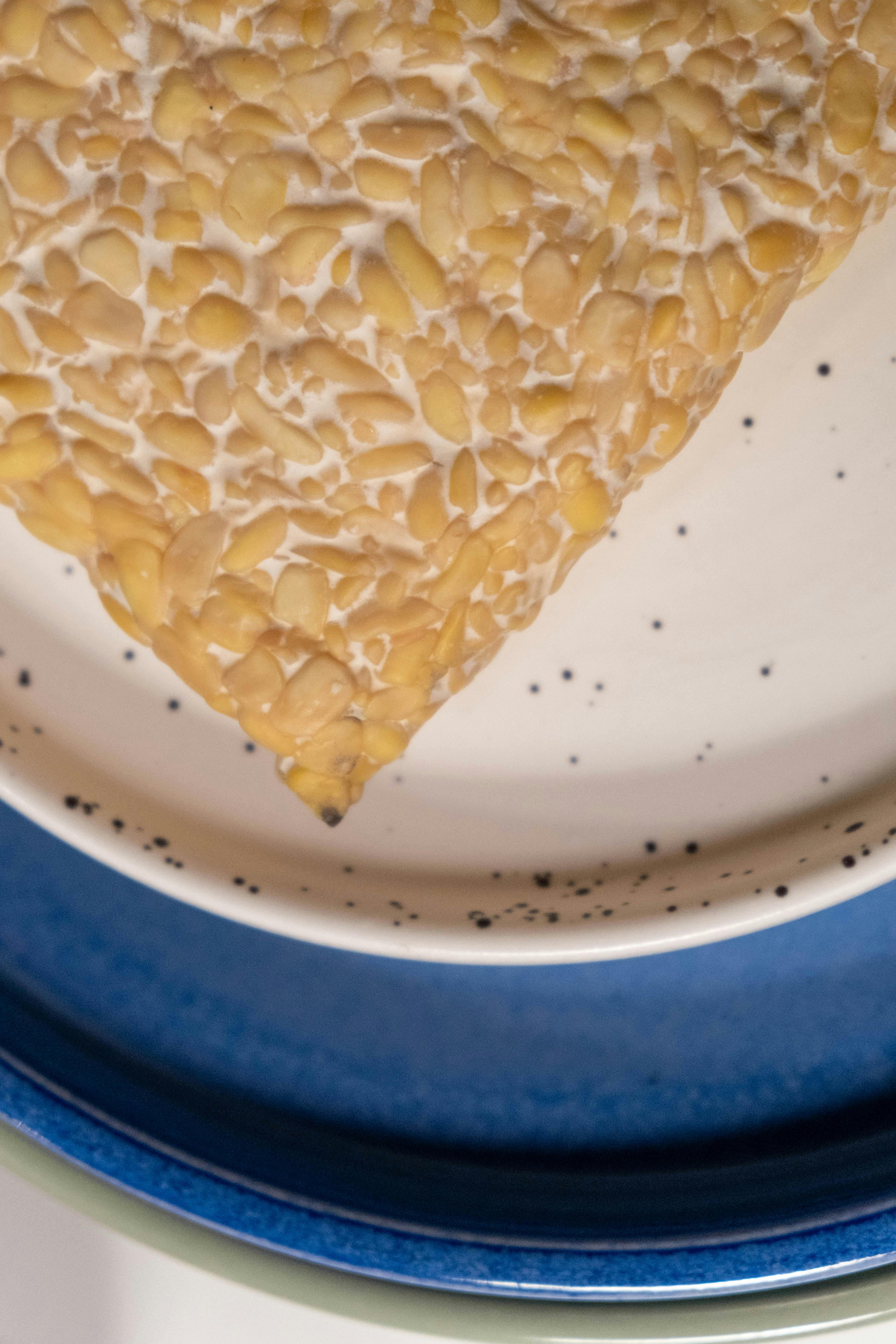
The diets react (see scores below)
Diet Ratings
Tempeh contains 9-11g net carbs per 100g from fermented soybeans. Incompatible with strict keto carb limits; exceeds daily allowance in modest portions.
Tempeh is a whole-food fermented soy product. Fully plant-based, nutrient-dense, minimally processed, and an excellent protein source for vegans.
Tempeh is made from fermented soybeans. Soy is a legume explicitly excluded from paleo diet. Fermentation does not remove the legume classification.
Fermented soy product providing complete protein and probiotics. While not traditional to Mediterranean region, it aligns with plant-based protein emphasis and is minimally processed. Modern Mediterranean adaptations include it.
Strict traditionalists argue tempeh is not Mediterranean and prefer legumes like lentils and chickpeas as primary plant proteins. However, contemporary Mediterranean diet interpretations embrace non-traditional plant proteins.
Tempeh is a fermented soy product derived entirely from plants. It violates the core carnivore principle of consuming only animal products. Contains plant-based proteins and carbohydrates incompatible with carnivore diet.
Tempeh is made from fermented soybeans. Soy is explicitly excluded from Whole30 as a legume. Not compliant.
Tempeh is made from fermented soybeans. While fermentation reduces some GOS (galacto-oligosaccharides), Monash University testing shows tempeh contains moderate GOS at standard servings. Low-FODMAP at restricted portions (approximately 100g or 3.5 oz).
Monash University rates tempeh as low-FODMAP at 100g, but some clinical FODMAP practitioners recommend further restriction due to residual GOS content and individual variation in tolerance to fermented legumes.
Excellent plant-based DASH protein. Fermented soy product with complete amino acids, good fiber, magnesium, and potassium. Low saturated fat. Watch sodium in flavored varieties; choose plain or low-sodium.
Fermented soy provides complete protein but contains significant carbs (~9g per 100g). Requires careful portioning to maintain 40/30/30 ratio. Higher carb-to-protein ratio than animal proteins makes Zone balancing challenging.
Dr. Sears' later writings show more acceptance of fermented soy products due to improved digestibility and probiotic content. Some practitioners rate tempeh higher than tofu for bioavailability.
Fermented whole soy food with complete protein, probiotics, and isoflavones. Strongly emphasized in anti-inflammatory diets. Superior to tofu due to whole soybean retention and probiotic content.
High protein (19g per 3oz), moderate fat (11g mostly unsaturated), high fiber (3g per serving), fermented for better digestibility than tofu. Complete amino acid profile. Nutrient-dense and supports muscle preservation.
Nutritional profile
Six traits that cut across every diet.
Fiber & Plants
How much whole-plant food and fiber it delivers.
Healthy Fats
The quality of its fats (unsaturated, omega-3).
Whole / Unprocessed
How close it is to its natural, unprocessed form.
Gut Gentle
How easy it is on digestion (low FODMAP, few irritants).
Low Glycemic
How little it spikes your blood sugar.
Protein Density
How much protein it packs per calorie.
Controversy Index
Score range: 1–9/10. Higher controversy = more disagreement between diets.
Diet-Specific Tips for Tempeh
 Vegan — 9/10
- Whole plant food
- Fermented soy
- High protein
- Minimal processing
- Complete amino acid profile
 Mediterranean — 7/10
- Complete plant protein
- Minimally processed
- Probiotic content
- Not traditional but aligned with principles
 Low-FODMAP — 5/10
- Contains GOS from soybeans
- Fermentation reduces but does not eliminate GOS
- Portion-dependent FODMAP status
- Individual tolerance varies
 DASH — 8/10
- Complete plant protein
- Good fiber source
- Rich in magnesium
- Watch sodium in flavored versions
 Zone — 5/10
- Protein: ~19g per 100g
- Carbs: ~9g per 100g (moderate glycemic)
- Fat: ~11g per 100g (mixed quality)
- Complete amino acid profile
- Requires careful portioning
 Anti-Inflammatory — 8/10
- Complete protein
- Probiotics from fermentation
- Isoflavones
- Whole soybean food
- Bioavailable nutrients
 GLP-1 Friendly — 9/10
- high protein density
- complete amino acids
- high fiber
- fermented (better digestibility)
- moderate unsaturated fat