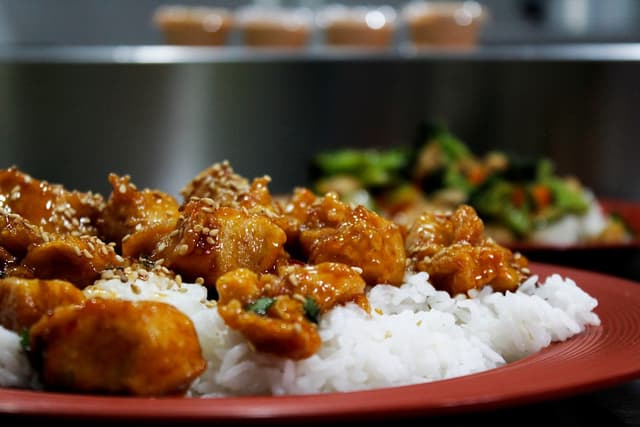
Teriyaki chicken bowl
Rated by 11 diets
Diet Ratings
Teriyaki sauce contains 8-12g net carbs from sugar per serving. Rice base contains 35-45g net carbs. Vegetables add 5-8g carbs. Total carb load of 48-65g makes this incompatible with ketosis.
Contains chicken (poultry), a direct animal product explicitly excluded from vegan diet.
Typically served over rice (grain). Teriyaki sauce contains soy (legume) and refined sugar. Chicken is approved but other components violate paleo rules.
Chicken is acceptable protein. Teriyaki sauce contains added sugars and high sodium. White rice is refined grain. Vegetable content depends on preparation. Can be Mediterranean-compatible with whole grains, reduced sauce, and abundant vegetables.
iSome practitioners accept teriyaki bowls as occasional meals if prepared with brown rice, minimal sauce, and vegetable-forward composition, though not traditional Mediterranean.
Chicken is approved, but teriyaki sauce is made with soy sauce (plant-derived), sugar, and mirin (rice-derived). The dish is served over rice (grain) with vegetables. The sauce and carbohydrate base are fundamentally incompatible with carnivore principles.
Teriyaki sauce contains added sugar and soy sauce (legume, excluded). Served over rice (grain, excluded). Chicken and vegetables are compliant, but the dish relies on excluded ingredients.
Teriyaki sauce contains garlic, ginger (polyol), and high sugar content (honey or high-fructose corn syrup). Soy sauce is low-FODMAP but overwhelmed by other components. Rice is low-FODMAP but insufficient to offset sauce.
Chicken is lean protein (positive), and bowl may contain vegetables. However, teriyaki sauce is very high in sodium and added sugars. White rice is refined. Acceptable only if sauce is significantly reduced and brown rice used.
iNIH DASH guidelines support lean chicken and vegetables; however, traditional teriyaki sauce preparation violates sodium and added sugar limits. Updated clinical interpretation suggests low-sodium teriyaki and brown rice could make this acceptable.
Teriyaki sauce is high-glycemic (sugar, corn syrup). White or brown rice base is moderate-to-high glycemic load. Even with lean chicken, the carb quality and sauce glycemic index violate Zone principles.
Chicken provides lean protein, but teriyaki sauce is typically high in added sugars and sodium. Brown rice base offers whole grains if present. Inflammatory profile depends heavily on sauce quantity and preparation method. Vegetables may provide some antioxidants.
iSome anti-inflammatory advocates argue traditional teriyaki with minimal added sugar and served with substantial vegetables (>50% bowl) approaches approval range. Dr. Weil emphasizes sauce moderation rather than complete avoidance.
Teriyaki chicken bowl provides good protein from chicken and some fiber from vegetables and rice, but teriyaki sauce is high in sugar and sodium. The white rice base is refined carbs with minimal fiber. Can work if sauce is used sparingly and brown/wild rice substituted, but traditional preparation has too much sugar.
iSome GLP-1 specialists accept teriyaki bowls if sauce is limited to 2 tablespoons and rice is whole-grain; others recommend avoiding due to sugar content triggering cravings and blood sugar dysregulation.
Controversy Index
Score range: 1–5/10. Higher controversy = more disagreement between diets.