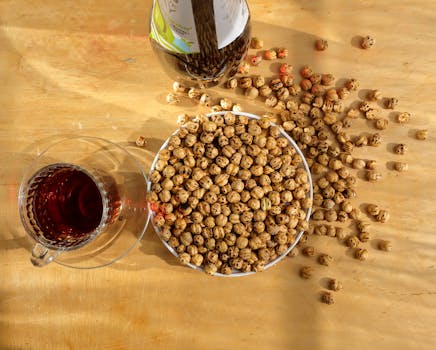
The diets react (see scores below)
Diet Ratings
Tiger nuts contain ~7-8g net carbs per ounce, higher than most nuts. While they offer fiber and minerals, the carb density limits consumption. Acceptable in very small portions (10-15g) but not ideal for strict keto.
Some keto practitioners include tiger nuts as occasional treats due to their prebiotic fiber and mineral profile, arguing the carbs are manageable in small amounts; others classify them as too carb-dense for daily use.
Tiger nuts are small tubers that are entirely plant-based. They are a whole food with no animal products or derivatives, offering good nutritional value.
Small tubers (not true nuts) that were foraged by Paleolithic humans. Nutrient-dense with resistant starch and prebiotic fiber.
Nutrient-dense tuber with healthy fats, fiber, and minerals. Aligns with Mediterranean emphasis on plant-based whole foods. Less common historically but fits modern Mediterranean principles well.
Tiger nuts are not traditional Mediterranean foods; they originate from Africa and are more prominent in Spanish cuisine recently. Some purists may view them as non-traditional additions.
Plant-derived tuber product, not an animal product. Despite 'nut' in name, these are plant-based and explicitly excluded from carnivore diet. Contains plant compounds and carbohydrates.
Tiger nuts are tubers (not legumes or grains) and are Whole30 compliant. They are a whole, unprocessed food allowed on the program.
Tiger nuts (chufa tubers) are not extensively tested by Monash University. They contain resistant starch and some fructans. Limited clinical data; some practitioners report tolerance at small portions, others flag as potentially problematic due to fructan content.
Monash University has not formally tested tiger nuts. Clinical FODMAP practitioners are divided: some approve small portions (1 ounce), others recommend avoidance due to suspected fructan content. Insufficient evidence for confident classification.
Tiger nuts are nutrient-dense (fiber, potassium, magnesium) and naturally low in sodium, aligning with DASH. However, they are less commonly addressed in NIH DASH guidelines. They are calorie-dense and portion control is important.
NIH DASH guidelines do not explicitly address tiger nuts. Updated clinical interpretation recognizes them as a whole-food nut alternative with favorable nutrient profiles, though caloric density warrants moderation.
Tiger nuts are tubers with moderate carb content (higher than tree nuts) but lower glycemic index than potatoes. Contain resistant starch and fiber. Usable in Zone but requires careful portioning. Less established in Sears' original protocols.
Dr. Sears' original Zone materials focus on tree nuts and seeds; tiger nuts emerged later as a paleo/ancestral food. Some practitioners view them as acceptable low-glycemic carb source; others prefer traditional Zone vegetables.
Tiger nuts are nutrient-dense tubers rich in resistant starch, fiber, and polyphenols with anti-inflammatory properties. They contain arginine and other amino acids. Less mainstream than other nuts but emerging research supports anti-inflammatory benefits. Some sources emphasize their prebiotic fiber.
While tiger nuts show promise, they are not emphasized in Dr. Weil's pyramid or mainstream anti-inflammatory guidelines. Limited long-term human studies compared to established nuts like almonds and walnuts. Some practitioners prioritize omega-3 sources over tiger nuts.
Tiger nuts are nutrient-dense (fiber, resistant starch, minerals) and lower in fat than tree nuts (9g fat per ounce vs. 14-20g for almonds/pecans). However, they are calorie-dense (120 cal per ounce) and may be difficult to digest in large quantities. Limited clinical data on GLP-1 patient tolerance. Small portions may work as a snack.
Some RDs recommend tiger nuts for their resistant starch and prebiotic fiber supporting gut health on GLP-1; others avoid them due to calorie density and lack of clinical evidence in this population. Individual tolerance varies significantly.
Nutritional profile
Six traits that cut across every diet.
Fiber & Plants
How much whole-plant food and fiber it delivers.
Healthy Fats
The quality of its fats (unsaturated, omega-3).
Whole / Unprocessed
How close it is to its natural, unprocessed form.
Gut Gentle
How easy it is on digestion (low FODMAP, few irritants).
Low Glycemic
How little it spikes your blood sugar.
Protein Density
How much protein it packs per calorie.
Controversy Index
Score range: 1–9/10. Higher controversy = more disagreement between diets.
Diet-Specific Tips for Tiger nuts
 Keto — 4/10
- 7-8g net carbs per ounce
- Higher carb density than almonds/macadamia
- Good fiber and minerals
- Portion-dependent viability
 Vegan — 9/10
- 100% plant-based
- Whole food
- Nutrient-dense tuber
 Paleo — 8/10
- Tuber, not legume
- Ancestral food
- Resistant starch
- Prebiotic fiber
 Mediterranean — 8/10
- whole plant food
- resistant starch
- healthy fats
- good fiber content
- nutrient-dense
 Whole30 — 9/10
- Tuber, not legume
- Whole food
- Unprocessed
- Explicitly allowed
 Low-FODMAP — 4/10
- Limited Monash testing
- Potential fructan content
- Resistant starch may affect individual tolerance
- Conflicting practitioner guidance
 DASH — 6/10
- High fiber and resistant starch
- Good potassium and magnesium
- Low sodium
- Calorie-dense
- Less common in standard DASH literature
 Zone — 6/10
- Moderate carbohydrate content
- Resistant starch present
- Lower glycemic index than potatoes
- Less established in Zone literature
 Anti-Inflammatory — 8/10
- High in resistant starch and fiber
- Contains polyphenols
- Prebiotic properties
- Lower omega-3 than walnuts
- Emerging research support
 GLP-1 Friendly — 5/10
- lower fat than most tree nuts
- high fiber and resistant starch
- calorie-dense
- limited clinical data for GLP-1 patients
- may support prebiotic gut health