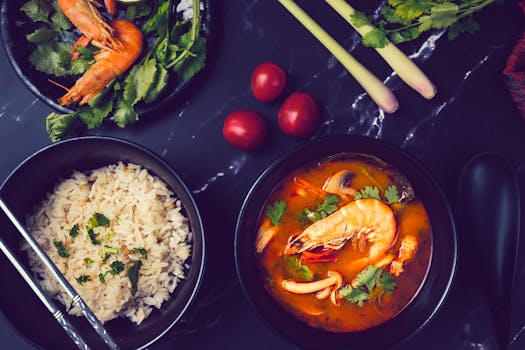
The diets react (see scores below)
Diet Ratings
Tom yum soup is primarily broth-based with shrimp or chicken (keto-friendly), lime juice, lemongrass, and Thai chilies (all low-carb). However, some recipes include sugar (3-8g per serving) and may contain rice noodles or starch thickener (15-25g net carbs if noodles included). Without noodles and with minimal added sugar, tom yum is keto-compatible (2-8g net carbs). Carb content highly preparation-dependent.
Some keto practitioners avoid tom yum due to potential hidden sugars in restaurant versions, while others argue that homemade or noodle-free tom yum is an excellent keto soup.
Traditional tom yum contains shrimp or chicken and fish sauce (animal-derived). However, vegetarian versions exist using vegetable broth and soy sauce. Vegan status depends entirely on preparation.
Some vegans accept explicitly vegan tom yum made with vegetable broth and soy sauce, while others avoid due to fish sauce prevalence in traditional recipes.
Made with shrimp or fish, coconut milk, lime juice, lemongrass, galangal, and chilies—all paleo-approved. No grains, legumes, or dairy. Excellent paleo option if made without added sugar.
Broth-based with vegetables and herbs is positive. Often contains fish sauce (high sodium) and coconut milk (saturated fat). Protein source varies. While flavorful and vegetable-rich, the fat source and sodium content diverge from Mediterranean principles.
Some Mediterranean practitioners accept tom yum if made with minimal coconut milk, fish protein, abundant vegetables, and reduced sodium, viewing the broth-based, plant-forward structure as Mediterranean-compatible.
Fish or shrimp (animal) may be present, but soup is dominated by plant-derived ingredients: lemongrass (plant), galangal (plant), lime (plant), chilies (plant), and vegetables (plant). Plant content violates carnivore rules.
Tom yum soup contains shrimp or chicken (compliant), broth (compliant), lime juice (compliant), lemongrass (compliant), galangal (compliant), and chili peppers (compliant). However, traditional tom yum often includes fish sauce (compliant), but may contain added sugar in the broth or paste, and sometimes includes rice noodles. If made without noodles and added sugar, it is compliant.
Official Whole30 guidelines would approve tom yum broth-based soup without noodles and without added sugar. However, many restaurant versions contain added sugar in the paste or broth, and some include rice noodles. Verification of ingredients is essential.
Tom yum soup is traditionally made with garlic, shallots, and onions as core flavor components. These are high-FODMAP. While lemongrass, galangal, and lime juice are low-FODMAP, and shrimp/chicken are low-FODMAP, the garlic and shallot content makes this unsuitable for elimination phase.
Broth-based with vegetables (positive). However, high sodium from fish sauce, salt, and shrimp paste. Coconut milk adds saturated fat (tropical oil). Spices and herbs provide antioxidants. Sodium typically 800-1200mg per serving.
Some nutritionists emphasize tom yum's vegetable content and use of herbs/spices with anti-inflammatory properties, though NIH DASH guidelines prioritize limiting sodium and tropical oils, both elevated here.
Tom yum is anti-inflammatory (lemongrass, galangal, lime, chili peppers—polyphenol-rich). Broth is low-glycemic and fat-light. Shrimp or chicken provides lean protein (~15-20g per serving). Vegetables (mushrooms, tomato, peppers) are low-glycemic. Coconut milk adds monounsaturated fat. Excellent Zone macro balance with minimal modification.
Aromatic anti-inflammatory spices (lemongrass, galangal, ginger, chili pepper, garlic) provide strong anti-inflammatory compounds. Lime juice adds vitamin C. Coconut milk provides medium-chain triglycerides (less inflammatory than saturated fat). Typically includes vegetables and shrimp or fish (omega-3s). Minimal processing. Excellent anti-inflammatory profile.
Broth-based soup is hydrating and easy to digest. Typically contains shrimp or chicken (moderate protein ~12-15g per bowl) and vegetables (fiber). However, tom yum is spicy (lemongrass, chili, galangal) and may trigger reflux and nausea in GLP-1 patients. Coconut milk versions are high in fat. Acceptable for those without GI sensitivity; avoid if spice triggers symptoms.
Some GLP-1 patients tolerate tom yum without issue and appreciate the flavor intensity. Others experience significant nausea from spice and coconut milk fat. Individual tolerance varies; spice sensitivity is not universal, and coconut milk fat content depends on recipe.
Nutritional profile
Six traits that cut across every diet.
Fiber & Plants
How much whole-plant food and fiber it delivers.
Healthy Fats
The quality of its fats (unsaturated, omega-3).
Whole / Unprocessed
How close it is to its natural, unprocessed form.
Gut Gentle
How easy it is on digestion (low FODMAP, few irritants).
Low Glycemic
How little it spikes your blood sugar.
Protein Density
How much protein it packs per calorie.
Controversy Index
Score range: 2–8/10. Higher controversy = more disagreement between diets.
Diet-Specific Tips for Tom yum soup
 Keto — 6/10
- Broth base is naturally low-carb
- High-quality protein from shrimp/chicken
- Lime, lemongrass, chilies are low-carb
- Added sugar may be present (3-8g)
- Rice noodles may be included (15-25g if present)
- Customizable by requesting no noodles
 Vegan — 4/10
- Fish sauce is standard but animal-derived
- Often contains shrimp or chicken
- Vegan versions available with soy sauce substitution
- Requires explicit verification with restaurant
 Paleo — 8/10
- Shrimp or fish (paleo)
- Coconut milk (paleo)
- Fresh herbs and spices (paleo)
- No grains or legumes
- Verify no added sugar in broth
 Mediterranean — 5/10
- Broth-based (positive)
- Vegetables abundant
- Fish sauce (high sodium)
- Coconut milk (saturated fat)
- Herbs and spices (positive)
 Whole30 — 6/10
- shrimp/chicken are compliant proteins
- broth is compliant if no added sugar
- lime, lemongrass, galangal, chili are compliant
- fish sauce is compliant
- rice noodles may be included (excluded grain)
- added sugar may be present in paste/broth
- ingredient verification required
 DASH — 5/10
- vegetable content
- high sodium from fish sauce
- saturated fat from coconut milk
- herbs and spices (antioxidants)
- broth-based preparation
 Zone — 8/10
- Anti-inflammatory herbs and spices
- Low-glycemic broth and vegetables
- Lean protein from shrimp/chicken
- Monounsaturated fat from coconut milk
- High polyphenol content
 Anti-Inflammatory — 8/10
- Lemongrass, galangal, ginger (anti-inflammatory)
- Chili pepper (capsaicin)
- Garlic and lime
- Coconut milk (MCTs)
- Seafood provides omega-3s
- Vegetables included
- Minimal processing
 GLP-1 Friendly — 5/10
- hydrating broth-based format
- moderate protein
- spicy (potential reflux trigger)
- coconut milk adds fat (recipe-dependent)
- vegetables provide fiber
- easy to digest (if not spicy-sensitive)
- high water content
- individual tolerance varies