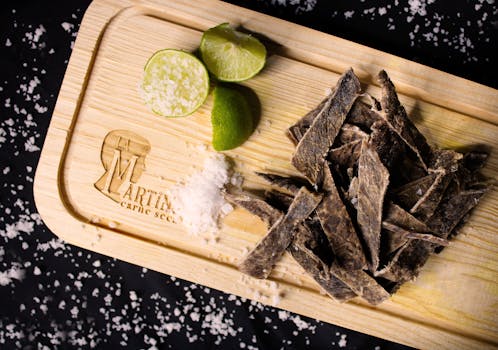
The diets react (see scores below)
Diet Ratings
Most turkey jerky contains 2-5g net carbs per ounce due to added sugars and marinades. Quality varies significantly by brand. Some premium brands offer truly low-carb options, while others hide sugars. Check labels carefully.
Strict keto practitioners avoid most commercial jerky due to hidden sugars and processed ingredients, preferring homemade versions or whole meat sources.
Made from turkey meat. Contains animal flesh and is fundamentally incompatible with vegan diet.
Turkey jerky is meat-based (paleo-approved), but commercial versions often contain added sugars, salt, and preservatives. Check labels for sodium nitrite, added sugars, and seed oils. Homemade or minimally processed versions are better.
Strict paleo excludes processed meats and added salt entirely. Some paleo practitioners accept jerky if made with minimal additives and no nitrates/nitrites.
Turkey jerky is processed meat with added sodium and often preservatives. While poultry is acceptable in Mediterranean diet, processing and salt content are concerns. Fresh poultry is strongly preferred.
Turkey jerky is meat-based but often contains added sugars, soy sauce, spices, and other plant-derived additives. Pure turkey jerky with only meat, salt, and smoke would score higher. Most commercial versions contain problematic additives that lower the rating.
Strict carnivore practitioners prefer fresh or minimally processed whole meat cuts over jerky due to processing and potential additives. Some also prioritize ruminant meat (beef) over poultry for fatty acid profile.
Turkey jerky is compliant if it contains only meat, salt, and spices with no added sugar, soy, or other excluded ingredients. However, most commercial jerky contains added sugar, soy sauce, or other additives. Must verify label carefully.
Some Whole30 practitioners consider jerky a processed snack food that tests the spirit of eating whole foods, even when ingredients are technically compliant. Official Whole30 allows jerky if ingredients are clean.
Plain turkey jerky with no added sugars or garlic is low-FODMAP. However, most commercial jerky contains added sugars, garlic powder, onion powder, or soy sauce (which may contain wheat). Check labels carefully for high-FODMAP additives.
Monash rates plain meat as low-FODMAP; however, commercial jerky processing and additives create variability. Plain homemade jerky is safer than retail versions.
Turkey jerky is high in sodium (300-500mg per ounce) and often contains added sugars and preservatives. While it provides lean protein, the sodium content is problematic for DASH, especially low-sodium DASH (<1500mg/day). Low-sodium varieties exist but are less common.
Lean protein source (10-15g per ounce) but often contains added sugars and sodium. Check label for carb content and sodium levels. Can fit Zone if sugar is minimal (<2g per serving) and paired with vegetables and fat.
Turkey is lean poultry (approved in moderation). However, jerky processing often involves high sodium, added sugars, and preservatives (nitrates/nitrites). These additives can promote inflammation. Quality varies significantly; some brands are cleaner than others.
Some paleo and low-carb advocates view quality jerky favorably. Dr. Weil emphasizes whole poultry over processed forms. AHA guidelines caution against processed meats due to sodium and additives.
Excellent protein density (10-15g per serving), low fat, minimal carbs, shelf-stable, satisfying in small portions. Easy to digest. Check sodium and added sugars (some brands are high). Ideal portable GLP-1 snack.
Nutritional profile
Six traits that cut across every diet.
Fiber & Plants
How much whole-plant food and fiber it delivers.
Healthy Fats
The quality of its fats (unsaturated, omega-3).
Whole / Unprocessed
How close it is to its natural, unprocessed form.
Gut Gentle
How easy it is on digestion (low FODMAP, few irritants).
Low Glycemic
How little it spikes your blood sugar.
Protein Density
How much protein it packs per calorie.
Controversy Index
Score range: 1–8/10. Higher controversy = more disagreement between diets.
Diet-Specific Tips for Turkey jerky
 Keto — 6/10
- 2-5g net carbs per ounce (brand dependent)
- Added sugars in marinades
- High sodium
- Check individual labels
 Paleo — 6/10
- added sugars
- high sodium
- preservatives (nitrates/nitrites)
- processing level
 Mediterranean — 5/10
- processed meat
- high sodium content
- chemical preservatives
- poultry source positive
 Carnivore — 6/10
- Animal-derived (turkey)
- Often contains added sugar
- May contain soy or plant-based additives
- Processing method matters
- Check ingredient label carefully
 Whole30 — 6/10
- Meat-based (compliant)
- Most brands contain added sugar
- Check label for soy, sugar, additives
- Processed format
 Low-FODMAP — 5/10
- Plain meat is low-FODMAP
- Added sugars and garlic/onion powder are common
- Soy sauce may contain wheat (fructans)
 DASH — 4/10
- Very high sodium content
- Lean protein source
- Often contains added sugar
- Processed meat product
 Zone — 6/10
- Lean protein benefit
- Often high sodium
- Added sugar common
- Processed food
- Label inspection essential
 Anti-Inflammatory — 5/10
- lean protein base
- high sodium content
- added sugars in many brands
- preservatives (nitrates)
- processing reduces anti-inflammatory benefit
 GLP-1 Friendly — 8/10
- high protein
- low fat
- portable
- satisfying small portions
- check sodium/sugar