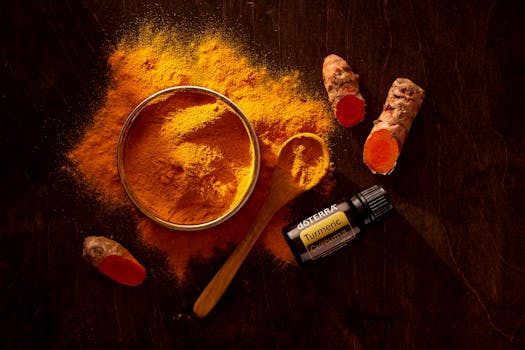
The diets react (see scores below)
Diet Ratings
Turmeric is a spice with negligible carbs (1.3g net carbs per tablespoon) and no sugar. It's calorie-sparse and adds flavor without impacting ketosis. Anti-inflammatory properties are a bonus.
Pure plant-derived spice with no animal products or animal-derived ingredients. Whole food form with significant anti-inflammatory properties.
Turmeric is a pure spice derived from a root plant, available to Paleolithic humans. Contains no grains, legumes, dairy, or processed ingredients. Anti-inflammatory properties align with paleo philosophy.
Turmeric is a spice with anti-inflammatory properties, aligns with Mediterranean culinary traditions, and adds flavor without calories, sugar, or unhealthy fats. Supports plant-based cooking emphasis.
Plant-derived spice from turmeric root. Contains plant compounds and alkaloids. Strictly excluded from carnivore diet which permits only animal products.
Pure spice with no excluded ingredients. Whole30 explicitly allows all herbs and spices.
Turmeric is a pure spice with no significant FODMAP content. Monash University has tested turmeric and confirmed it is low-FODMAP at typical culinary serving sizes.
Sodium-free spice with anti-inflammatory properties (curcumin). Enhances flavor without adding sodium, saturated fat, or calories. Supports DASH principles by enabling flavorful meals without salt.
Turmeric is a polyphenol-rich spice with powerful anti-inflammatory properties (curcumin). Zero macronutrient impact at typical serving sizes. Aligns perfectly with Zone's anti-inflammatory focus.
Turmeric contains curcumin, a potent polyphenol with strong anti-inflammatory and antioxidant properties. Extensively researched and explicitly emphasized in Dr. Weil's anti-inflammatory pyramid. Best absorbed with black pepper (piperine) and fat.
Zero calories, zero macronutrients, anti-inflammatory properties support GLP-1 tolerability. Enhances nutrient absorption and aids digestion without triggering GI side effects. Excellent seasoning choice for protein-rich meals.
Nutritional profile
Six traits that cut across every diet.
Fiber & Plants
How much whole-plant food and fiber it delivers.
Healthy Fats
The quality of its fats (unsaturated, omega-3).
Whole / Unprocessed
How close it is to its natural, unprocessed form.
Gut Gentle
How easy it is on digestion (low FODMAP, few irritants).
Low Glycemic
How little it spikes your blood sugar.
Protein Density
How much protein it packs per calorie.
Controversy Index
Score range: 2–10/10. Higher controversy = more disagreement between diets.
Diet-Specific Tips for Turmeric
 Keto — 9/10
- Negligible net carbs
- No added sugars
- Minimal calories per serving
- Anti-inflammatory compound (curcumin)
 Vegan — 9/10
- 100% plant-based
- Whole food spice
- No processing concerns
 Paleo — 9/10
- Unprocessed plant-based spice
- No additives or fillers
- Anti-inflammatory compound (curcumin)
 Mediterranean — 8/10
- Zero calories
- Anti-inflammatory compounds
- Minimal processing
- Enhances plant-based dishes
 Whole30 — 10/10
- Pure spice
- No additives
- Explicitly allowed category
 Low-FODMAP — 9/10
- Pure spice with negligible fermentable carbohydrates
- No fructans, GOS, lactose, or polyols
- Standard serving sizes are very small
 DASH — 9/10
- Zero sodium
- Anti-inflammatory compounds
- No added sugars
- Enhances palatability of low-sodium foods
 Zone — 9/10
- Anti-inflammatory polyphenols
- Negligible macronutrients
- Supports Zone philosophy
 Anti-Inflammatory — 9/10
- Curcumin polyphenol
- Potent anti-inflammatory
- Antioxidant properties
- Enhanced bioavailability with black pepper and fat
 GLP-1 Friendly — 8/10
- zero calorie density
- anti-inflammatory
- aids digestion
- no GI triggers