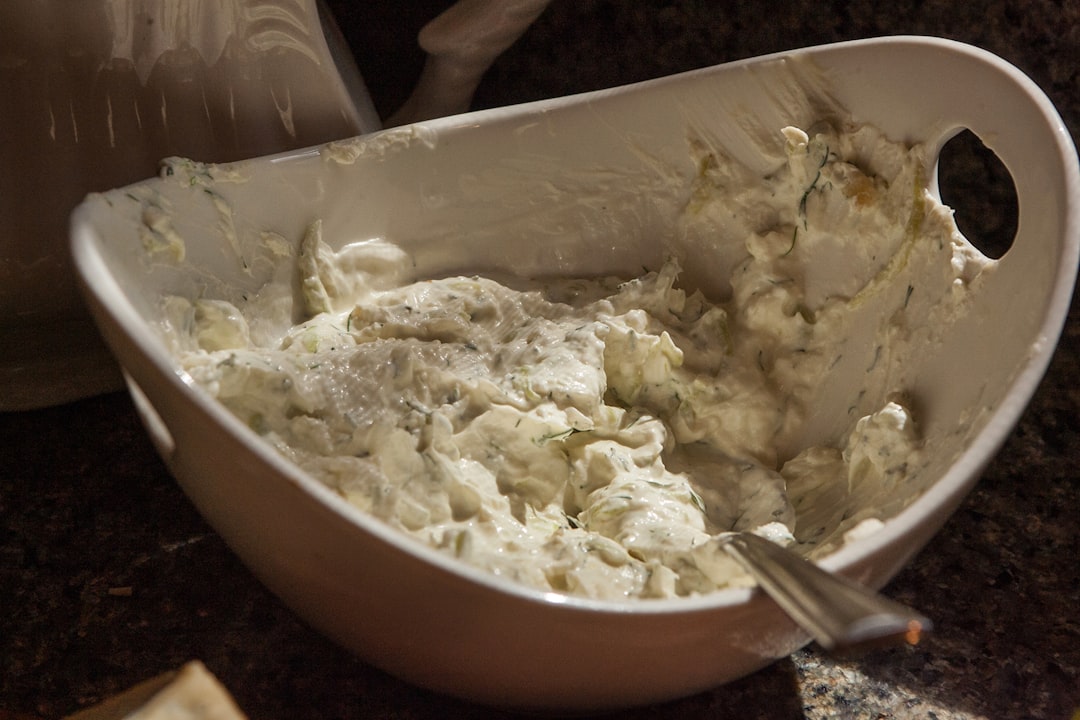
The diets react (see scores below)
Diet Ratings
Tzatziki is primarily Greek yogurt, cucumber, and herbs. Full-fat Greek yogurt is keto-friendly; cucumber is very low carb. Standard serving (2-3 oz) contains ~2-3g net carbs. Excellent fat and protein profile.
Traditional tzatziki is made with Greek yogurt or sour cream, both dairy products. Contains animal-derived ingredients incompatible with veganism.
Tzatziki is made from Greek yogurt (dairy), which is excluded from paleo diet. Dairy products contain lactose and casein proteins that paleo avoids, regardless of fermentation or processing.
Tzatziki is a traditional Mediterranean condiment made from Greek yogurt, cucumber, garlic, and herbs. It embodies Mediterranean principles: fermented dairy in moderation, fresh vegetables, and minimal processing. Excellent for dips and sauces.
Tzatziki is primarily yogurt (animal-derived dairy) but contains cucumber and garlic (plant-derived). The dairy base is acceptable to most carnivore practitioners, but the vegetable additions violate strict carnivore rules.
Strict carnivore practitioners exclude tzatziki entirely due to cucumber and garlic content. Dairy-inclusive carnivores may accept plain yogurt but reject this specific preparation.
Tzatziki is made with yogurt, which is a dairy product explicitly excluded on Whole30.
Tzatziki is yogurt-based with cucumber and typically contains garlic. Garlic is high-FODMAP. Lactose content depends on yogurt type (Greek yogurt is lower lactose). The garlic content makes this problematic unless garlic is omitted.
Monash University rates garlic as high-FODMAP at any meaningful serving. Some practitioners suggest garlic-free versions may be acceptable, but traditional tzatziki contains garlic and should be avoided.
Tzatziki made with low-fat Greek yogurt, cucumber, and herbs is an excellent DASH condiment. Rich in protein and calcium from yogurt, low in sodium if prepared without excess salt, and provides beneficial probiotics.
Greek yogurt base provides protein and fat; cucumber adds low-glycemic carbs. Typically 40/30/30 compatible in measured portions (3-4 oz). Watch for added sugar in commercial versions.
Tzatziki combines Greek yogurt (moderate dairy, acceptable), cucumber (anti-inflammatory vegetable), garlic (emphasized anti-inflammatory herb), and dill (polyphenol-rich herb). Low in inflammatory ingredients when made with plain yogurt and olive oil.
Tzatziki is made from Greek yogurt (high protein, probiotics), cucumber (high water content, low calorie), and herbs. It provides 2-3g protein per 2-tablespoon serving, is easy to digest, supports hydration, and is nutrient-dense per calorie. Excellent condiment for lean proteins.
Nutritional profile
Six traits that cut across every diet.
Fiber & Plants
How much whole-plant food and fiber it delivers.
Healthy Fats
The quality of its fats (unsaturated, omega-3).
Whole / Unprocessed
How close it is to its natural, unprocessed form.
Gut Gentle
How easy it is on digestion (low FODMAP, few irritants).
Low Glycemic
How little it spikes your blood sugar.
Protein Density
How much protein it packs per calorie.
Controversy Index
Score range: 1–8/10. Higher controversy = more disagreement between diets.
Diet-Specific Tips for Tzatziki
 Keto — 8/10
- Full-fat Greek yogurt base
- Low-carb cucumber
- 2-3g net carbs per serving
- High protein and fat
 Mediterranean — 8/10
- Traditional Mediterranean sauce
- Fermented dairy
- Fresh vegetables
- Minimal processing
- Probiotic benefits
 Carnivore — 5/10
- Contains dairy (yogurt)
- Contains cucumber (plant)
- Contains garlic (plant)
- Mixed animal and plant origin
 Low-FODMAP — 5/10
- Garlic is high-FODMAP
- Lactose content varies by yogurt type
- Greek yogurt has lower lactose than regular yogurt
- Cucumber is low-FODMAP
 DASH — 8/10
- High protein (Greek yogurt base)
- Good calcium source
- Low sodium (if prepared without excess salt)
- Probiotics from yogurt
- Low saturated fat (if made with low-fat yogurt)
 Zone — 6/10
- Lean protein from yogurt
- Low-glycemic vegetable
- Monounsaturated fat from olive oil
- Commercial versions may add sugar
 Anti-Inflammatory — 8/10
- Probiotic-rich Greek yogurt supports gut health
- Garlic provides sulfur compounds and anti-inflammatory benefits
- Cucumber offers hydration and antioxidants
- Dill contains polyphenols and flavonoids
- Typically made with olive oil, not inflammatory seed oils
 GLP-1 Friendly — 8/10
- High protein from Greek yogurt
- High water content from cucumber
- Probiotics support digestion
- Low calorie, nutrient-dense
- Easy to digest