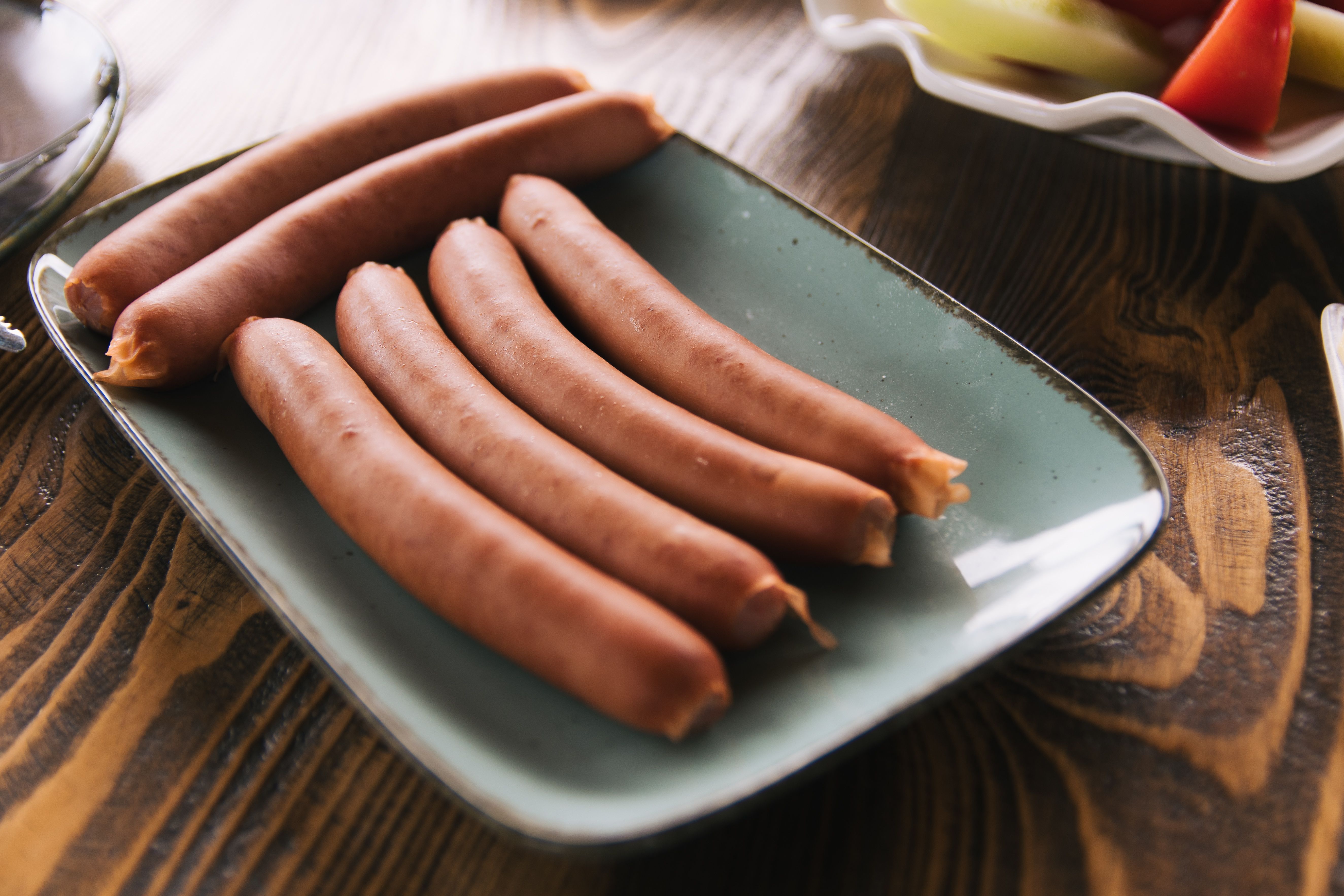
Vienna sausages
Rated by 11 diets
The diets react (see scores below)
Diet Ratings
Zero carbs and high fat, but heavily processed with nitrates, fillers, and low-quality meat. Acceptable macros but poor nutritional quality. Some keto practitioners avoid due to processing; others accept for convenience.
Strict whole-food keto advocates avoid Vienna sausages due to heavy processing, nitrates, and unclear meat sourcing, preferring fresh or quality canned meats. Lazy keto practitioners accept them as carb-compliant convenience foods.
Processed meat product containing pork and/or beef, direct animal products explicitly excluded from vegan diet.
Processed meat product containing grain fillers, seed oils, added sugar, nitrates, and numerous additives. Despite being meat-based, the processing and ingredients are fundamentally anti-paleo.
Highly processed meat product with excessive sodium, saturated fat, and preservatives. Contradicts Mediterranean principle of minimizing processed foods and limiting red/processed meat.
Animal-derived meat product, but heavily processed with fillers, soy-based additives, sugar, and seed oils common in commercial brands. Quality varies significantly by brand.
Strict carnivore practitioners avoid all processed meats with additives, viewing them as incompatible with the diet's whole-food animal product focus. Some brands may contain plant-based fillers or soy.
Vienna sausages are highly processed meat products that typically contain added sugar, soy, cornstarch, and other excluded ingredients. They violate the spirit of whole, unprocessed foods and almost always contain non-compliant additives.
Meat content is low-FODMAP, but processing may include garlic, spices, or additives. High sodium and fat. Label review essential.
Monash University has limited specific testing on processed meat products; clinical practitioners recommend checking ingredient lists for garlic powder, onion powder, or sorbitol.
Highly processed meat product with extremely high sodium (300-400mg per 2oz serving). High saturated fat and cholesterol. Contains nitrates/nitrites. Minimal nutritional value. Directly contradicts DASH emphasis on whole foods and sodium limitation.
Processed meat with excessive saturated fat, sodium, and preservatives (nitrates). Poor protein-to-fat ratio. Inflammatory ingredients incompatible with Zone anti-inflammatory focus.
Processed meat with nitrates/nitrites (inflammatory), high saturated fat, high sodium, artificial additives, and preservatives. No anti-inflammatory compounds. Strongly pro-inflammatory profile.
Ultra-processed, high saturated fat, high sodium, moderate protein (6-7g per 2oz can) but offset by poor digestibility and inflammatory fat profile. Canned in oil/brine. Minimal nutritional value relative to calories. Better protein options available.
Nutritional profile
Six traits that cut across every diet.
Fiber & Plants
How much whole-plant food and fiber it delivers.
Healthy Fats
The quality of its fats (unsaturated, omega-3).
Whole / Unprocessed
How close it is to its natural, unprocessed form.
Gut Gentle
How easy it is on digestion (low FODMAP, few irritants).
Low Glycemic
How little it spikes your blood sugar.
Protein Density
How much protein it packs per calorie.
Controversy Index
Score range: 1–5/10. Higher controversy = more disagreement between diets.
Diet-Specific Tips for Vienna sausages
 Keto — 5/10
- Zero net carbs
- High fat content
- Heavily processed
- Nitrates and additives
- Low nutritional density
 Carnivore — 5/10
- processed meat product
- likely contains fillers and additives
- seed oil cooking medium possible
- brand-dependent quality
 Low-FODMAP — 5/10
- Meat is low-FODMAP
- Additives and spices variable
- Processing may introduce FODMAP ingredients
- High sodium content