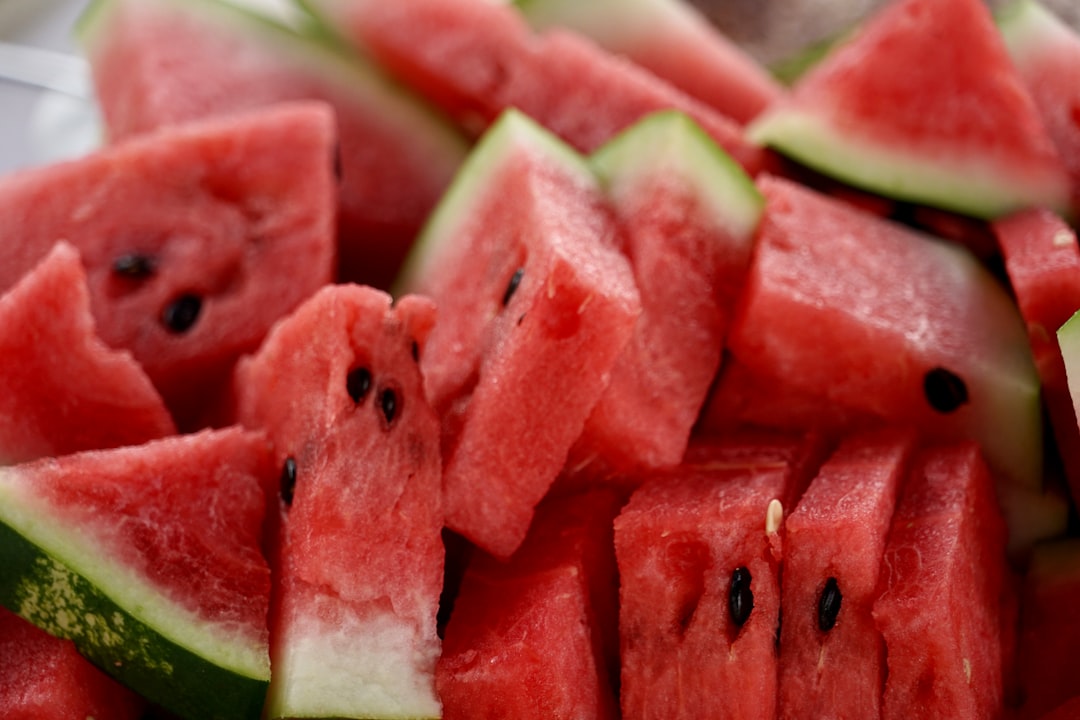
The diets react (see scores below)
Diet Ratings
Watermelon is 92% water but still contains significant carbs: 11g net carbs per cup. High sugar content and low satiety make it poor for keto despite low calorie density.
Whole plant fruit with no animal products or derivatives. Ideal vegan food meeting all dietary criteria.
Whole fruit available to hunter-gatherers. Unprocessed, hydrating, nutrient-dense. Low glycemic impact relative to sugar content due to high water volume.
Hydrating whole fruit with lycopene, vitamins A and C, and minimal calories. Aligns perfectly with Mediterranean emphasis on plant-based foods. Traditional summer fruit in Mediterranean regions. No processing or added ingredients.
Watermelon is plant-derived fruit with high water and sugar content. Directly violates carnivore diet exclusion of all plant foods and fruits.
Watermelon is a whole fruit with no processing or added ingredients. Fruits are explicitly allowed on Whole30.
Watermelon is low-FODMAP at a standard serving of 160g (1 cup diced). Monash University confirms low-FODMAP status due to high water content diluting FODMAP concentration.
Excellent DASH fruit. High water content, good potassium, low sodium, natural sugars, supports hydration and cardiovascular health.
Moderate-to-high glycemic load despite low calorie density. One cup (~12g net carbs) = 1.3 carb blocks. High water content dilutes nutrients. Usable in small portions but not preferred over low-glycemic vegetables.
Watermelon is rich in lycopene (potent antioxidant), citrulline (supports vascular health), and has high water content with low caloric density. Minimal inflammatory compounds despite natural sugars.
Extremely high water content (92%), low calorie (46 cal per cup), moderate fiber (1.2g), hydrating (critical for GLP-1 patients with reduced thirst), easy to digest, nutrient-dense (vitamin C, lycopene). Ideal for hydration support.
Nutritional profile
Six traits that cut across every diet.
Fiber & Plants
How much whole-plant food and fiber it delivers.
Healthy Fats
The quality of its fats (unsaturated, omega-3).
Whole / Unprocessed
How close it is to its natural, unprocessed form.
Gut Gentle
How easy it is on digestion (low FODMAP, few irritants).
Low Glycemic
How little it spikes your blood sugar.
Protein Density
How much protein it packs per calorie.
Controversy Index
Score range: 1–10/10. Higher controversy = more disagreement between diets.
Diet-Specific Tips for Watermelon
 Vegan — 10/10
- Whole plant food
- No processing
- No animal ingredients
 Paleo — 9/10
- Unprocessed whole food
- Available to Paleolithic humans
- High water content
- Natural sugars in moderation
 Mediterranean — 8/10
- High water content
- Beneficial antioxidants
- Traditional Mediterranean fruit
- Multiple daily consumption appropriate
 Whole30 — 10/10
- Whole fruit
- No additives
- Explicitly allowed
 Low-FODMAP — 7/10
- High water content
- Low FODMAP density
- Monash-tested at 160g serving
- Portion-dependent
 DASH — 8/10
- Good potassium source
- Low sodium
- High water content
- Natural sugars
 Zone — 4/10
- Moderate glycemic index
- High water content
- Low nutrient density
- Portion-dependent
 Anti-Inflammatory — 8/10
- high lycopene content
- citrulline supports vascular function
- excellent hydration
- low caloric density
- natural sugars acceptable in context
 GLP-1 Friendly — 9/10
- Very high water content
- Low calorie
- Hydration support
- Easy to digest
- Nutrient-dense